
Last Updated on February 27, 2026 by Umar Farooq
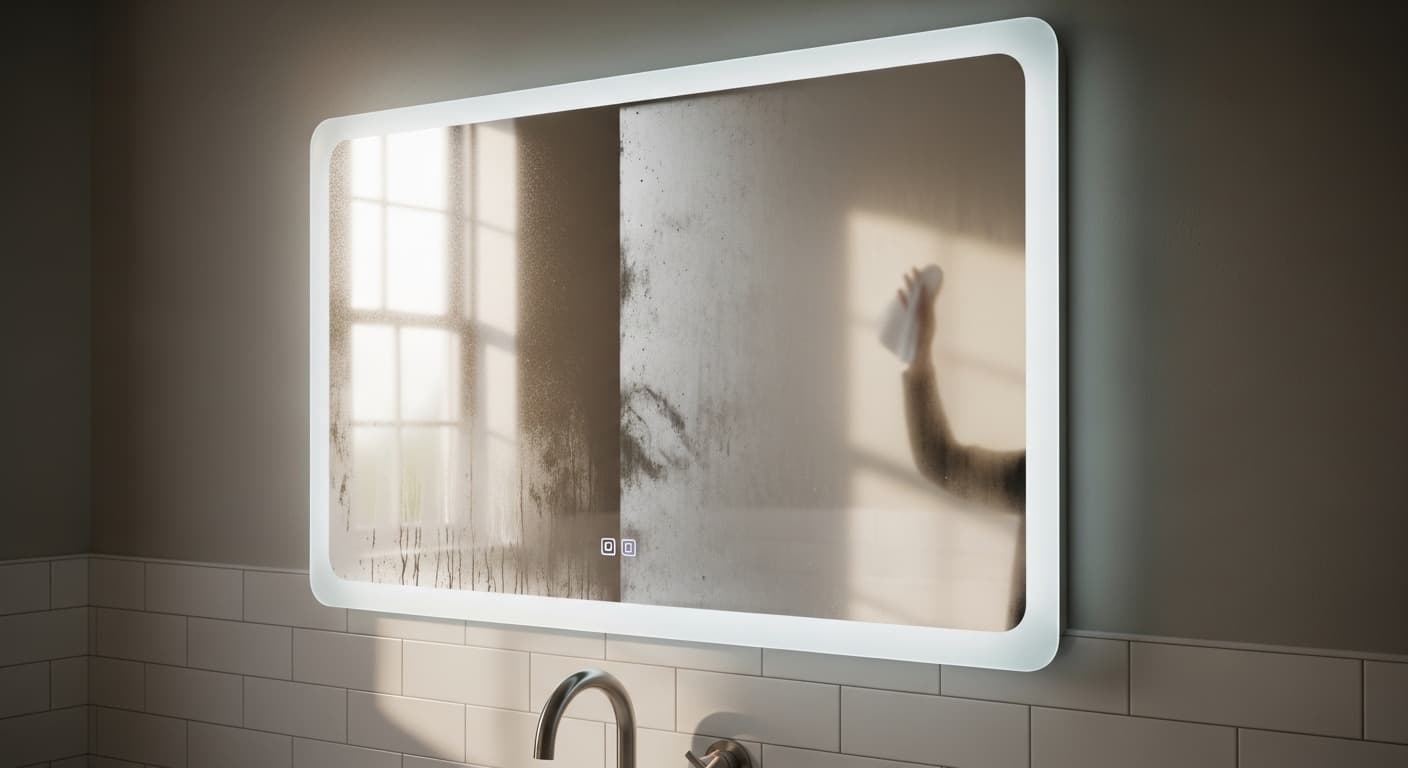
You step out of the shower, grab your towel, and look toward the vanity. You expect a crystal-clear reflection, ready for your morning routine. Instead, you’re greeted by a wall of gray mist. The mirror is foggy again.
You know you turned the anti-fog feature on before you hopped in. So, why is it off now? Did it break? Is there a ghost in the machine? Or is this actually supposed to happen?
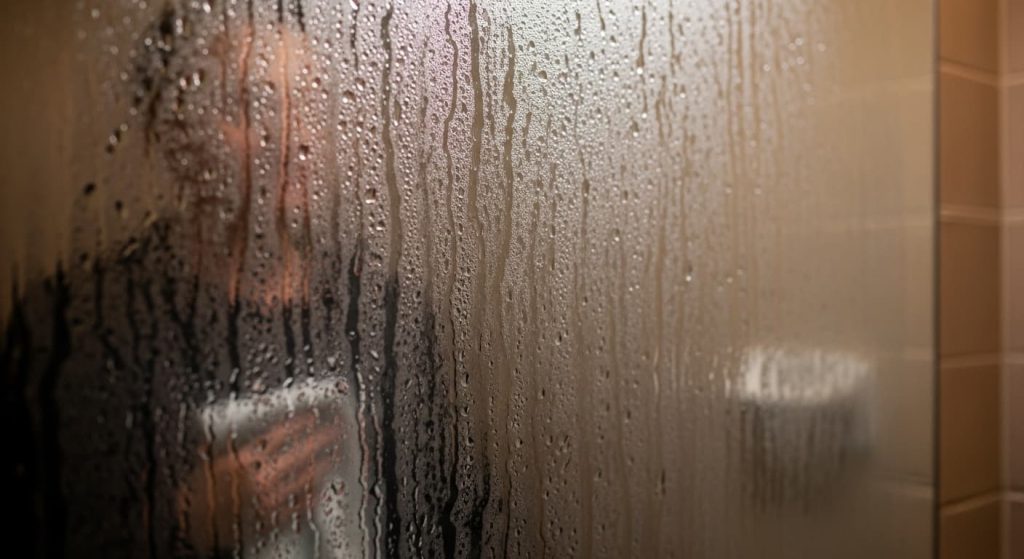
It’s a frustrating moment, but don’t worry. In most cases, your mirror isn’t broken. Let’s dive into exactly how these mirrors work and the specific reasons why yours might be shutting down on its own.
What an Anti-Fog Mirror Actually Does
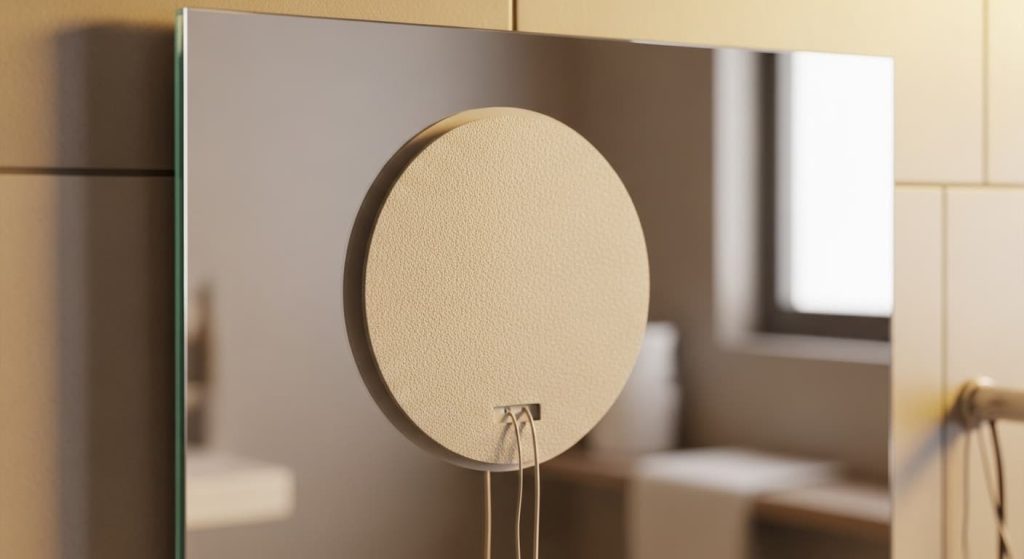
Before we troubleshoot, it helps to understand the magic behind the glass. An anti-fog mirror isn’t overly complicated technology. It relies on a simple heating pad, typically called a demister pad, attached to the back of the mirror glass.
When you switch it on, this pad warms up the surface of the mirror. Condensation happens when warm, moist air (from your shower) hits a cool surface (your mirror). By heating the mirror so it is slightly warmer than the room temperature, the demister prevents water vapor from condensing into liquid droplets.
However, heating pads consume electricity and generate heat. Because of this, manufacturers rarely design them to run indefinitely.
The 10-Second Check: Before You Panic…
Before diving into technical details, try these two quick checks. They solve a surprising number of cases:
- Is it the timer? If the mirror ran for 30-60 minutes and then shut off, wait another 30 minutes and try turning it back on. If it works, your mirror is functioning exactly as designed.
- Is it a dirty sensor? Wipe the power button and surrounding glass with a dry microfiber cloth to remove any water residue or steam that might be interfering with the touch controls.
The Most Common Reason: Built-In Auto Shut-Off
If your mirror turns off after about 30 to 60 minutes, stop troubleshooting. Your mirror is working perfectly.
The vast majority of modern LED anti-fog mirrors come equipped with an automatic shut-off timer. This is the single most common reason users think their mirror is “glitching.”
Why Does the Timer Exist?
- Energy Efficiency: Leaving a heating element on 24/7 would be a huge waste of electricity.
- Safety: It prevents the unit from running unsupervised for long periods.
- Component Longevity: Constant heat can degrade the adhesive backing or the electronics over time.
If your showers are long, or if you turn the mirror on well before you get in the shower, the timer might simply run out right when you need it most. Check your user manual to see if your model has a default 45-minute or 60-minute timer. Some advanced mirrors even let you adjust or disable this timer—look for terms like “timer setting,” “run time,” or “defog mode” in the manual’s index.
Motion or Touch Sensor Issues
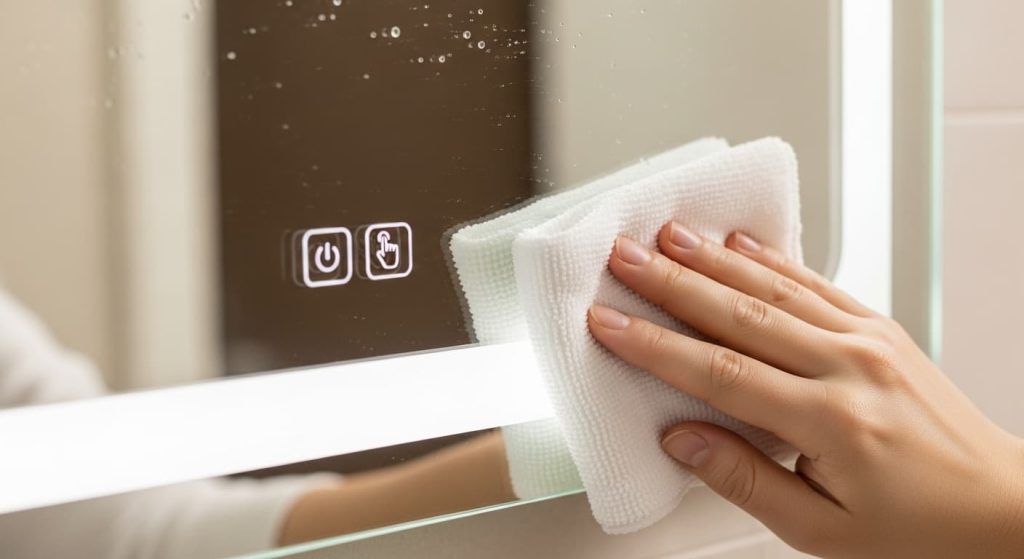
Many smart mirrors use touch-sensitive buttons etched directly onto the glass or motion sensors to detect your presence. While sleek, these controls can sometimes be too sensitive—or not sensitive enough.
Ghost Touching
Capacitive touch sensors work by detecting the electrical charge from your finger. Sometimes, high humidity or water droplets running down the surface of the mirror can trigger the sensor.
- The Fix: If a large drop of water slides over the “Power” button, it might register as a touch and shut the unit off. Fix it by making a habit of wiping the control panel area with a dry towel after your shower. This removes any water that could cause a false command.
- Pro Tip: This is especially common with mirrors that have a flat capacitive touch panel rather than a raised mechanical button. Some models include a “sensor lock” feature—check your manual to see if yours has one.
Motion Sensor Timeouts
If your mirror relies on a motion sensor, it requires movement to stay active. If you are standing still while shaving or applying makeup, or if the sensor is blocked by a towel or bottle, it might assume you’ve left the room and cut the power to save energy.
- The Fix: Try making a small, deliberate movement, like waving a hand near the sensor, to wake it up. Also, ensure nothing is stacked in front of the sensor on your vanity.
Power Supply Problems
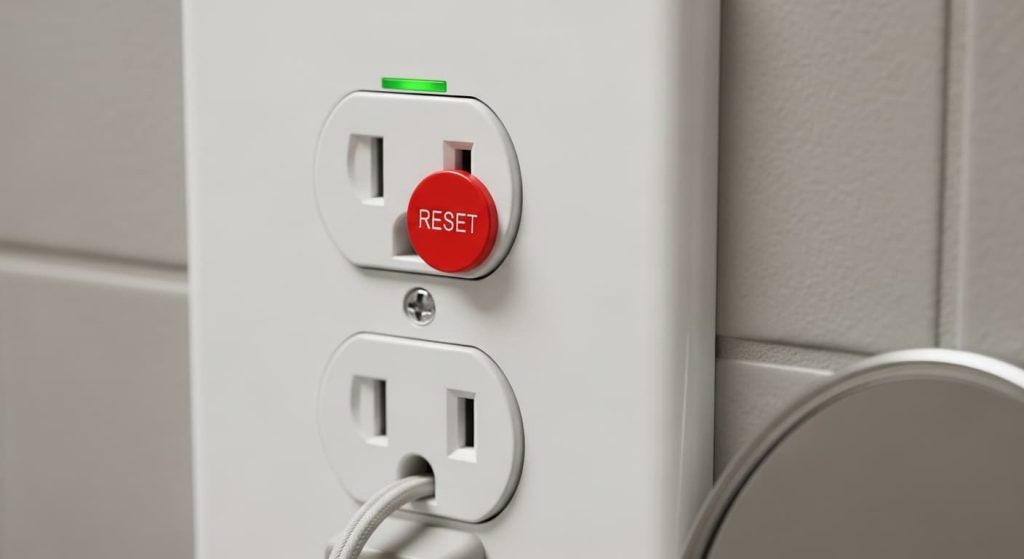
Sometimes the issue originates outside the mirror itself. If the anti-fog function turns off instantly or sporadically, you might be dealing with a power supply interruption.
GFCI Outlets
Bathrooms are required to have Ground Fault Circuit Interrupter (GFCI) outlets. These are designed to cut power instantly if they detect an imbalance in the electrical current—a crucial safety feature in wet environments.
If your mirror is plugged into a GFCI outlet that is sensitive or faulty, the surge of power required to heat the pad might trip the circuit. Check if the “Reset” button on your outlet has popped out. If it has, press it back in. If it trips again immediately, the outlet itself may need replacement.
Loose Wiring
If your mirror flickers before turning off, you might have a loose connection. This could be at the plug (if it’s a plug-in model) or within the wall junction box (if hardwired). Voltage fluctuations in your home’s electrical grid can also cause sensitive electronics to reset themselves.
- Warning: Unless you are comfortable with electrical work, checking internal wiring is a job for a licensed electrician.
Overheating Protection
Just like a hairdryer or a space heater, high-quality anti-fog mirrors have internal safety mechanisms. If the internal temperature sensor detects that the heating pad is getting dangerously hot, it will trigger an emergency shut-off.
This often happens due to poor installation. The heating pad needs a small amount of breathing room. If the mirror is installed too tightly against insulation, or if there is zero air gap between the mirror and the wall, heat can build up rapidly.
Once the unit cools down, it may function normally again, only to shut off once the heat spikes. This is a protective measure to prevent the glass from cracking or the electronics from melting.
- Prevention Tip: If you suspect this is the issue, consult your installation manual. Most mirrors require a specific air gap or mounting brackets to ensure proper ventilation behind the unit.
Wiring or Installation Errors
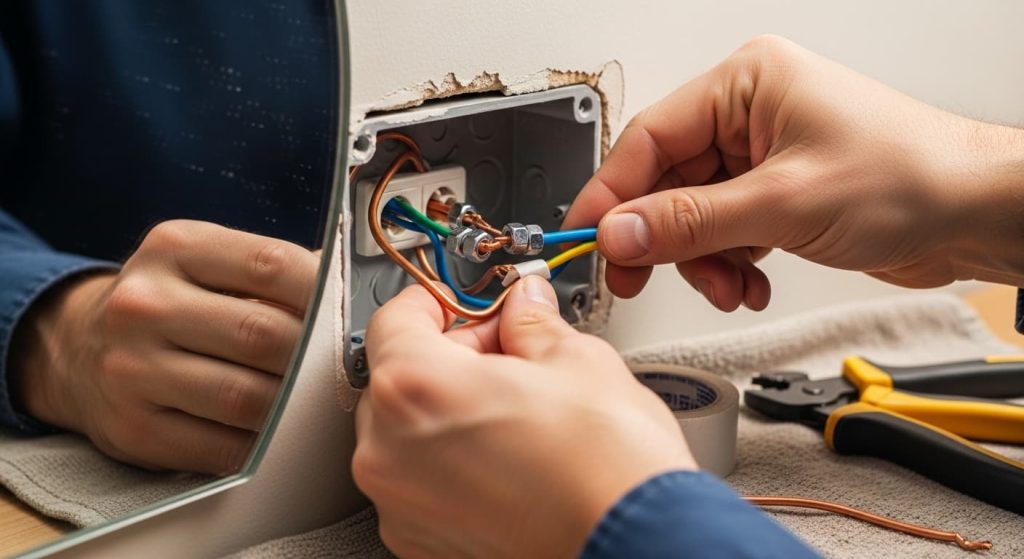
If you recently installed the mirror and it has never stayed on properly, the installation itself is the prime suspect.
Improper Grounding
Hardwired mirrors require a solid ground connection. If the grounding wire is loose or unconnected, static buildup or electrical interference can cause the control unit to behave erratically.
Junction Box Crowding
In hardwired setups, the wires are tucked behind the mirror housing. If these wires are crammed in tightly, a connector might be loose. A loose neutral wire, for example, can cause the device to power on for a second and then die immediately.
- Note: Again, this is a situation that calls for a professional electrician.
Defective Heating Pad
In rare cases, the hardware itself is to blame. Heating pads are durable, but they aren’t invincible. A defect in the conductive tracks inside the pad can cause “hot spots” or uneven heating.
If the pad has a break in the circuit, it might work for a few minutes while cool, but as the material expands with heat, the connection breaks, and the unit shuts off. If you notice only one corner of the mirror clearing up before it shuts down, this is a strong indicator of a defective pad.
Quick Troubleshooting Checklist
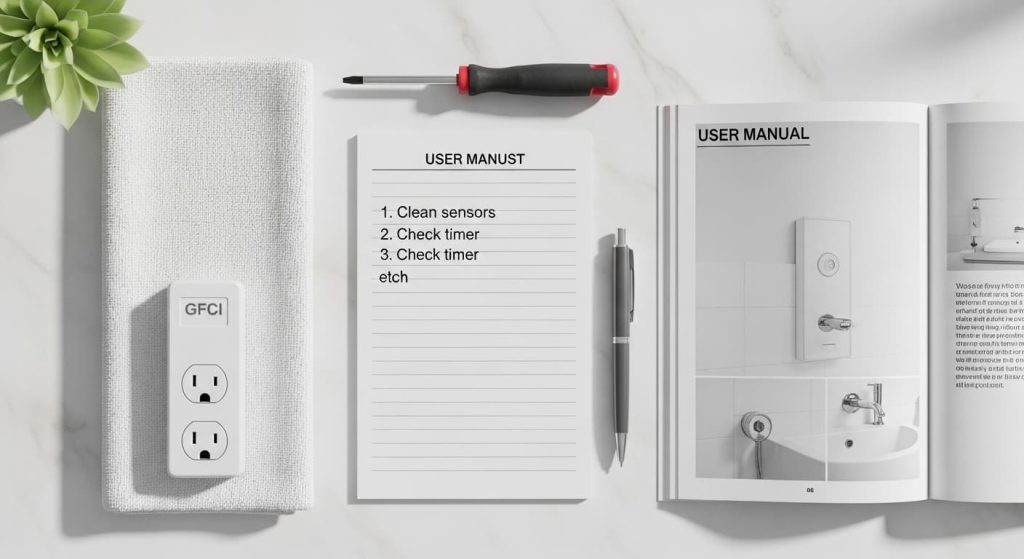
Before you rip the mirror off the wall or call customer support, try these simple steps in order:
- Clean the Sensors: Wipe down the touch buttons with a dry, microfiber cloth to remove water residue or fingerprints.
- Review the Manual: Look specifically for “Auto-off settings.” Some advanced mirrors let you disable or adjust this timer.
- The “Cool Down” Test: If it shuts off after a long period, let it sit for 30 minutes. Turn it back on. If it works, it was likely just the timer or thermal protection.
- Test the Outlet: Plug a hairdryer or nightlight into the same outlet (or the one the mirror is wired to). If that device also fails, the problem is your house wiring, not the mirror.
- Check the Breaker: Go to your home’s electrical panel and see if the bathroom breaker has tripped.
When It’s Time to Replace the Mirror
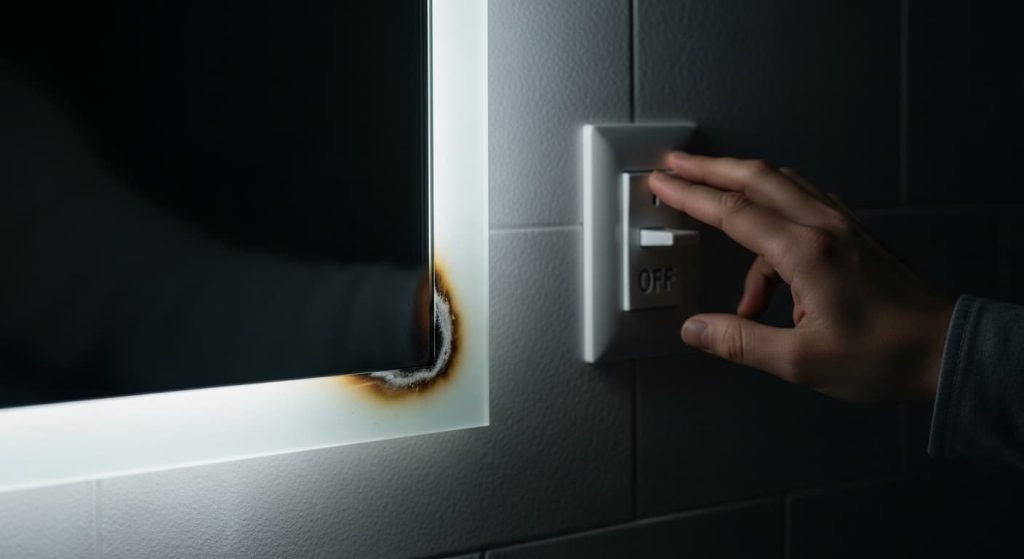
While most shut-offs are nuisance trips or normal features, some signals indicate danger. If you experience any of the following, cut power to the mirror immediately at the breaker and consider a replacement:
- Burning Smell: If the mirror smells like melting plastic or ozone when the anti-fog is on.
- Audible Buzzing: A loud humming noise usually indicates a failing power driver.
- Scorch Marks: Any visible darkening on the mirror surface or behind the glass.
- Shock: If you feel a tingle when touching the metal frame.
Final Thoughts
It is annoying to lose your clear reflection right when you need it, but usually, an anti-fog mirror turning off by itself is a sign that it is working as designed. The manufacturer likely installed a timer to save you money on your electric bill and keep your bathroom safe.
Start simple. Assume it’s the timer first. If the shutdown happens within seconds, look at your power source. But always prioritize safety—if electricity is involved and you aren’t sure, call a professional.
Frequently Asked Questions
How long should an anti-fog mirror stay on?
Most anti-fog mirrors run for 30 to 60 minutes before automatically shutting off. This is normal and prevents overheating.
Can I turn off the auto shut-off timer?
Some high-end models let you adjust or disable the timer. Check your user manual for “timer settings” or “defog mode.” Not all mirrors have this feature.
Why does my mirror turn off after 2 minutes?
This usually signals a power supply issue or overheating problem. Check your GFCI outlet first. If that’s fine, the heating pad may be defective.
Will an anti-fog mirror crack from heat?
No—if installed correctly. The built-in thermal protection shuts the mirror off before it gets hot enough to crack the glass.
Do anti-fog mirrors use a lot of electricity?
No. The heating pad uses about the same power as a small light bulb. The auto shut-off timer also helps save energy.
Why is only half of my mirror defogging?
This usually means a faulty heating pad. If only one corner clears up before it shuts off, the pad likely has a broken connection.
Can humidity trick the touch sensor?
Yes. Water droplets or heavy steam can trigger ghost touching and turn the mirror off. Wipe the control panel dry to fix this.
Should I call an electrician?
If you’ve tried everything and the mirror still shuts off instantly—or if you smell burning—call a licensed electrician. Don’t risk it.