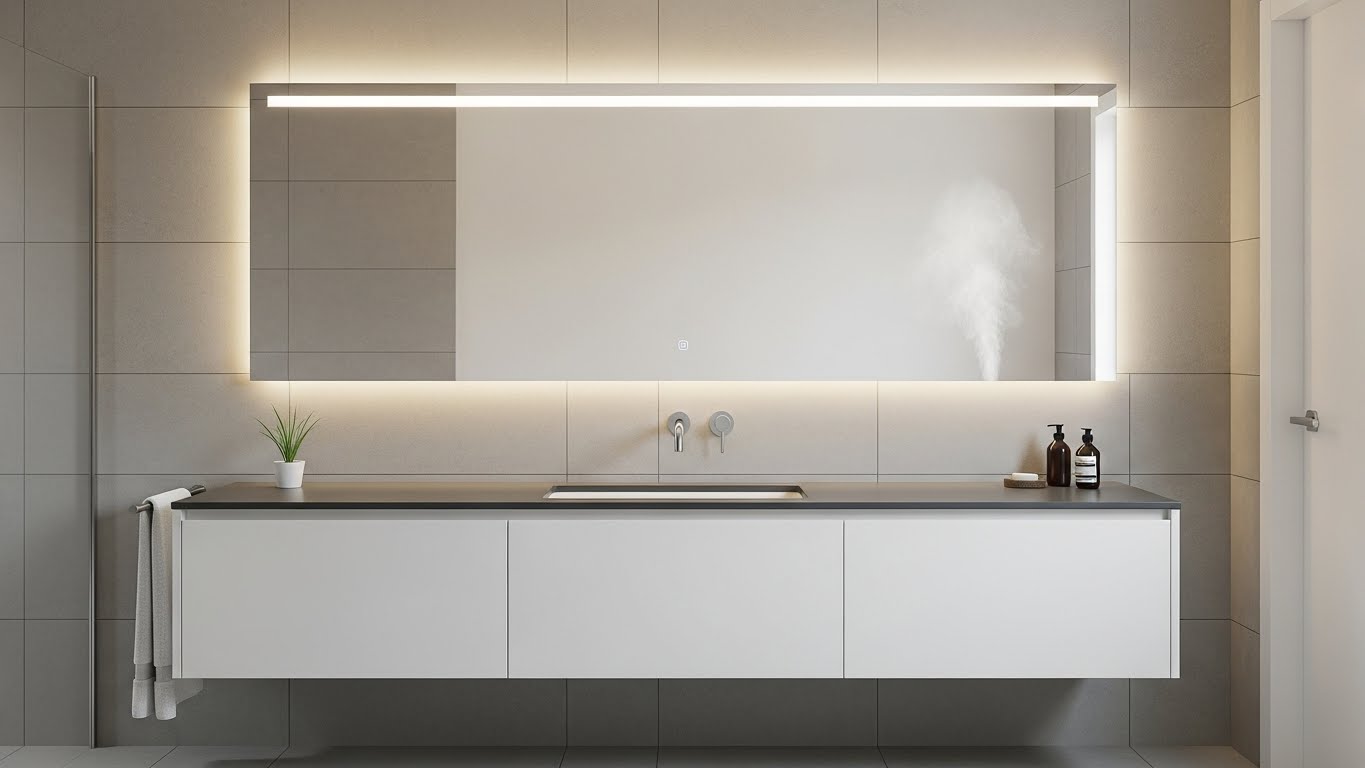
Stepping out of a hot shower only to face a completely fogged-up mirror is a minor but universal frustration.# Anti-Fog Mirrors: A Clear View on How They Work and Where They’re Used
Stepping out of a hot shower only to face a completely fogged-up mirror is a minor but universal frustration. You can wipe it with a towel, leaving streaks, or wait for it to clear on its own. But what if the mirror never fogged up in the first place? That’s the simple yet brilliant promise of anti-fog mirrors.
These innovative surfaces provide a consistently clear reflection, regardless of steam or humidity. This article will demystify the science behind anti-fog technology, explore its many benefits, and highlight the diverse settings where these mirrors are making a difference.
What Causes a Mirror to Fog Up?
Before diving into the solution, it helps to understand the problem. Fog on a mirror is simply condensation. When you take a hot shower, the air in your bathroom becomes warm and saturated with water vapor. Your mirror, being at a cooler room temperature, provides a surface for this warm, moist air to cool down.
As the air cools against the mirror, the water vapor in it condenses into countless tiny liquid droplets. These droplets scatter light, creating the translucent, cloudy layer we call fog. The same principle applies to your car’s windshield on a humid day or a camera lens in a cold environment.
How Do Anti-Fog Mirrors Work?
Anti-fog mirrors prevent this condensation from forming. There are two primary methods used to achieve a fog-free surface: heating and hydrophilic coatings.
1. Heating Technology
The most common and effective type of anti-fog mirror, especially in bathrooms, uses a gentle heating element. A thin heating pad or film is attached to the back of the mirror. When you turn on the light or a dedicated switch, a low-voltage electrical current warms the mirror’s surface.
By raising the mirror’s temperature to be slightly warmer than the dew point of the air, it prevents the water vapor from condensing. The warm, moist air no longer has a cool surface to cling to, so the tiny water droplets never form. This ensures your reflection remains perfectly clear, even in the steamiest conditions. These systems are energy-efficient, often using less power than a standard light bulb.
2. Hydrophilic Coatings
Another approach involves applying a special chemical coating to the mirror’s surface. These are known as hydrophilic coatings. The word “hydrophilic” means “water-loving.”
Instead of repelling water, these coatings attract it. When water vapor comes into contact with a hydrophilic surface, it doesn’t form thousands of tiny, light-scattering droplets. Instead, the water is forced to spread out into a single, ultra-thin, transparent sheet across the entire mirror. Because this sheet of water is uniform and see-through, it doesn’t obstruct your reflection.
You might have encountered this anti-fog technology in products like anti-fog sprays for glasses or diving masks. While sprays are a temporary solution, mirrors can be manufactured with a permanent, factory-applied coating that lasts for years.
The Benefits of Installing an Anti-Fog Mirror
Advertisement



While the primary benefit is obvious—a clear reflection—there are several other advantages to consider.
- Convenience and Time-Saving: No more waiting for the mirror to clear or wiping it down. Your mirror is ready to use the moment you step out of the shower, streamlining your morning routine.
- Reduced Cleaning: Wiping a foggy mirror with a towel often leaves behind lint, smudges, and streaks. Anti-fog mirrors eliminate this need, meaning you’ll spend less time cleaning glass to maintain a spotless look.
- Enhanced Safety: In certain environments, a clear view is a matter of safety. For drivers, fog-free side mirrors are crucial for visibility in damp or cold weather. In industrial settings, clear mirrors and lenses protect workers.
- Modern Aesthetic: Many heated anti-fog mirrors come with integrated features like LED lighting, digital clocks, and touch-sensitive controls, adding a sleek and modern touch to any bathroom design.
Common Uses of Anti-Fog Mirrors
Advertisement


Anti-fog technology is more widespread than you might think. It provides critical functionality in a variety of residential, commercial, and industrial applications.
In the Home
The bathroom is the most popular place for an anti-fog mirror. They are a staple in modern bathroom renovations and luxury homes, offering both function and style. From small vanity mirrors to large, wall-mounted installations, there is a fog-free option for any space.
In Vehicles
The automotive industry has long relied on anti-fog technology. Heated side mirrors are standard on most new cars, ensuring drivers have a clear view of adjacent lanes during rain, snow, or humid conditions. Some vehicles also use heated elements or special coatings on rearview mirrors and backup camera lenses to maintain visibility.
Hospitality and Commercial Spaces
High-end hotels, spas, and gyms install anti-fog mirrors in their bathrooms and changing rooms as a premium amenity for guests. It’s a small detail that significantly enhances the user experience, conveying a sense of luxury and attention to detail.
Medical and Scientific Fields
In medical and dental offices, small anti-fog mirrors are essential for examinations. They allow doctors and dentists to see clearly inside a patient’s mouth or other areas without their breath causing condensation. Similarly, laboratories use anti-fog coatings on microscope lenses and safety goggles to ensure clear vision during delicate procedures.
Industrial and Safety Equipment
Workers in demanding environments rely on anti-fog technology for safety. It is applied to:
- Safety goggles and face shields
- Helmet visors for firefighters and construction workers
- Lenses for industrial cameras and sensors
In these contexts, a clear line of sight is not just a convenience—it’s critical for preventing accidents.
A Clear Choice for Modern Living
Advertisement


Anti-fog mirrors are a perfect example of a simple technology solving a common problem. By either gently heating the glass or using an advanced hydrophilic coating, they prevent condensation from ever forming. This provides a clear, streak-free reflection that saves time, reduces cleaning, and enhances safety.
Whether you’re looking to upgrade your bathroom, improve driving visibility, or ensure safety in a professional setting, the uses of anti-fog mirrors are diverse and impactful. They represent a clear improvement, turning a daily annoyance into a seamless part of modern life.