Long before they became a common fixture in our homes, mirrors were rare, expensive, and steeped in mystery. To look into a polished surface of obsidian, bronze, or silver was to see a perfect, silent double—a concept that sparked wonder, fear, and a wealth of cultural beliefs. Across history and around the globe, mirrors have been seen as magical artifacts, portals to other worlds, and windows into the soul. They are central objects in folklore, rituals, and superstitions that persist to this day.
This article delves into the fascinating cultural and historical beliefs about mirrors. We will explore how different societies have interpreted these reflective objects, from their use in ancient divination to the superstitions that still make us handle them with care. By understanding their past, we can see why mirrors hold such a powerful place in our collective imagination.
Early Mirrors: Portals to the Gods and Future
The first mirrors were not made of glass but of naturally reflective materials. Volcanic glass (obsidian), polished metals like bronze and copper, and even bowls of still water served as humanity’s first looking glasses. Because of their rarity and the distorted, dark reflections they produced, these objects were immediately imbued with mystical properties.
Scrying and Divination

One of the earliest and most widespread uses for mirrors was scrying, or the practice of gazing into a reflective surface to gain supernatural insight. Ancient cultures believed these objects could reveal the future or allow communication with gods and spirits.
- Ancient Greeks and Romans: The Greeks practiced catoptromancy, where a sick person’s fate was determined by their reflection in a mirror dipped in water. A clear image meant recovery, while a distorted one signaled death.
- Mesoamerican Cultures: The Aztecs and Mayans used polished obsidian mirrors for divination. Priests would stare into the dark, smoky surface to receive visions and communicate with deities like Tezcatlipoca, whose name means “Smoking Mirror.”
- Chinese Traditions: In ancient China, bronze mirrors were not just for grooming; they were considered powerful spiritual tools. They were often decorated with cosmological symbols and were believed to ward off evil spirits, who were thought to be frightened by their own reflection.
Mirrors and the Soul: A Fragile Connection

Perhaps the most pervasive belief about mirrors is their connection to the human soul. Many cultures have historically viewed a person’s reflection as a physical manifestation of their spirit or life force. This belief is the foundation for some of the most enduring mirror superstitions.
Capturing and Trapping Spirits
The idea that a mirror can capture or trap a soul is a recurring theme in global folklore. This is the origin of the tradition of covering mirrors in a house where someone has died. It was believed that the soul of the deceased, lingering before its final journey, could become trapped in the reflective glass. This would prevent the spirit from finding peace and could potentially cause it to haunt the living. This practice, known as Victorian death custom, highlights the mirror’s role as a liminal object between the world of the living and the dead.
The Seven Years of Bad Luck
The most famous mirror superstition—that breaking one brings seven years of bad luck—has ancient roots. The Romans believed that life renewed itself in seven-year cycles. They also thought that a mirror didn’t just reflect your image but held a piece of your soul. Therefore, breaking a mirror meant damaging your soul, and it would take seven years for your spirit to be whole again, bringing a long period of misfortune. To counteract the bad luck, people would gather the broken pieces and either bury them in the moonlight or grind them into dust.
Vampires, Demons, and the Revealing Glass
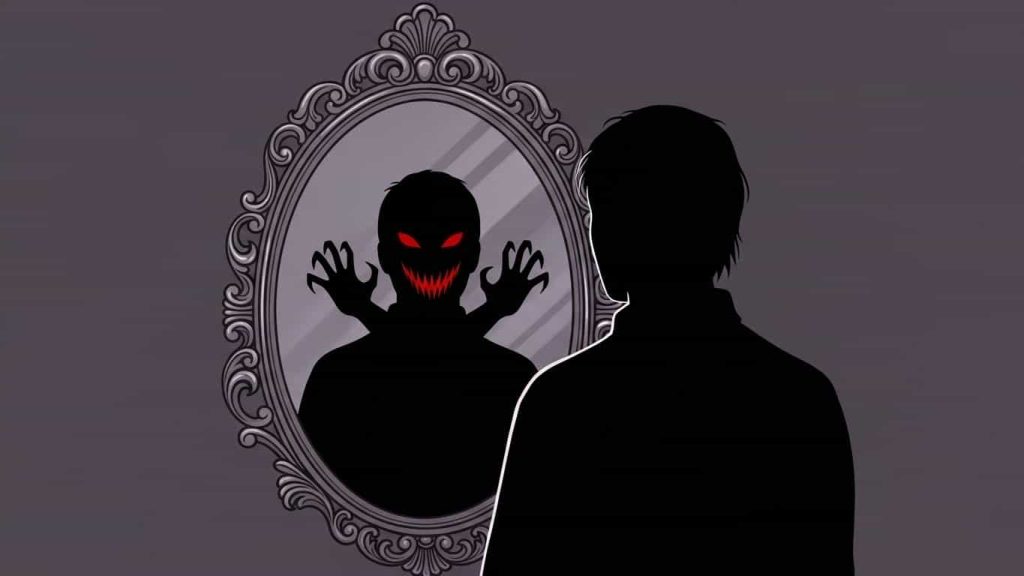
Since mirrors were believed to reflect the soul, it followed that creatures without a soul would have no reflection. This concept became a cornerstone of monster lore, particularly in the case of vampires. In Bram Stoker’s Dracula and subsequent vampire fiction, a key way to identify the undead is their inability to cast a reflection. This lack of a reflection signifies their soulless, unnatural state.
Conversely, some traditions held that mirrors could reveal the true form of demonic entities or trickster spirits disguised as humans. The mirror was an incorruptible truth-teller, capable of showing what the naked eye could not. This turned the mirror into a protective ward, a tool to unmask the evil hiding in plain sight.
Mirrors as Gateways and Alternate Realities
Beyond connecting to the soul, mirrors have often been seen as physical portals to other dimensions. This belief transforms the mirror from a passive object to an active threshold, a door to another place entirely.
Through the Looking-Glass
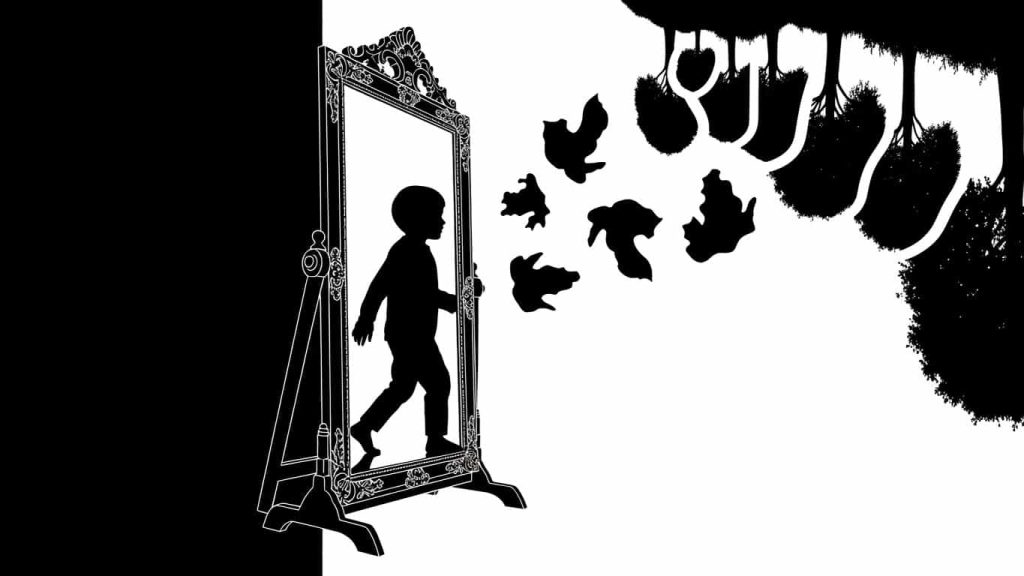
Lewis Carroll’s classic story, Through the Looking-Glass, is the most famous example of this idea in literature. Alice climbs through a mirror into a world where everything is reversed, a fantastical reality operating on its own strange logic. This story cemented the mirror portal as a powerful narrative device in popular culture.
The World of Bloody Mary
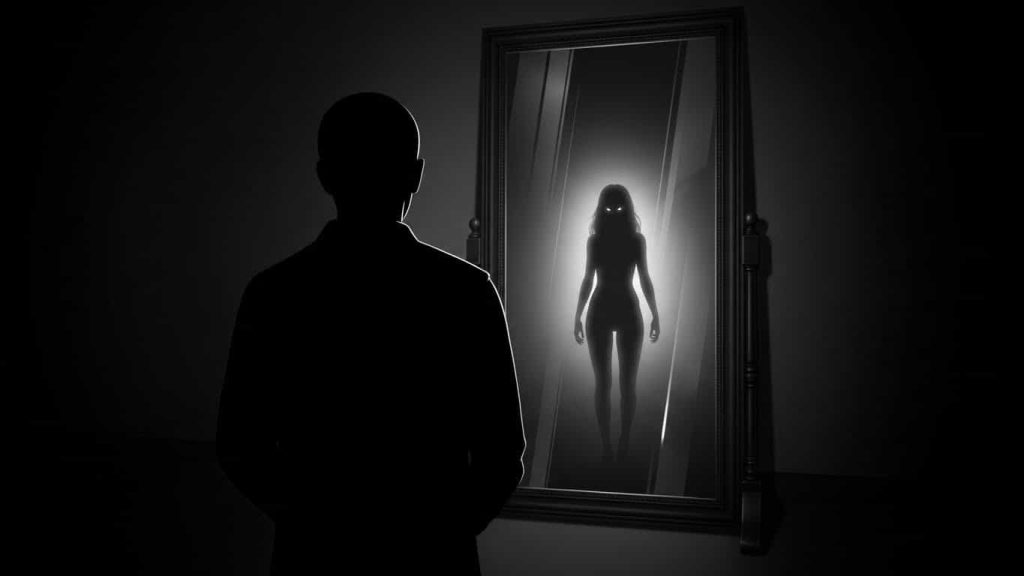
A darker version of the mirror portal exists in the urban legend of Bloody Mary. This ritual, popular at sleepovers, involves chanting the name “Bloody Mary” into a mirror in a darkened room. According to the legend, this summons her vengeful spirit, which might appear in the reflection to attack the summoner. Here, the mirror acts as a conduit, a specific gateway that can be opened through a ritual to invite a supernatural entity into our world.
Symbolism in Culture and Art
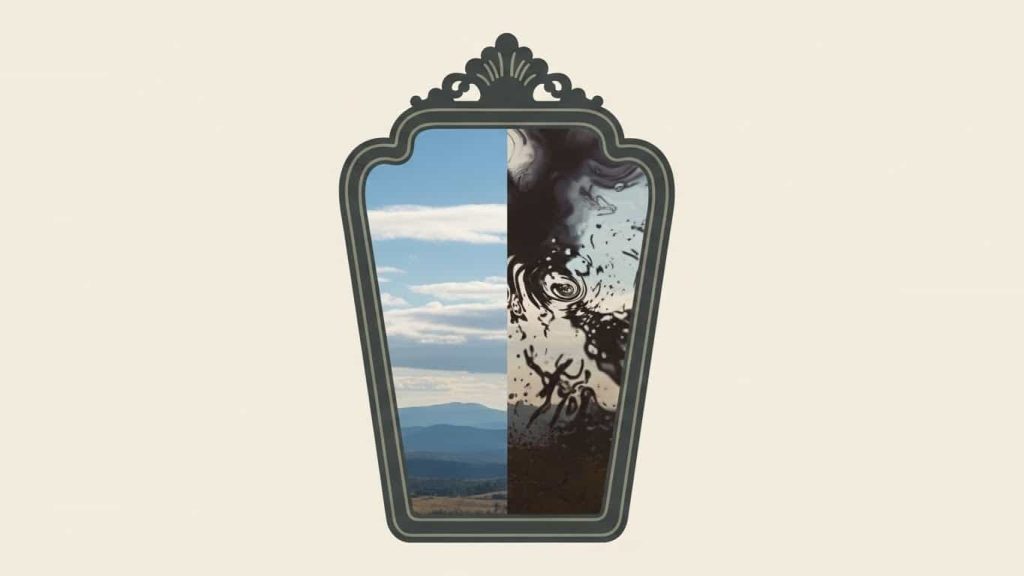
Throughout history, mirrors have carried rich and often contradictory symbolism. They represent truth and vanity, reality and illusion, self-knowledge and self-deception.
- Truth and Self-Knowledge: The mirror’s ability to show a precise reflection has made it a symbol of truth and clarity. The Japanese imperial regalia includes a sacred mirror, Yata no Kagami, which represents wisdom and truth. In Buddhist traditions, the mind is likened to a mirror that should be kept clean to reflect the world without distortion.
- Vanity and Deception: Conversely, the myth of Narcissus, who fell in love with his own reflection and wasted away, established the mirror as a symbol of vanity and dangerous self-obsession. In art, particularly during the Renaissance, a woman holding a mirror was often an allegory for pride, one of the seven deadly sins.
A Lasting Reflection of Human Belief
From the scrying pools of ancient priests to the haunted bathroom mirrors of modern horror, our perception of these objects has always been about more than what is on the surface. Cultural and historical beliefs about mirrors reveal our enduring fascination with the soul, the afterlife, and the nature of reality itself. They reflect our deepest fears and our greatest curiosities.
So the next time you look in a mirror, remember the centuries of myth, magic, and superstition that have shaped what you see. You are not just looking at your reflection; you are looking into an object that has been a source of profound mystery for all of human history.