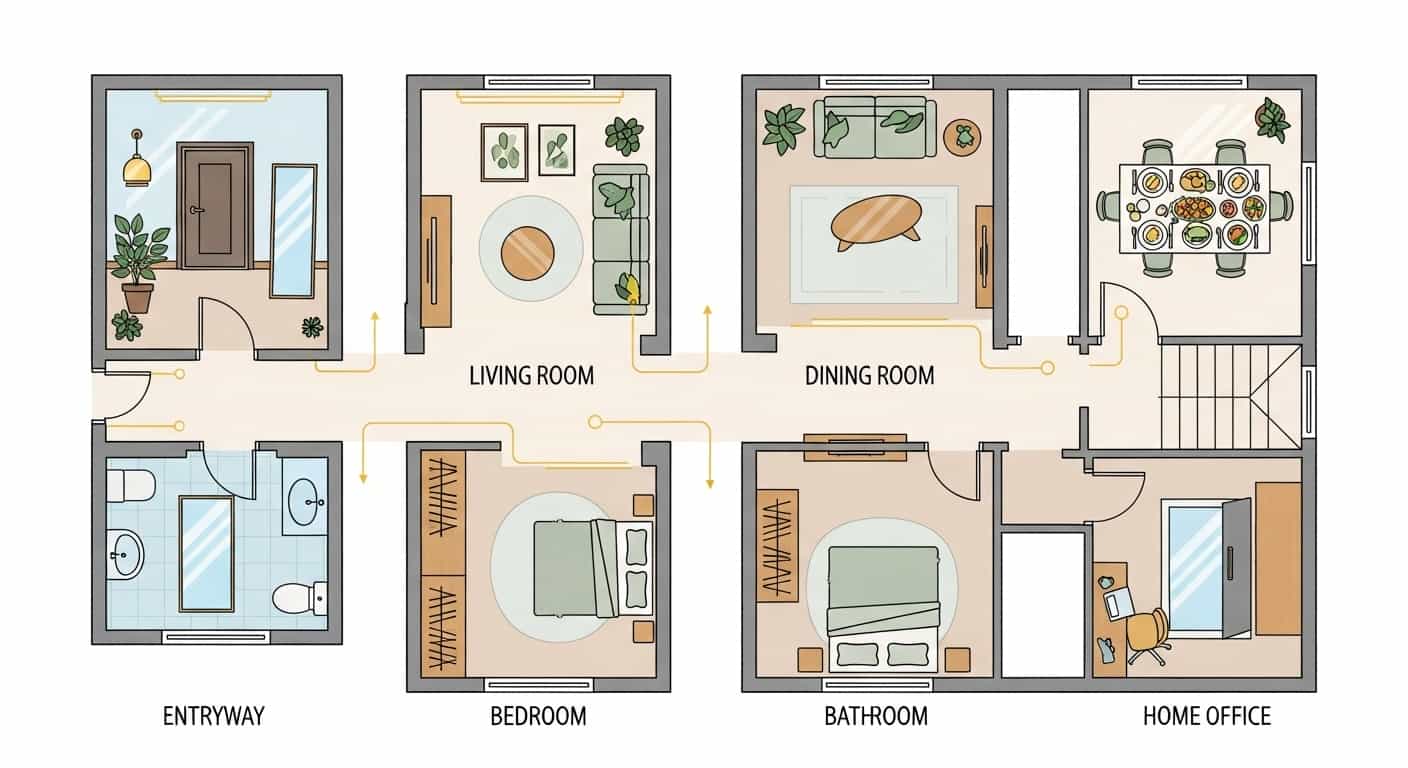
In the art of Feng Shui, not all rooms are created equal. Each space in your home serves a unique purpose and possesses its own distinct energetic blueprint. The living room is for social gatherings, the bedroom is for rest, and the home office is for career focus. It stands to reason, then, that the powerful tools used to manipulate energy, or Chi, must be applied differently in each area.
Mirrors, often called the “aspirin of Feng Shui” for their versatility, are no exception. A mirror feng shui placement that brings abundance to a dining room could unintentionally bring anxiety to a bedroom.
Understanding how to apply feng shui mirror principles on a room-by-room basis is the key to unlocking a truly harmonious home. While general rules provide a solid foundation, room-specific strategies allow you to fine-tune the energy flow. This guide offers a detailed walkthrough of the most important rooms in the house, from the front door to the bedroom, explaining precisely feng shui where to place mirrors to enhance positive Chi and create an environment that supports your well-being, wealth, and happiness.
The Entryway: The Mouth of Chi
The entryway, or foyer, is one of the most critical areas in Feng Shui. It’s known as the “Mouth of Chi” because it is the primary portal through which all energy, opportunity, and nourishment enter your home. The goal here is to create a bright, welcoming, and expansive feeling that invites positive Chi in and encourages it to circulate throughout the rest of the house.
Best Placement Practices for the Entryway
The ideal mirror position feng shui suggests for the entryway is on a wall perpendicular to the front door. Imagine the Chi flowing in a straight line as the door opens; a mirror to the side gently catches this energy and pulls it deeper into the home, preventing it from stagnating or rushing out.
This placement also serves a practical purpose. It makes a typically small or narrow foyer feel larger, brighter, and more gracious. When selecting a mirror for this space, opt for one that is large enough to reflect the full head and shoulders of the tallest person in the household. A mirror that “cuts off” your head is considered inauspicious.
What to Avoid in the Entryway
The single most important rule to follow in the foyer is to never have a feng shui mirror facing door. When a mirror facing door directly opposes the entrance, it acts like a defensive shield. It immediately bounces all the beneficial energy that enters right back out.
This mirror in front of door placement can manifest as a constant stream of missed opportunities, financial instability, and a sense that good luck simply doesn’t stick around. To ensure optimal feng shui mirror placement for good luck, keep the reflection focused on the side walls rather than the entrance itself.
The Living Room: The Heart of the Home
The living room is a social, active (yang) space where the family gathers and guests are entertained. The energy here should be vibrant, comfortable, and conducive to connection. Feng shui and mirrors can work together effectively here to amplify this positive, communal energy.
Best Placement Practices for the Living Room
A mirror in living room can work wonders to make the space feel more open and sociable. The key is to be mindful of what it reflects. Position the mirror to capture and double something beautiful. This could be a stunning piece of art, a thriving houseplant, or a view of a garden from a window.
Reflecting these positive elements fills the room with uplifting energy. If you have a dark corner, placing a mirror in the living room there along with a floor lamp will instantly brighten the area and activate what was once stagnant Chi.
What to Avoid in the Living Room
Avoid placing a mirror where it reflects clutter, as this will only amplify chaotic energy. Be cautious of placing it opposite a seating area in a way that makes guests feel uncomfortably “on display.” Also, watch out for “poison arrows”—sharp corners from furniture or walls. A mirror feng shui arrangement should not reflect these sharp angles, as it will double and project this cutting energy into the room.
The Dining Room: The Center of Abundance
In Feng Shui, the dining room is directly linked to the family’s wealth, prosperity, and ability to hold onto resources. The dining table represents the “rice bowl” of the family, a symbol of nourishment and abundance.
Best Placement Practices for the Dining Room
This is one of the few places where experts universally encourage the use of a large feng shui mirror. Place a mirror to reflect the dining table. This is a classic and highly auspicious practice that energetically doubles the food and the gathering of people around the table.
By reflecting the happy energy of family and friends enjoying a meal together, the mirror amplifies feelings of connection, joy, and community. The light from a chandelier or candles will also be reflected, creating a warm, inviting, and luxurious ambiance.
What to Avoid in the Dining Room
While reflecting the table is good, ensure the mirror doesn’t create an uncomfortable glare for any of the diners. It should also not reflect the entrance to a nearby kitchen, especially if the kitchen is cluttered or shows the stove. The focus should remain on the abundance represented by the dining table itself.
The Bedroom: Sanctuary for Rest
The bedroom is a yin space, dedicated to rest, intimacy, and healing. The energy here needs to be calm, soft, and enveloping. Because mirrors and feng shui interact to create active, yang energy, they must be used with extreme caution in the bedroom.
Best Placement Practices for the Bedroom
Many people ask where to place a mirror in a bedroom safely. The best feng shui bedroom mirror placement is often inside a closet or wardrobe door. This allows you to use it when needed, but it can be closed away at night, neutralizing its energetic effect while you sleep.
If you are wondering where to put mirror in bedroom if a closet isn’t an option, a small mirror on a vanity table is acceptable. Ensure it is not facing the bed and can perhaps be covered with a cloth at night. The goal of mirror placement in bedroom is to keep the active energy of the reflection from disturbing the tranquil environment needed for rest.
What to Avoid in the Bedroom
The number one rule for feng shui mirrors in bedroom spaces is to never place one where it reflects the bed. A mirror facing bed is one of the most significant prohibitions in Feng Shui.
Why is it bad to sleep in front of a mirror? First, the active energy of the mirror in front of bed is believed to disrupt the restorative process of sleep, leading to restlessness or insomnia. Second, a mirror in front of bed feng shui warns, can invite the energy of a third party into the relationship.
Additionally, avoid:
- Beds with mirrors above bed: A mirror above bed or mirror over the bed creates a sense of heavy pressure and potential danger, which is unsettling for the subconscious.
- Mirror in bedroom ceiling: This creates a disorienting and chaotic energy that makes relaxation nearly impossible.
- Mirrors facing bed: Whether it is a large dresser mirror or a mirror in bedroom corner, if you can see yourself from the pillow, it needs to be moved or covered.
When considering feng shui and mirrors in bedroom, always prioritize peace over vanity. A feng shui mirror facing bed stimulates the mind when it should be powering down.
The Bathroom: Managing Energetic Drains
Bathrooms are tricky areas in Feng Shui. With their many drains, they are considered places where the home’s positive energy—and by extension, its wealth—can be flushed away. Feng shui mirrors can be used strategically to help manage this draining effect.
Best Placement Practices for the Bathroom
While a mirror above the sink is standard, an additional powerful mirror location feng shui suggests is on the outside of the bathroom door, facing into the hallway. This application symbolically makes the bathroom “disappear” and keeps energy from entering the drain.
If placed inside, ensure any mirror is large enough to provide a clear, full view of your head and shoulders.
What to Avoid in the Bathroom
Do not place a mirror that directly faces the toilet. The toilet is the primary source of draining energy. A mirror reflecting it will double this force. Keep the toilet lid down whenever possible.
The Home Office: Command Center for Career
Your home office is the hub for your career and financial success. Proper mirror placement feng shui can support you in maintaining a position of control.
Best Placement Practices for the Home Office
To achieve the “command position,” your desk should ideally be positioned so you can see the door. If your back must be to the door, use a mirror to see who’s coming in feng shui.
Place a small mirror on your desk or the wall in front of you so that it reflects the entrance behind you. This allows you to see the door without turning around, reducing subconscious anxiety. It keeps you in control and symbolically open to new opportunities arriving.
What to Avoid in the Home Office
Do not hang a mirror directly behind your desk chair. While a solid wall behind you provides support, a mirror creates a sense of vulnerability. It symbolically places your support and opportunities behind your back, where you cannot see or act on them.
Hallways and Corridors
Hallways act as the arteries of your home, circulating Chi from room to room. Feng shui where to place mirrors in a hallway depends on the flow.
Avoid placing a mirror at end of hallway. A mirror placed right at the very end of a long corridor can symbolize a “dead end” or a crash, frustrating the energy flow rather than encouraging it. Instead, stagger mirrors on the side walls to slow down rushing energy and allow it to meander pleasantly through the home.
Conclusion: A Reflection of Your Intentions
By tailoring feng shui mirror placement to the specific function of each room, you can transform your home into a more supportive environment. The entryway should welcome energy, the dining room should amplify abundance, and the bedroom feng shui mirror strategy should focus on calm.
Take a walk through your home and assess your mirrors. Are they serving the best interests of each room? A few simple shifts can realign the energy flow. By mastering room-specific placement and avoiding common pitfalls like a mirror facing door feng shui warns against, you harness one of the most powerful tools in functuay (Feng Shui) to reflect a life filled with positivity, balance, and purpose.