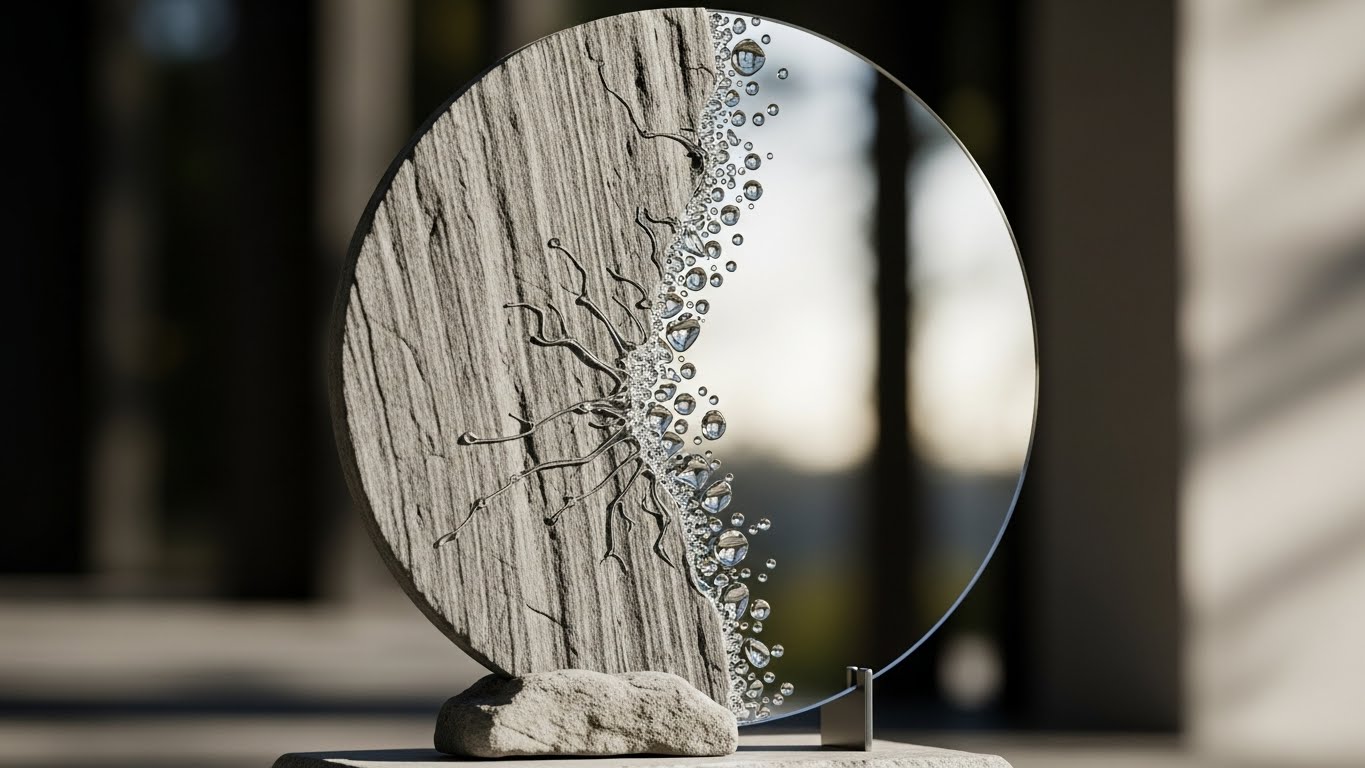
The simple act of checking your reflection is a thoroughly modern luxury. For most of human history, seeing a clear, accurate image of oneself was impossible. The mirrors we take for granted today are the result of thousands of years of innovation, spanning from naturally occurring volcanic glass to sophisticated manufacturing techniques. The history of mirrors is not just a story of technology; it’s a story of humanity’s evolving relationship with its own image.
This article will take you on a journey through time to explore the fascinating evolution of mirrors. We will uncover the earliest forms of reflective surfaces used by our ancestors, trace the development of metal and glass mirrors through different civilizations, and see how technological breakthroughs led to the high-quality mirrors that are now a part of daily life.
The First Reflections: Ancient Mirrors of Stone and Metal
Advertisement


Long before glass and silver came together, people found their reflections in the still surfaces of water. But the desire for a portable, personal reflection tool drove early ingenuity. The first manufactured mirrors were not made of glass, but of polished stone.
Polished Obsidian: The Earliest Mirrors
The oldest known man-made mirrors date back to around 6,000 BCE in Anatolia, which is now modern-day Turkey. Archaeologists have unearthed beautifully crafted pieces of obsidian, a type of volcanic glass, that were polished to a high sheen to create a reflective surface. These ancient mirrors were rare and valuable objects. Their reflections were dim and distorted compared to modern standards, but they provided the first opportunity for people to gaze upon their own likenesses outside of a pool of water. These obsidian mirrors were likely luxury items, holding significant cultural and spiritual value.
The Age of Metal: Copper, Bronze, and Precious Metals
As civilizations advanced into the Bronze Age, so did mirror technology. Around 4,000 BCE in Mesopotamia and 3,000 BCE in Egypt, artisans began crafting mirrors from polished metals. The most common materials were copper and bronze. These metals could be flattened into discs and polished to create a much brighter and clearer reflection than obsidian.
Egyptian mirrors were often pear-shaped or round with handles made of wood, ivory, or metal, sometimes intricately decorated with mythological figures. They were personal grooming tools but also held deep religious significance, associated with the sun god Ra and the goddess of love, Hathor. Similarly, the Indus Valley Civilization and ancient China developed their own advanced techniques for creating bronze mirrors, which became important cultural artifacts and symbols of status.
The Romans later improved upon this technology, using polished silver, which offered an even better reflection. However, all metal mirrors shared a common problem: they tarnished quickly and required constant polishing to maintain their reflective quality. They were also extremely expensive, accessible only to the wealthiest citizens.
The Glass Revolution: The Birth of the Modern Mirror
Advertisement


The idea of using glass for mirrors was not new. The Roman author Pliny the Elder mentioned crude attempts to coat glass with metal in the first century CE. However, the quality of Roman glass was poor, often greenish and filled with imperfections, making it unsuitable for clear reflections. For over a thousand years, polished metal remained the standard.
The Venetian Breakthrough
The true birth of the modern glass mirror occurred in 16th-century Venice. The glassmakers on the island of Murano developed a superior glass-making technique that produced clear, flawless glass sheets. They combined this with an improved method of backing the glass with a tin-mercury amalgam. This process involved pressing a thin sheet of tin against the glass and then flooding it with mercury. The mercury dissolved the tin, creating a brilliant reflective coating that adhered to the glass.
This Venetian method was a closely guarded state secret. For 150 years, Venice held a monopoly on high-quality glass mirrors, which were more valuable than paintings by famous artists. These mirrors were the ultimate luxury item, found only in the palaces of royalty and the mansions of the fabulously wealthy. They were symbols of immense power and prestige.
Industrialization and Accessibility
The Venetian monopoly was eventually broken in the 17th century when French spies smuggled the secrets of mirror-making out of Murano. France began producing its own high-quality mirrors at the Saint-Gobain manufactory, famously demonstrated in the Hall of Mirrors at the Palace of Versailles.
However, the tin-mercury process was incredibly dangerous. The use of mercury led to severe health problems and death among the workers. A safer and more efficient method was needed. This breakthrough came in 1835 when German chemist Justus von Liebig invented the silvering process. This technique involved depositing a thin layer of metallic silver onto the glass through a chemical reaction.
Liebig’s process was faster, less toxic, and produced a brighter, more durable reflection. This innovation was the final piece of the puzzle. It made the mass production of high-quality, affordable mirrors possible for the first time. The mirror was no longer an object reserved for kings; it was on its way to becoming an everyday household item.
Modern Glass Mirrors and Beyond
Advertisement


Today, mirror manufacturing is a highly refined industrial process. Most modern mirrors are made by depositing a very thin layer of aluminum or silver onto the back of a sheet of float glass in a vacuum chamber.
The process, known as sputtering, ensures a perfectly uniform and highly reflective coating. Protective layers, often including copper and a durable paint backing, are then applied to protect the delicate metal layer from scratches and corrosion. This multi-layered construction makes modern mirrors incredibly durable and clear.
The evolution of mirrors continues with the development of “smart mirrors” that integrate digital displays, providing information like weather, news, and personal schedules. In science and technology, specialized mirror coatings are essential for everything from powerful telescopes like the James Webb Space Telescope to lasers and medical equipment.
A Reflection of Ourselves
The journey of the mirror, from a cloudy reflection in polished stone to the crystal-clear image we see today, is a reflection of human progress. Each advancement in mirror technology not only improved our ability to see ourselves but also changed how we perceive our own identity and place in the world. What began as a rare object of magic and power has become an indispensable tool for personal grooming, decoration, safety, and scientific discovery. The next time you look in a mirror, you are looking at the culmination of 8,000 years of human ingenuity.