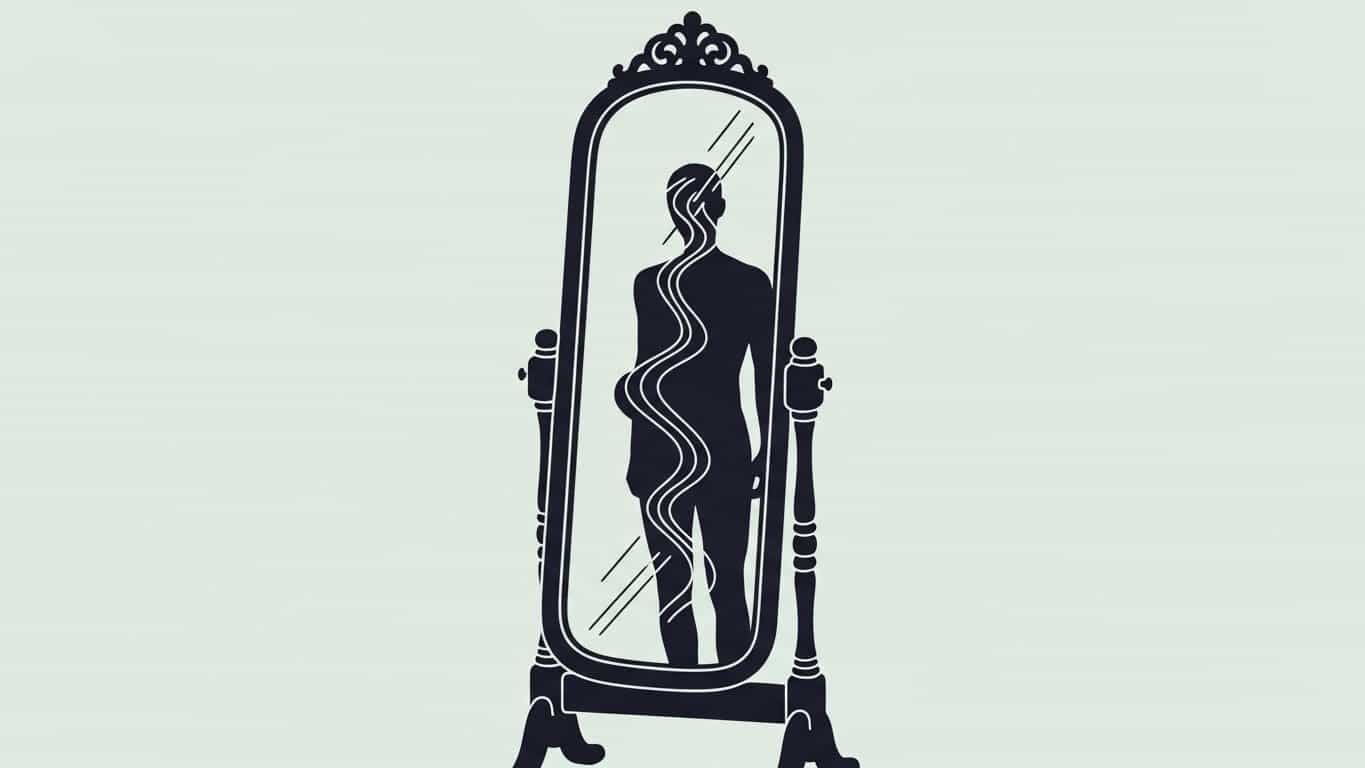
In the world of horror, some objects are more than what they seem. A creaking door, a child’s toy, or a flickering light can all carry sinister weight. Yet, few props are as symbolically rich or psychologically potent as the mirror. Beyond its use for a simple jump scare, the mirror serves as a profound symbol, reflecting the deepest themes of the genre: the fragility of identity and the terrifying nature of truth.
When a character in a horror story looks into a mirror, they are often confronting more than just their own reflection. They are facing their inner demons, their fractured sense of self, and truths they would rather keep buried. This article explores the powerful symbolism of mirrors in horror, examining how they function as tools to deconstruct identity and reveal horrifying realities.
A Window to the True Self
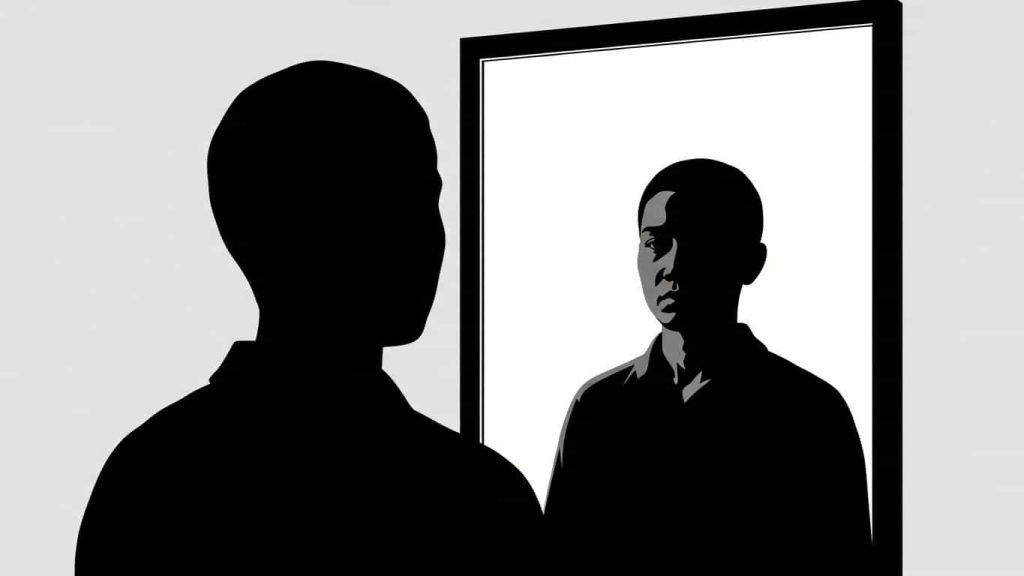
At its core, a mirror is supposed to show us an honest image. In horror, this function is twisted to reveal truths that are hidden from the naked eye. The reflection becomes a source of incorruptible, often brutal, honesty, exposing the darkness that lies within a character or the true nature of the world around them.
Revealing the Inner Monster
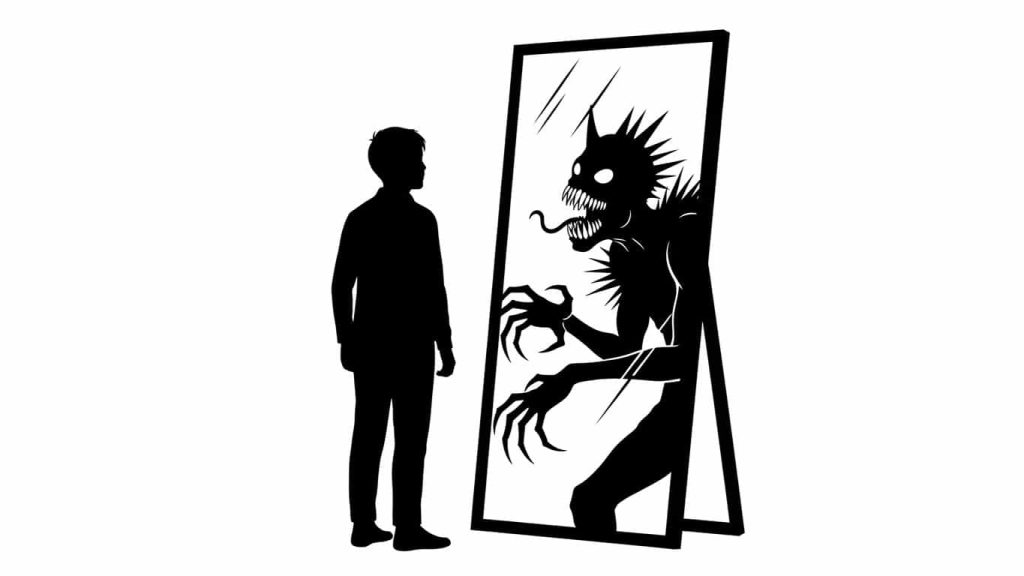
Many horror narratives explore the duality of human nature—the idea that a monstrous side exists within everyone. Mirrors are the perfect device to make this internal struggle external and visible. A character may appear normal to the world, but their reflection shows the monster they are becoming. This symbolism is not just about a physical transformation; it’s about the erosion of a character’s soul.
In Darren Aronofsky’s Black Swan, Nina Sayers is a dedicated ballerina whose pursuit of perfection leads to a psychological breakdown. Her reflection begins to act independently, smirking and moving on its own. This reflected double represents her “Black Swan” persona—the dark, sensual, and uninhibited side she must embrace for her role. The mirror makes her internal conflict terrifyingly real, showing her the monstrous self she is unleashing.
Unmasking a Deceptive Reality
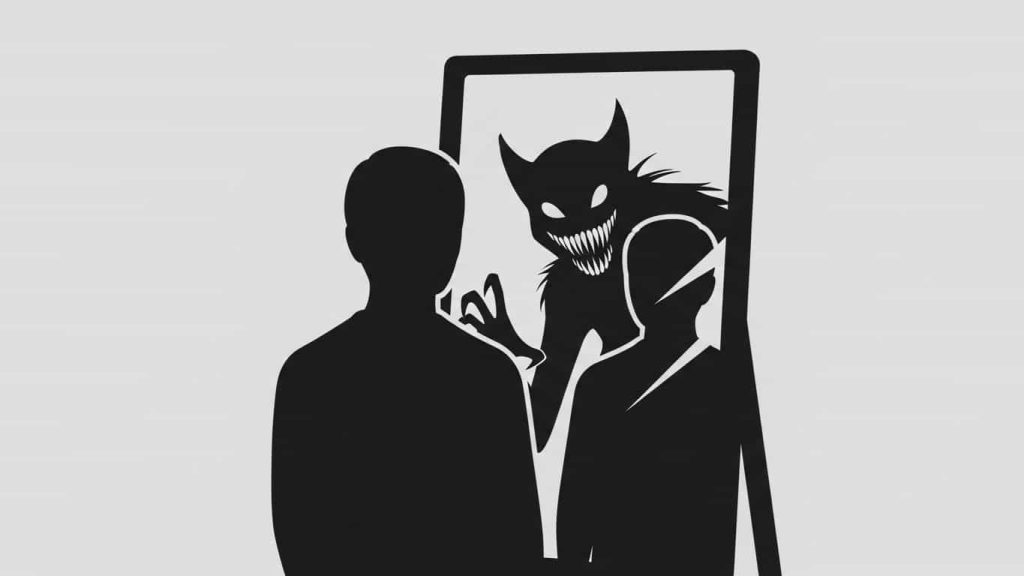
Mirrors can also serve as truth-tellers in a world built on lies. They can reveal the true form of a disguised entity or expose a supernatural threat that is otherwise invisible. The reflection doesn’t lie, even when everything else does. This makes the mirror a tool for revelation, forcing characters and the audience to confront a horrifying reality.
A classic example of this is the vampire’s inability to cast a reflection. In folklore and in films like Francis Ford Coppola’s Dracula, a vampire’s lack of a reflection is proof of their soulless, undead nature. The mirror exposes them for what they are, cutting through any charming or human facade they present. It is an arbiter of truth in a world where evil can hide in plain sight.
The Fragmentation of Identity
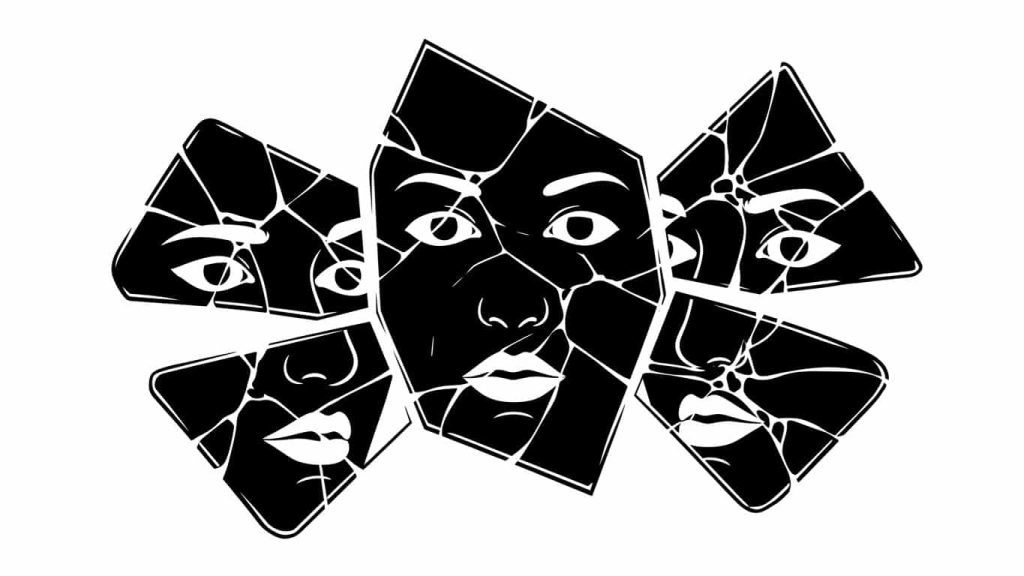
Horror stories often prey on our fear of losing control, particularly over our own minds and identities. Mirrors are a powerful symbol for this loss of self. A reflection that is distorted, fractured, or acts independently represents a psyche that is breaking apart.
The Doppelgänger and the Corrupted Self
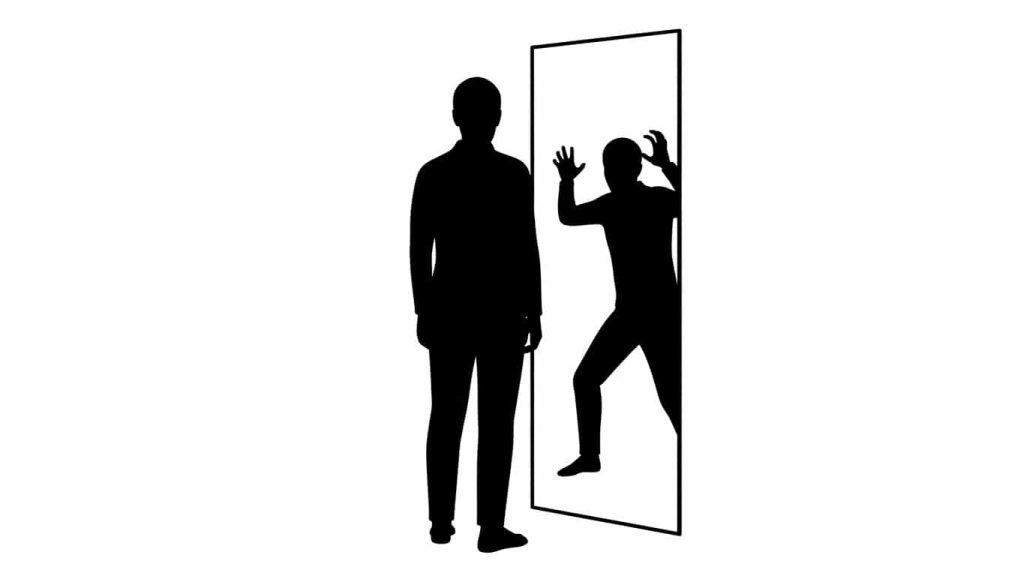
The concept of the doppelgänger, or an evil twin, is a terrifying manifestation of identity loss, and mirrors are the natural stage for this theme. When a reflection begins to act on its own, it signifies a split in the self. It suggests that a darker, more malevolent version of the character is fighting for control. This taps into the primal fear of being replaced or that our identity is not entirely our own.
Jordan Peele’s Us masterfully explores this concept with “The Tethered,” doppelgängers who live a shadow existence underground. While not always depicted in mirrors, their relationship to their counterparts is that of a dark reflection. The final confrontation between Adelaide and her double, Red, in a hall of mirrors is a literal and symbolic climax. It’s a battle for control over a single identity, revealing a shocking truth about who the “real” person is.
Reflections of Madness
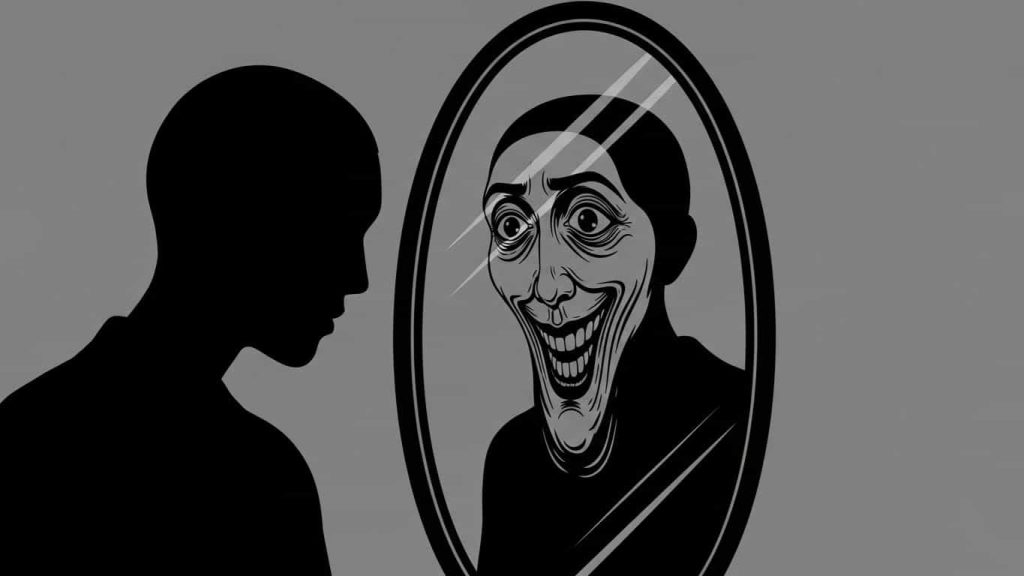
A character’s descent into madness is a common trope in psychological horror, and mirrors are often used to chart this journey. An obsessive focus on one’s reflection can signify a disconnect from reality and a turn inward toward delusion and paranoia. The mirror becomes a portal not to another world, but into a fractured mind.
In the film Queen of Spades: The Dark Rite, the mirror is a conduit for a malevolent spirit, but it also reflects the deteriorating mental state of the teenagers who summon her. Their reflections become distorted and menacing, mirroring their growing fear and paranoia. What they see is as much a product of their own terror as it is a supernatural occurrence, blurring the line between an external threat and internal collapse.
The Mirror as a Test of Character
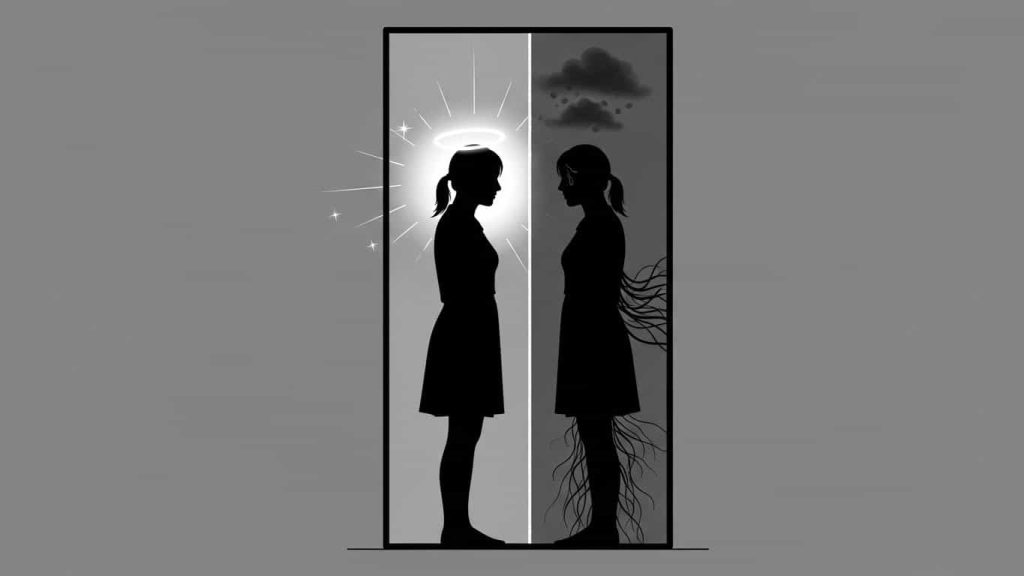
In some horror narratives, a mirror serves as a crucible, forcing a character to confront a difficult truth about themselves or their situation. What they see—and how they react to it—becomes a defining moment. This symbolic test often determines their fate.
Facing Guilt and Past Traumas
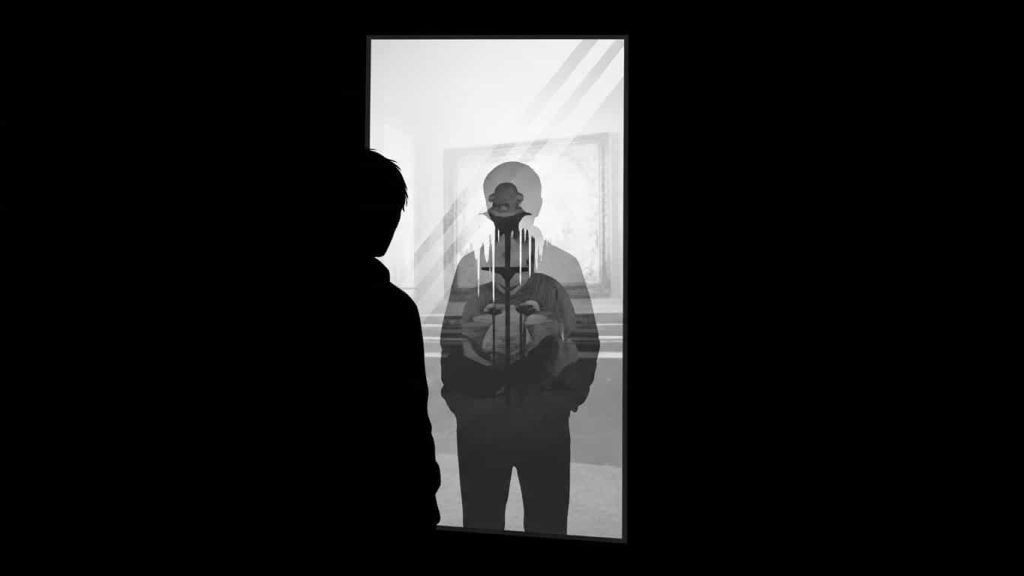
Mirrors can become screens upon which a character’s past sins or traumas are replayed. A reflection might show them a memory they have suppressed or a victim they have wronged. In this context, the mirror is a symbol of conscience, refusing to let the character escape their past.
In Mike Flanagan’s Oculus, the Lasser Glass forces its victims to relive and misinterpret past events, preying on their trauma. The mirror reflects a version of reality steeped in guilt and pain, turning siblings against each other by showing them twisted versions of their shared history. To survive, they must confront the mirror’s lies and the real truth of their past, a test they ultimately fail.
The Choice Between Two Selves
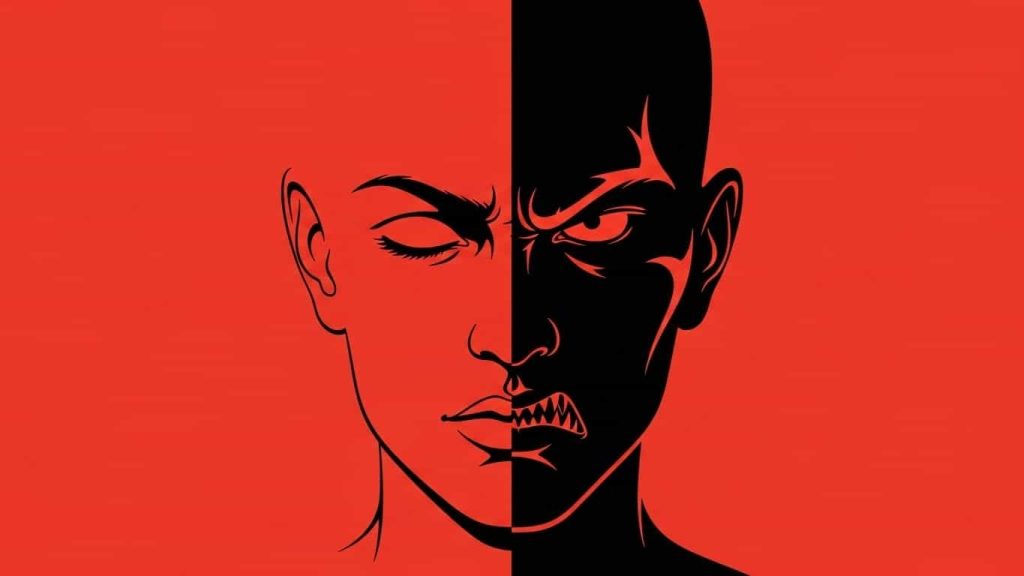
When a mirror presents a character with a “good” and “evil” version of themselves, it often symbolizes a critical choice. This is seen in stories where a character must either accept or reject their darker potential. The reflection becomes a visual representation of a moral crossroads.
This theme is prevalent in stories based on Robert Louis Stevenson’s Strange Case of Dr. Jekyll and Mr. Hyde. Dr. Jekyll’s transformations often occur in front of a mirror, forcing him to witness the monster he is becoming. The mirror reflects his terrible choice, showing him the literal face of his moral corruption. He is forced to confront the truth that Mr. Hyde is not an invader, but a part of himself he chose to unleash.
A Reflection of Horror’s Deepest Themes

The symbolism of mirrors in horror goes far beyond a simple scare tactic. They are complex narrative devices that reflect the genre’s most profound themes. By representing the duality of identity and the often-horrifying nature of truth, mirrors force characters—and the audience—to look closer.
They reveal the monsters that hide within us, challenge our sense of self, and expose the lies we tell ourselves. In horror, a reflection is never just an image. It is a judgment, a revelation, and a terrifying glimpse into the fragile boundary between who we think we are and the darkness that waits just beneath the surface.