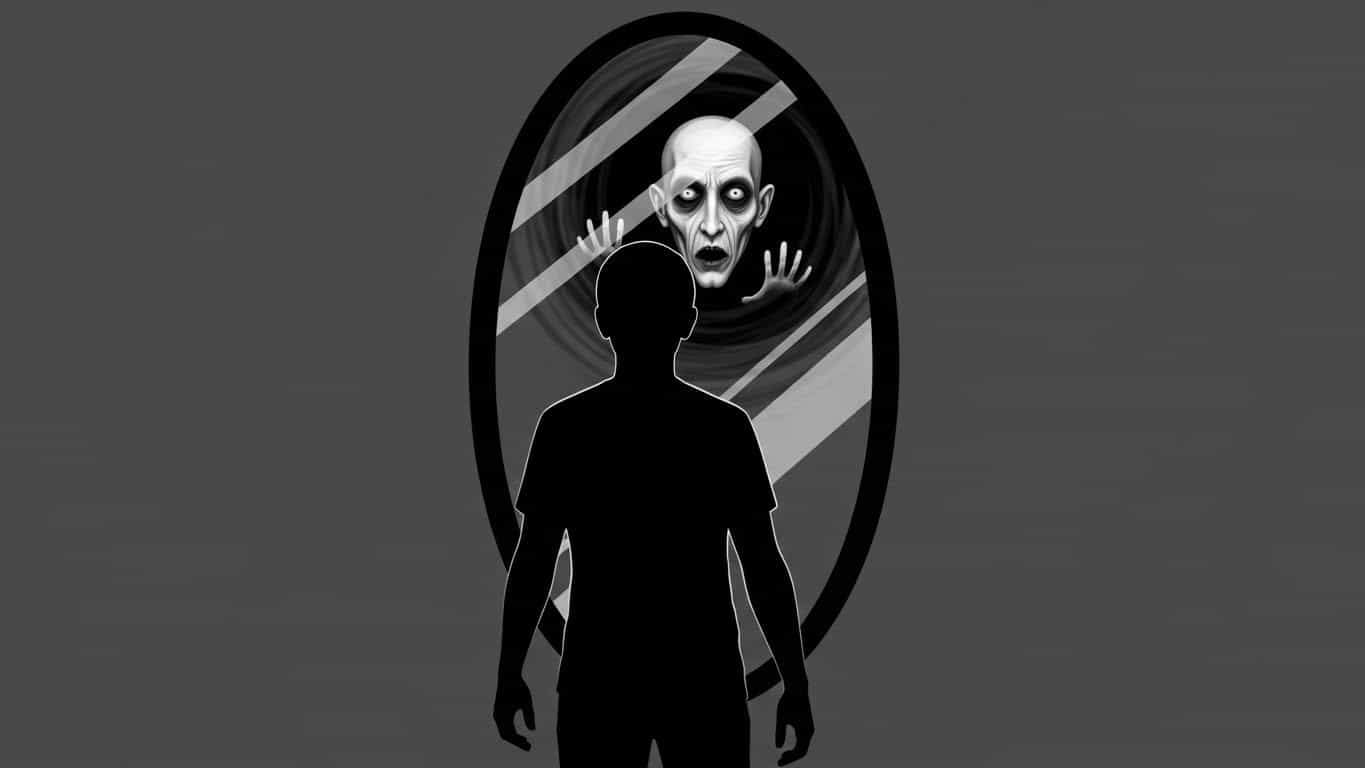
A mirror is a simple object, a smooth surface designed to show us our own reflection. Yet, for something so common, it holds a strange power over the human psyche. Staring into a mirror in a dimly lit room can evoke a profound sense of unease. A fleeting glimpse of movement in our peripheral vision can make our hearts race. Why do these reflective surfaces, found in every home, have the capacity to unnerve us so deeply?
The answer lies not in the mirror itself, but in the complex psychological processes it triggers within our minds. From the way our brains perceive identity to the ancient cultural stories we’ve inherited, mirrors tap into some of our most primal anxieties. This article will explore the psychology of mirrors, delving into the reasons they can be so creepy and the symbolism they carry across cultures.
The Brain’s Struggle with Reflections
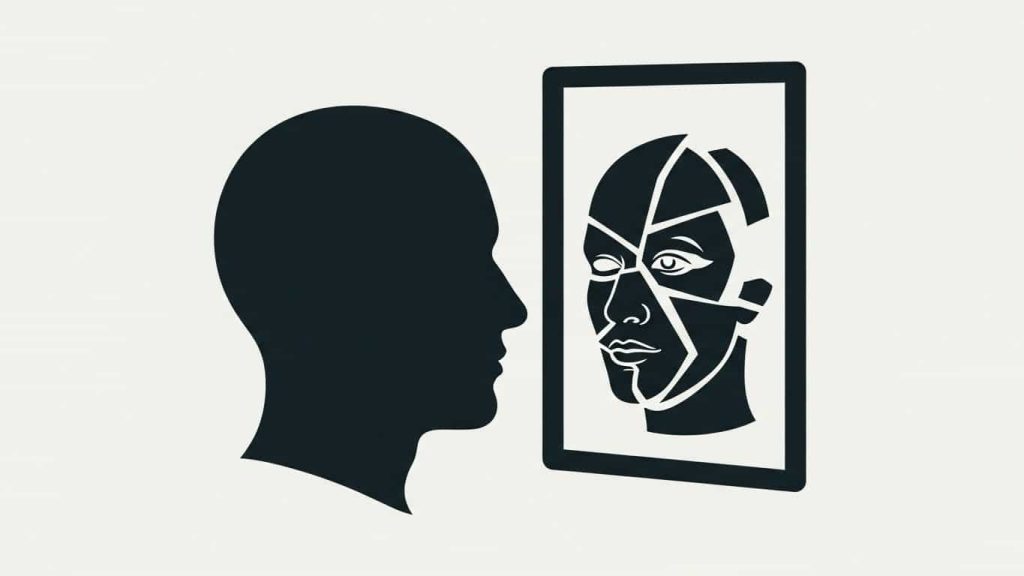
Much of our discomfort with mirrors stems from how our brain processes the information they present. What seems like a simple reflection is a complex puzzle for our minds, one that can easily be disrupted to create a feeling of dread.
The Uncanny Valley of the Self
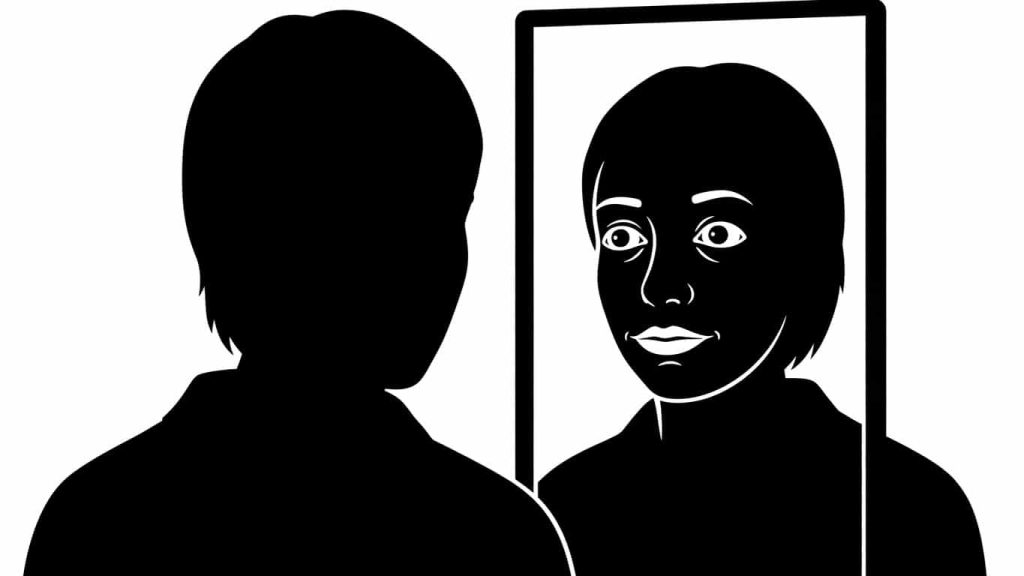
The concept of the “uncanny valley” typically describes our aversion to robots or animations that look almost, but not exactly, human. However, this same principle can apply to our own reflections. A mirror shows a version of you that is perfectly synchronized but fundamentally “other.” It’s a silent, two-dimensional twin that exists in a reversed world.
Your brain recognizes the face as your own, but it’s a reversed image you never see otherwise. This slight discrepancy can be unsettling. When we stare at our reflection for an extended period, a phenomenon known as the Troxler effect can occur. Our neurons, adapting to the unchanging stimulus, begin to fade out parts of the image, causing our face to appear distorted, warped, or even monstrous. Your own familiar features can suddenly seem alien, creating a powerful sense of unease.
Self-Perception and Awareness
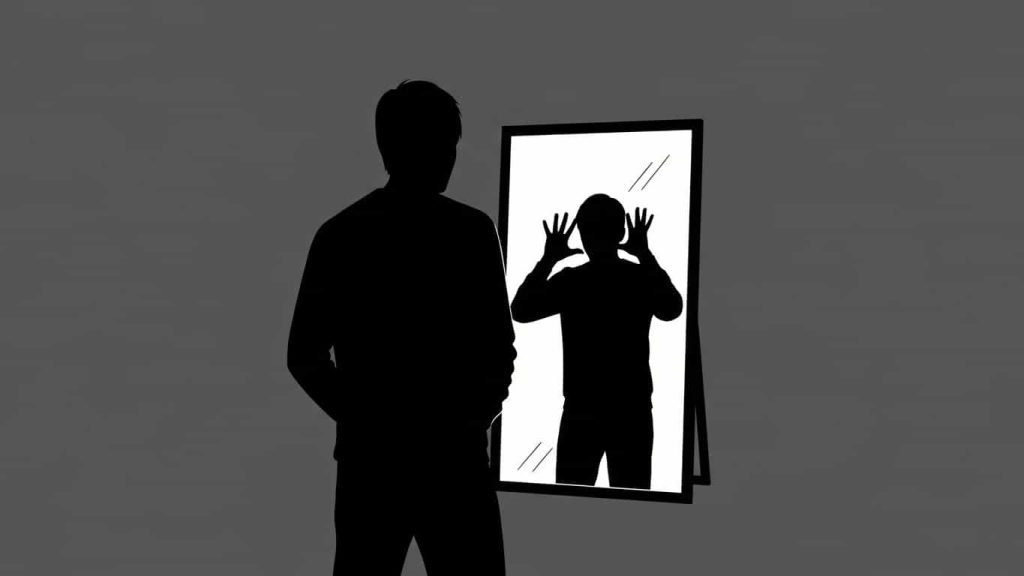
Mirrors force a moment of sudden self-awareness. In most of our daily lives, we operate without being consciously aware of how we look. Catching an unexpected glimpse of ourselves in a mirror or shop window can be jarring. It pulls us out of our internal thoughts and forces us to see ourselves as an object, as others might see us.
This can trigger a wave of self-consciousness and scrutiny. We might notice a flaw we hadn’t seen before or feel a disconnect between our internal sense of self and our external appearance. This heightened self-evaluation can be uncomfortable, making the mirror a source of anxiety rather than a neutral tool.
Cultural Superstitions and Mirror Symbolism
Beyond our individual psychology, our fear of mirrors is deeply rooted in centuries of folklore, myth, and superstition from around the world. These stories have been passed down through generations, embedding the idea of the mirror as a powerful and often dangerous object into our collective consciousness.
Windows to the Soul and Other Worlds
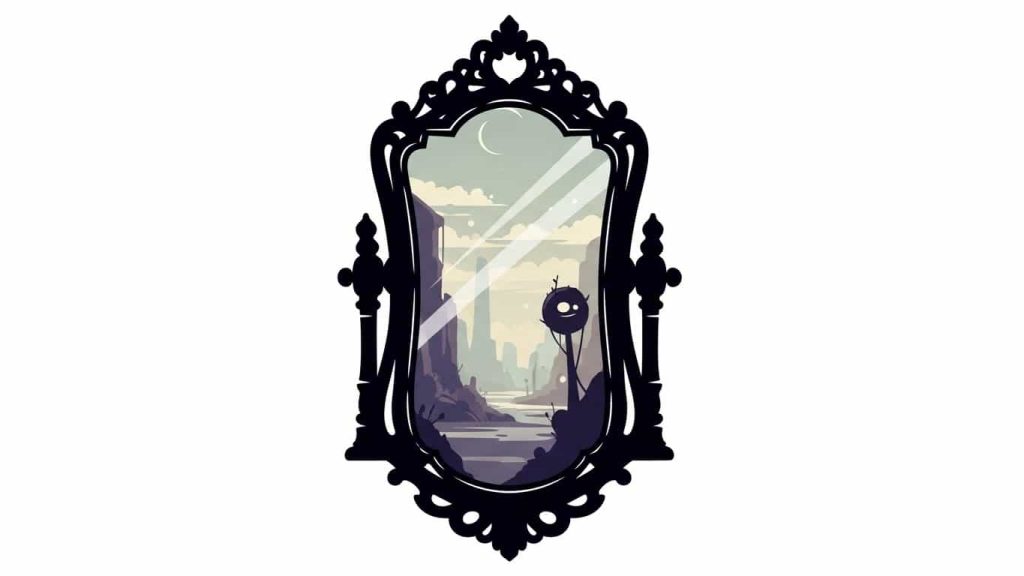
One of the most persistent beliefs about mirrors is that they are more than just reflective glass; they are portals. Many cultures have viewed mirrors as windows to the soul, capable of revealing a person’s true nature. This idea implies that a mirror can see beyond the physical and into the spiritual, a concept that is both fascinating and frightening.
This belief extends to the idea of mirrors as gateways to other dimensions or the spirit world. Folklore is filled with tales of entities passing through mirrors to enter our world or, conversely, of people being pulled into the mirror. This symbolism turns an everyday object into a potential threshold for the unknown, making us wary of what might be looking back from the other side.
The Doppelgänger and Trapped Spirits
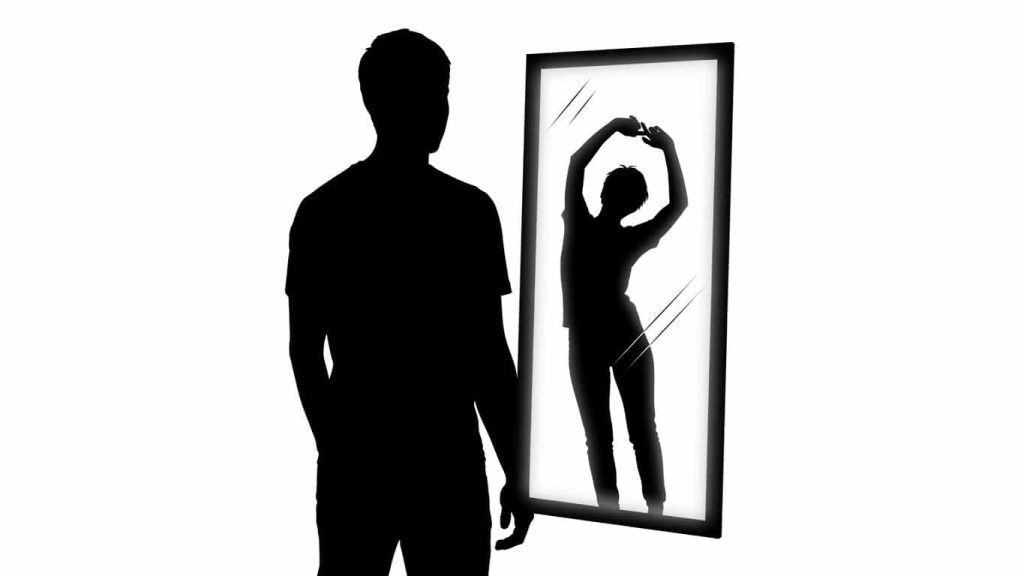
The concept of the doppelgänger, or an evil twin, is a universal fear, and mirrors provide the most direct visual representation of this idea. A reflection that acts on its own is a terrifying violation of the natural order. It suggests a loss of identity and control, tapping into our fear of being replaced or that a darker version of ourselves exists.
Furthermore, many traditions involve covering mirrors in a house where someone has died. This practice stems from the belief that a mirror can trap the soul of the recently departed, preventing it from moving on. This association with death and restless spirits infuses mirrors with a layer of macabre energy. The superstition that breaking a mirror brings seven years of bad luck also adds to this sense of cautious reverence, treating it as an object that must be handled with care.
Mirrors and the Fear of the Unknown
Ultimately, the power of a mirror lies in its ability to play with our perception of reality. It shows us what is there, but it can also suggest what isn’t.
In a quiet, dark room, a mirror doesn’t just reflect the space; it doubles it. It creates an illusion of depth and another room that we can see but never enter. Our brains are hardwired to detect threats, and this silent, watchful space can feel like a blind spot. We can’t be sure that the reflection will always mimic our reality perfectly. This sliver of doubt is all the human imagination needs to populate the reflected world with unseen threats.
The silence of a reflection is also unsettling. It is a perfect copy of us, but it is lifeless and soundless. This lack of vitality is inherently creepy, creating a stark contrast between our living, breathing selves and the cold, silent duplicate in the glass.
A Reflection of Our Deepest Anxieties

Mirrors unnerve us because they operate at the intersection of perception, psychology, and culture. They challenge our sense of self, exploit the quirks of our brain’s processing, and reflect back centuries of superstitious beliefs. They represent the known and the unknown, the self and the “other,” reality and illusion.
So, the next time you find yourself feeling a little creeped out by your own reflection, know that you are not alone. You are experiencing a complex psychological response that is woven into the very fabric of human consciousness. The mirror is simply showing you a reflection of the anxieties that were already there.