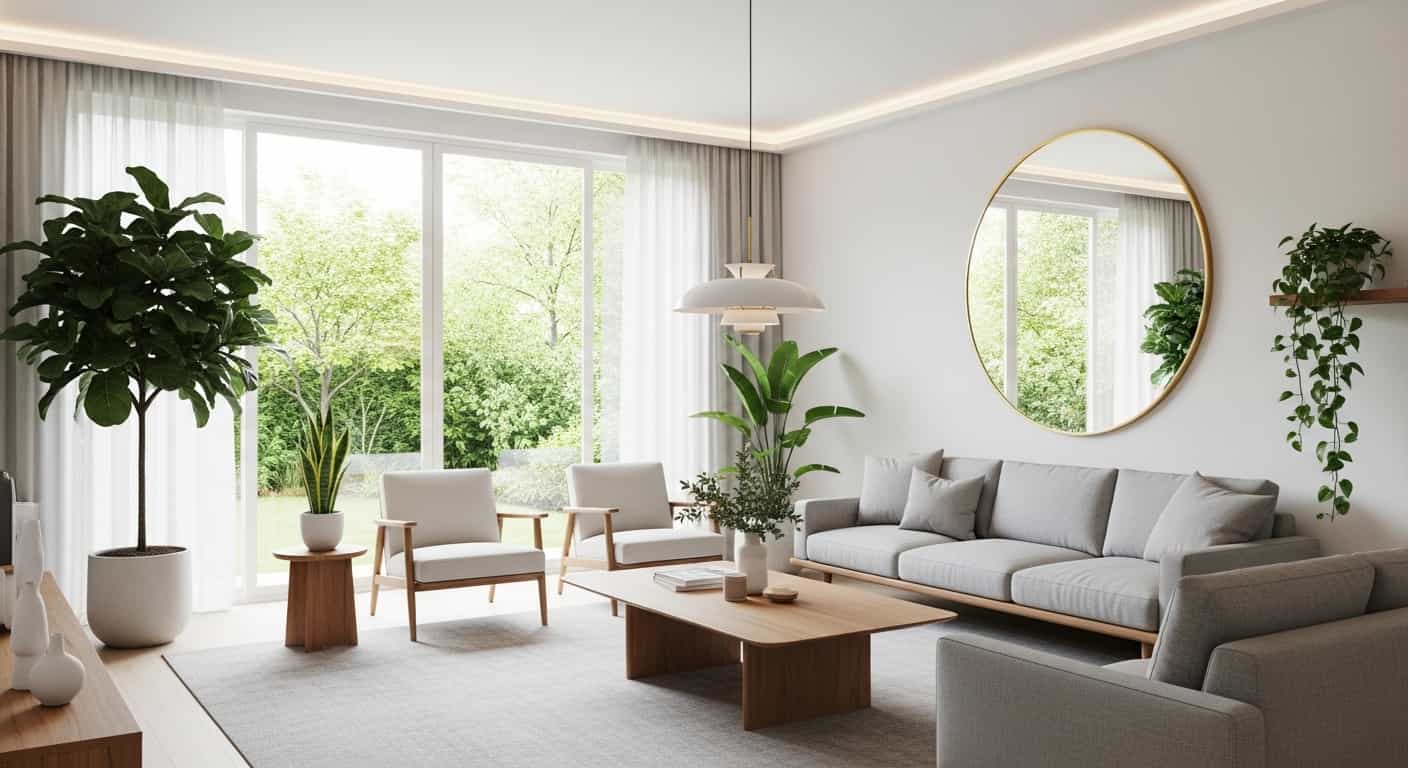
Mirrors are more than just practical objects for checking your appearance. In the ancient practice of Feng Shui, they are dynamic tools capable of shifting, expanding, and transforming the energy within your home. When positioned correctly, a mirror can invite abundance, amplify light, and double the positive “Chi” (life force) in your space.
However, random placement can have the opposite effect. A mirror in the wrong spot might bounce positive energy right out the door or magnify clutter, creating a sense of chaos.
This comprehensive guide dives deep into the art of feng shui mirror placement. We will explore how mirrors and feng shui work together to harmonize your environment, ensuring your home supports your well-being rather than draining it.
The Power of Mirrors in Feng Shui
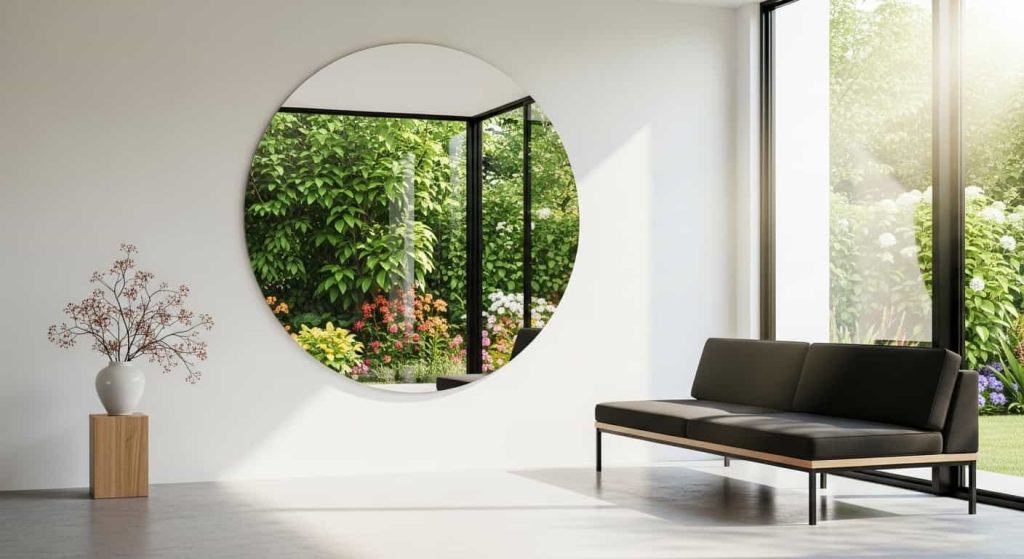
At its heart, Feng Shui is about arranging your environment to harmonize with the natural world. Feng shui and mirrors have a special relationship because mirrors are associated with the Water element. Water represents wisdom, fluidity, and introspection. Just as a still lake reflects the sky, a feng shui mirror reflects the reality of your home.
This reflective quality gives mirrors the unique ability to double whatever they face. If a mirror faces a beautiful view of a garden, it brings that vibrant, natural energy indoors. If it faces a pile of laundry, it symbolically doubles your workload.
Understanding mirror feng shui means recognizing that mirrors don’t just sit passively on a wall; they are active participants in your home’s energy flow. They can direct Chi, open up cramped spaces, and brighten dark corners that might otherwise feel stagnant.
Fundamental Principles of Mirror Placement
To harness the benefits of feng shui mirrors, you need to be intentional. Randomly hanging mirrors based solely on aesthetics can disrupt the energetic balance of a room.
Here are the core principles to guide your mirror placement feng shui:
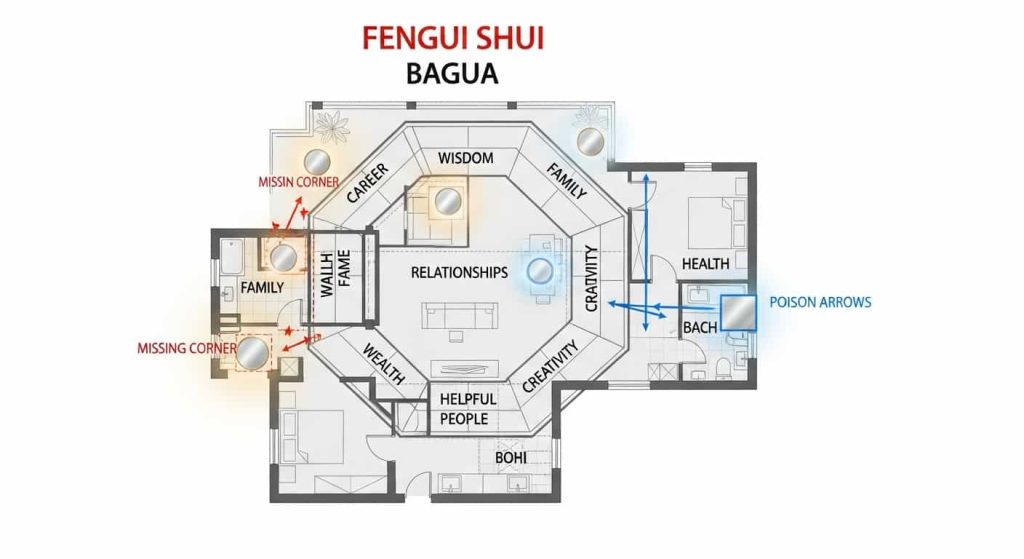
- Correct “Missing” Areas: If your home’s floor plan has an irregular shape, a mirror can energetically “fill in” a missing corner, restoring balance to the Bagua map.
- Amplify the Good: Always place mirrors where they reflect something beautiful or positive. This could be a healthy plant, a piece of art, or natural light.
- Expand the Space: Use mirrors in narrow areas to create the illusion of depth. This allows Chi to circulate more freely rather than getting stuck.
The Commanding Position
One powerful use of a mirror is to establish the “commanding position.” This is crucial in rooms where you spend a lot of time, like an office or bedroom. If your desk or bed is positioned so your back is to the door, you may feel subconsciously vulnerable.
A mirror to see who’s coming in feng shui allows you to see the entrance without moving your furniture. This simple adjustment restores a sense of security and control, allowing you to focus on work or rest without underlying anxiety.
Bedroom Mirrors: Analyzing the Debate
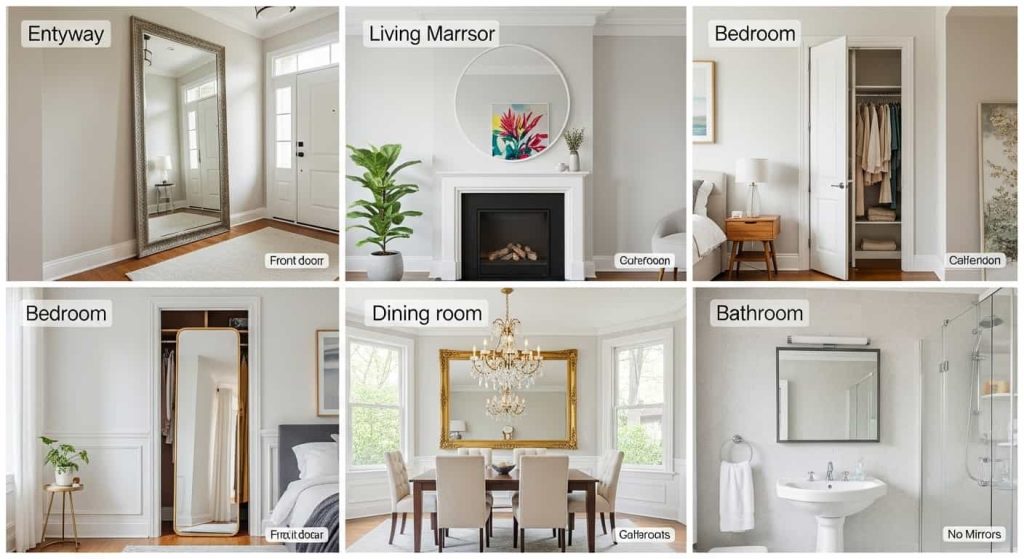
The bedroom is a sanctuary for rest and romance, making feng shui bedroom mirror placement a hot topic. There is often confusion about feng shui mirrors in bedroom spaces. Is it safe? Does it ruin your sleep?
The short answer is that while mirrors are allowed, their placement requires care.
The “Mirror Facing Bed” Dilemma
A common question is: is it bad to have a mirror facing your bed? Generally, Feng Shui experts advise against a feng shui mirror facing bed.
When you sleep, your soul and energy field are in a vulnerable, reparative state. A mirror facing bed acts as a stimulant. It reflects movement and bounces energy around the room, which acts like “caffeine” for a space. This active energy can disrupt deep sleep and lead to restlessness.
Furthermore, a mirror in front of bed feng shui is sometimes said to invite third parties into a relationship, symbolically crowding the couple.
Better Bedroom Solutions
If you must have a mirror in the bedroom feng shui, consider these alternatives:
- Inside a Closet: Place a full-length mirror on the inside of a closet door. It’s there when you need it but hidden when you sleep.
- Beside the Bed: Position the mirror so it does not directly reflect your body while you are lying down.
- Cover It Up: If you have a large, immovable mirrored wardrobe, consider covering it with a soft drape or screen at night.
When deciding on where to place mirror in bedroom, prioritize peace over utility. The goal is to create a serene environment where energy settles rather than accelerates.
The Entryway and Living Areas
Your entryway is the “mouth of Chi,” where energy enters your home. Feng shui mirror placement here is critical for setting the tone for the entire house.
The Front Door Warning
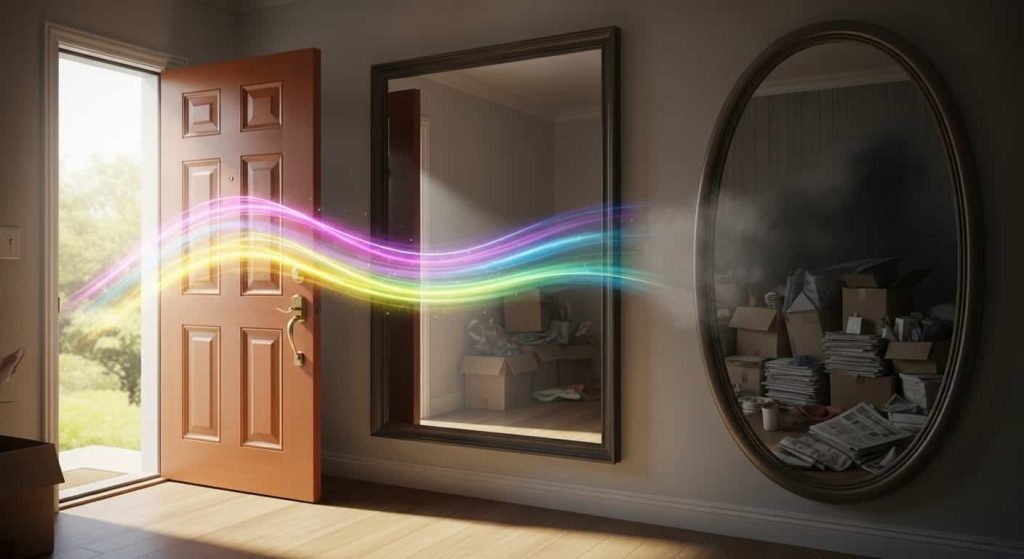
A major rule in mirror position feng shui involves the main entrance. You want to avoid a feng shui mirror facing door.
When a mirror is placed directly opposite the front door, any good energy (Chi) entering your home hits the mirror and bounces right back out. This prevents fresh energy from circulating through the rest of your house. Instead, place the mirror on a side wall. This welcomes Chi in and gently directs it further into the home.
However, a mirror in front of door—specifically on the outside of a bathroom door—can be a “cure.” If a bathroom door faces the front door or a kitchen (both considered negative alignments), a small mirror on the outside of the bathroom door can energetically make the bathroom “disappear.”
Living Room Vitality
The living room is a gathering space. A mirror in living room can work wonders here. When placed correctly, a mirror in the living room amplifies the festive, social energy of gatherings. It makes the room feel larger and more inviting.
Ensure the mirror reflects something pleasant, like a view of nature or a healthy plant. Avoid placing it where it reflects clutter or a sharp corner of a wall, known as a “poison arrow.”
Dining Room Abundance
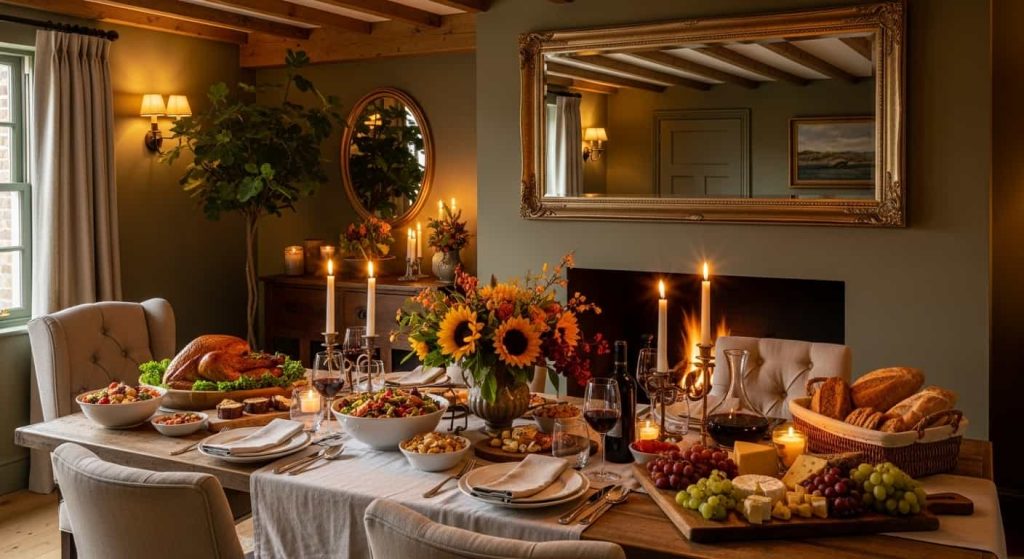
The dining room is one of the most auspicious places for a mirror. In Feng Shui, the dining table represents the family’s wealth and ability to feed itself. A mirror reflecting the dining table visually doubles the food and the people, symbolizing doubled abundance and prosperity.
Hallways and “Dead” Spaces
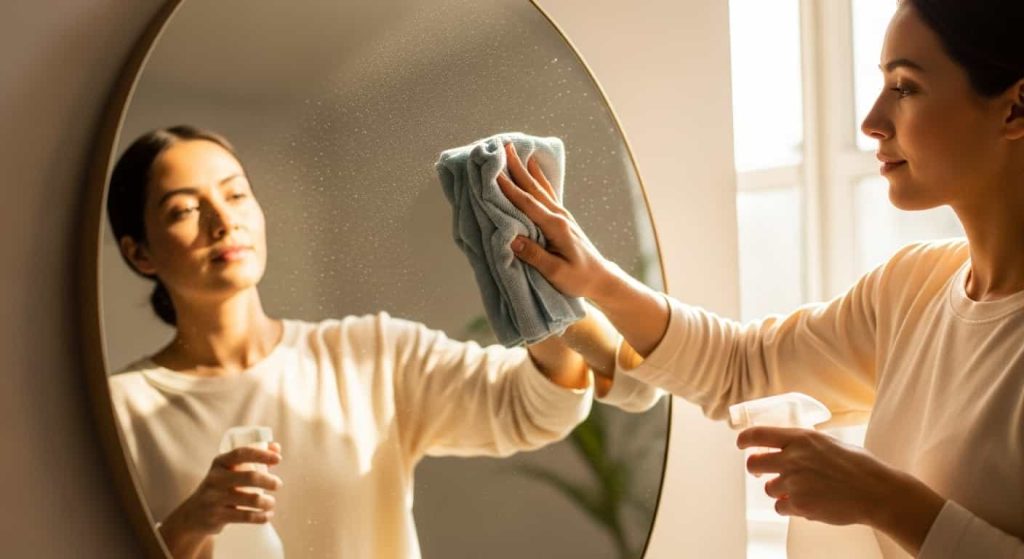
Long, narrow hallways can feel like energy tunnels where Chi rushes through too quickly or stagnates.
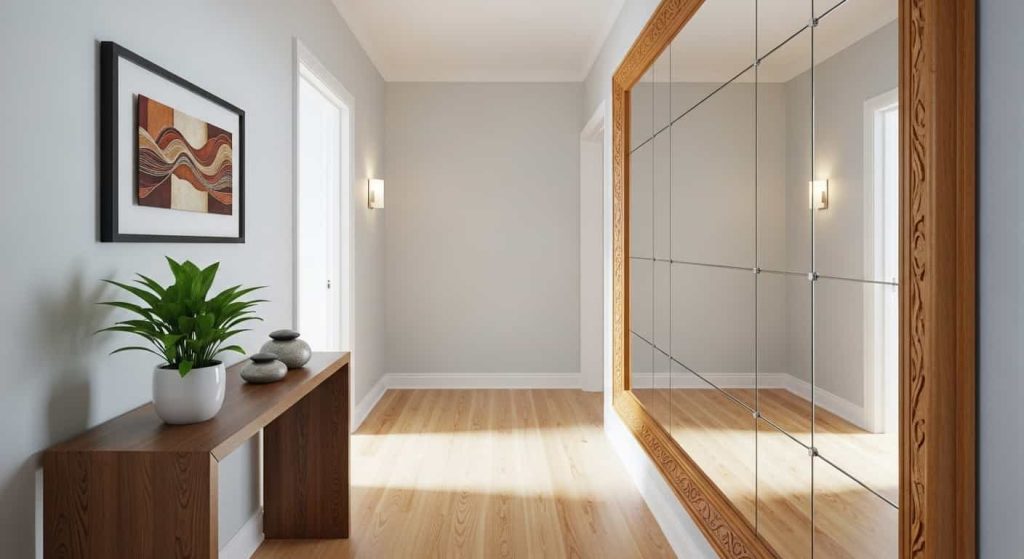
Strategic mirror location feng shui can help. Placing mirrors on the side walls of a hallway in a staggered pattern slows down the energy, allowing it to meander pleasantly.
However, be cautious with a mirror at end of hallway. A mirror placed right at the very end of a long corridor can symbolize a “dead end,” frustrating the energy flow. It is usually better to place art or a grounding object at the end of a hallway to stabilize the Chi.
Common Mistakes to Avoid
Even with good intentions, it is easy to make mistakes with feng shui where to place mirrors. Here are a few pitfalls to watch out for:
- Reflecting the Toilet: Never place a mirror where it reflects the toilet. The toilet is a drain where energy leaves the home. Reflecting it magnifies this draining effect.
- Reflecting Flames: While a dining room mirror is good, be careful if a mirror reflects the kitchen stove. The stove represents fire. Doubling the fire element can lead to burnout or anxiety in the household.
- Broken or Distorted Mirrors: A cracked or antique mirror with “ghosting” distorts the image. In Feng Shui, this distorts your clarity and self-image. Always use clean, high-quality mirrors.
- Fragmented Mirrors: Avoid mosaic mirrors that cut your reflection into little pieces. This symbolizes a fragmented self and can be disorienting.
Choosing the Right Mirror
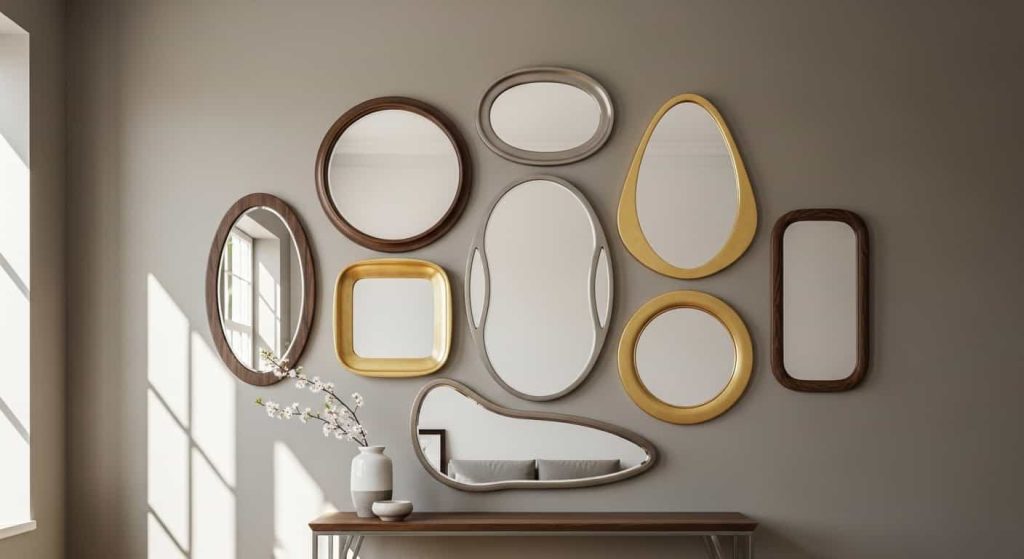
The shape and frame of your mirror also contribute to the mirror placement in bedroom or living areas.
- Round/Oval: These shapes represent metal energy and continuity. They are excellent for smoothing out energy and promoting harmony.
- Square/Rectangle: These shapes represent earth and wood energy. They offer stability and balance.
- The Frame: Gold or metal frames activate the Metal element (precision, joy). Wood frames activate the Wood element (growth, vitality).
Conclusion: Reflection and Intention
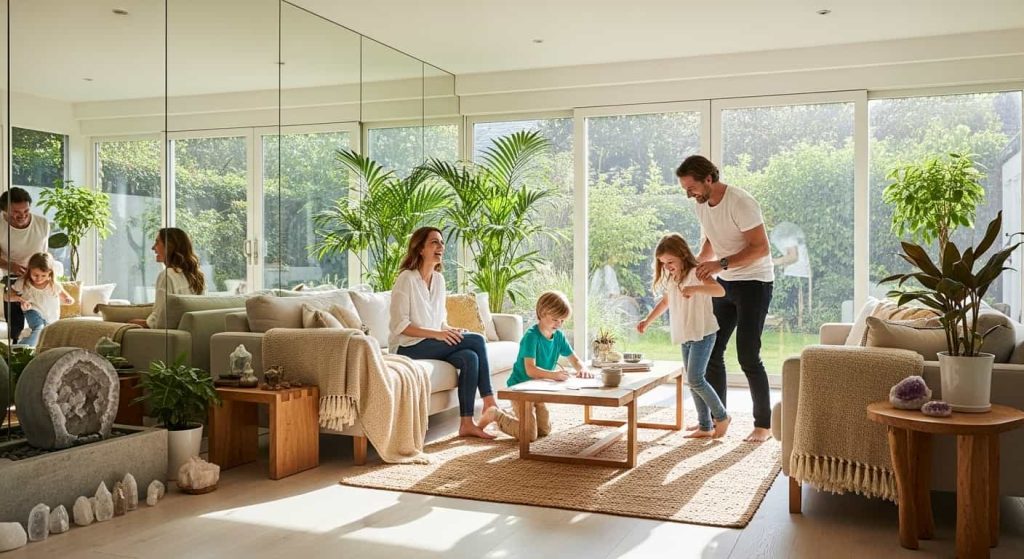
Ultimately, feng shui mirrors are powerful because they amplify your intention. By being mindful of what your mirrors reflect, you take control of the energy in your home.
Take a walk through your house today. Look at every mirror. Ask yourself: What is this doubling? Is it doubling clutter and stress, or light and abundance?
Simple adjustments can lead to profound shifts. Whether it is moving a mirror facing door feng shui creates issues with, or covering a mirror in front of bed feng shui suggests is harmful, these small changes help align your home with your goals for peace and prosperity.
Your home is a reflection of your life. Make sure your mirrors are telling the story you want to live.