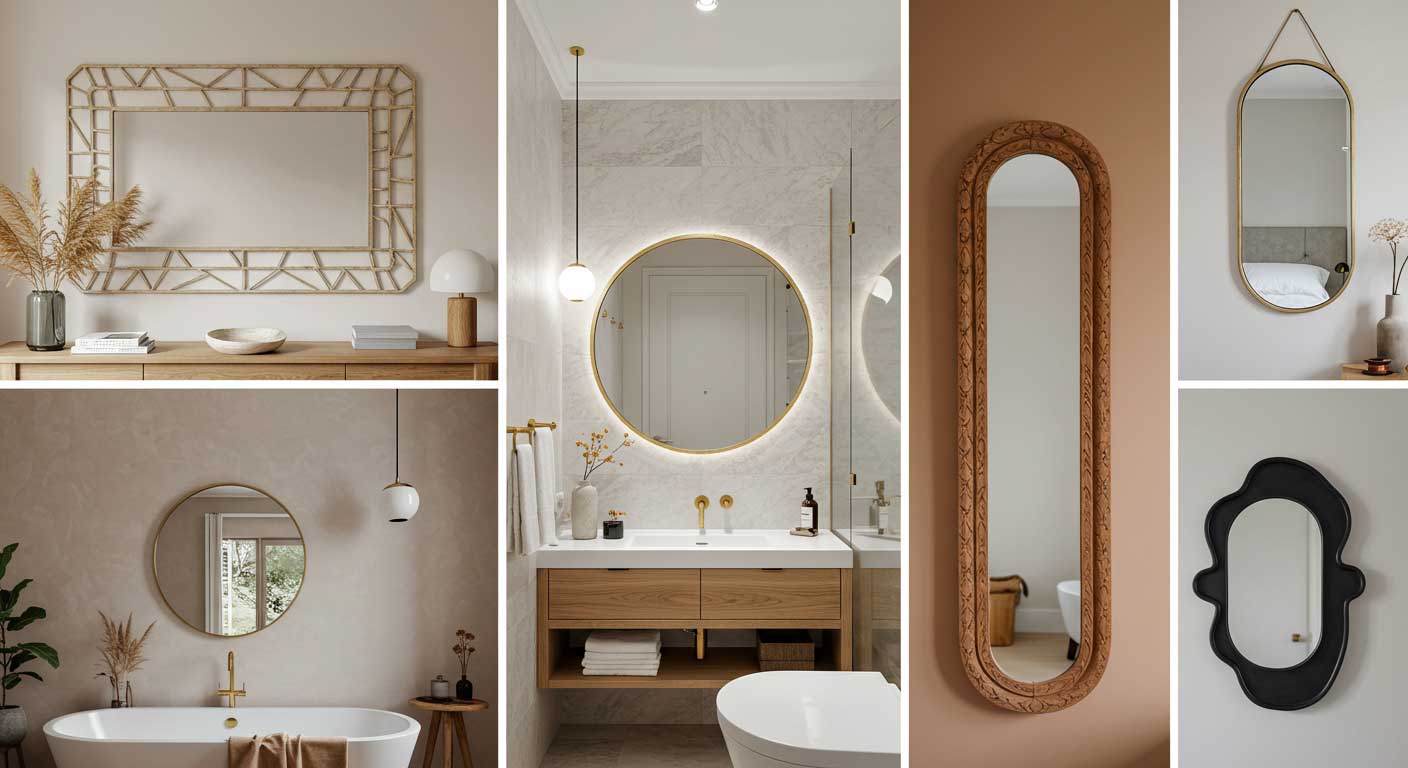
Wall mirrors are more than functional tools; they are versatile design elements used to amplify natural light, visually expand small spaces, and create artistic focal points. This guide covers everything from size proportions to strategic placement for every room in your home.
Determine Purpose: Functional vs. Decorative
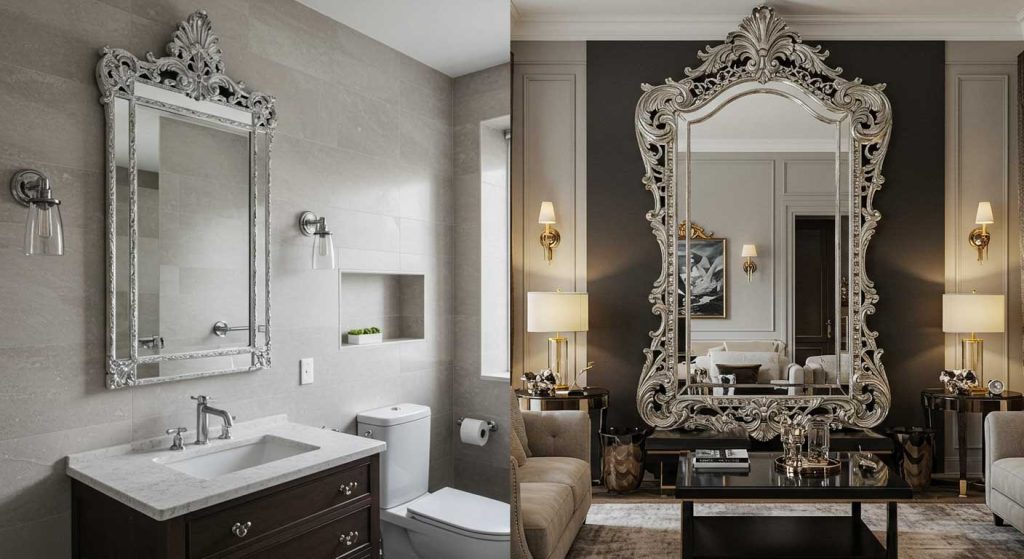
Before purchasing, identify the primary role of the mirror:
- Functional Mirrors: High-clarity glass and simple frames, ideal for bathrooms, dressing areas, and entryways.
- Decorative Mirrors: Ornate frames, tinted glass, or unique shapes designed to serve as wall art in living rooms or hallways.
Sizing and Proportions
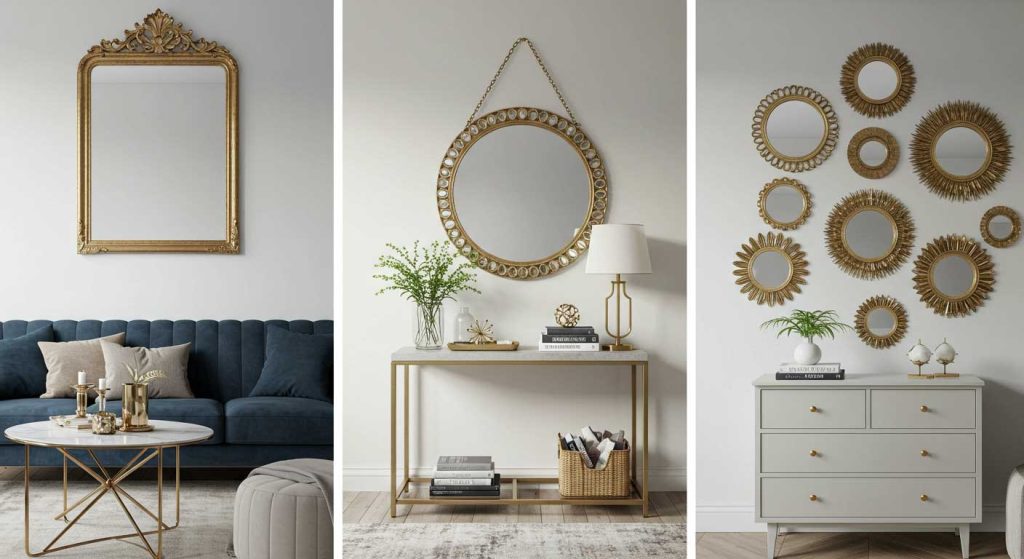
A common design mistake is choosing a mirror that is too small for the wall. Follow these scale guidelines:
- Large Statement Mirrors: Ideal for making a small room feel double its size.
- Medium and Small Mirrors: Best used in gallery walls or positioned above specific furniture pieces.
- The Furniture Rule: A mirror should typically be about two-thirds to three-quarters the width of the furniture below it.
Matching Mirror Styles to Interior Decor
| Room Style | Recommended Mirror Type |
| Modern/Minimalist | Frameless, geometric, or thin black metal frames. |
| Traditional/Rustic | Heavy wood frames, distressed finishes, or arched shapes. |
| Luxury/Glam | Sunburst designs, gold-leafed frames, or beveled edges. |
Strategic Placement for Light and Depth
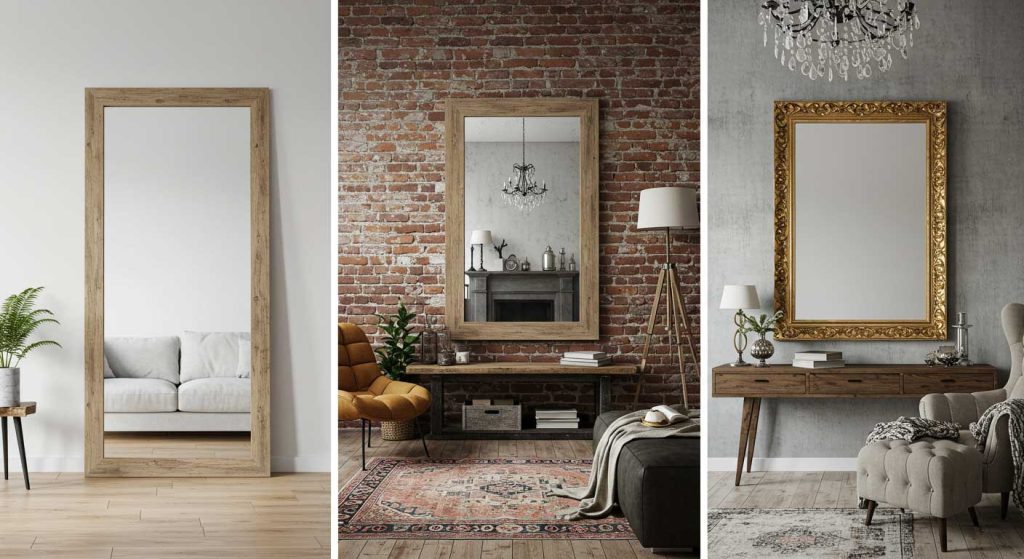
To maximize the “expansion effect,” follow these placement rules:
- Opposite Windows: Reflects the outdoors and bounces natural light into dark corners.
- Behind Light Sources: Place a mirror behind a lamp or chandelier to double the light output and create a warm glow.
- Avoid Reflecting Clutter: Ensure the mirror reflects an attractive view or a clean wall rather than storage areas or “dead space.”
Room-by-Room Selection Guide
Living Room
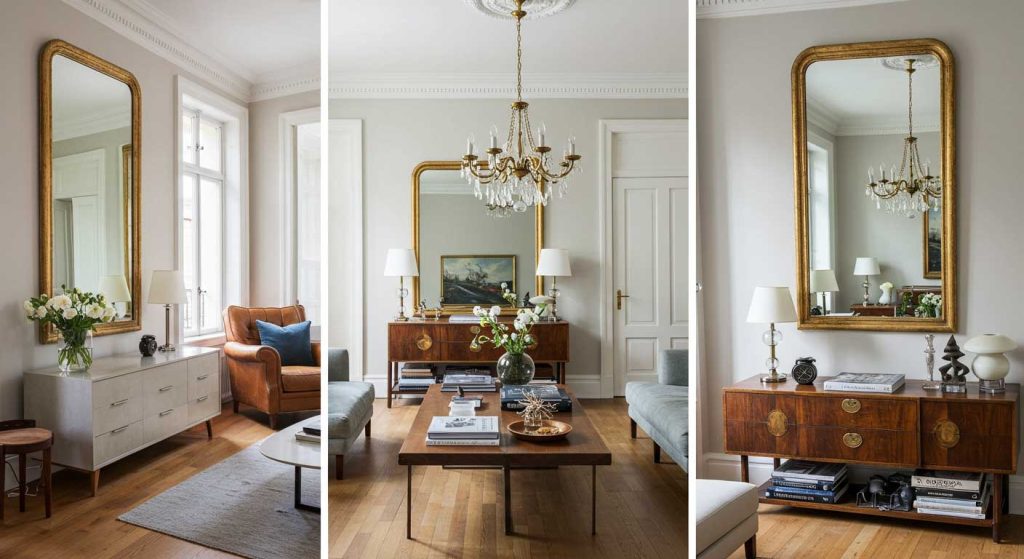
Position a large mirror above a fireplace mantel or sofa. This creates a central focal point and anchors the room’s symmetry.
Bedroom
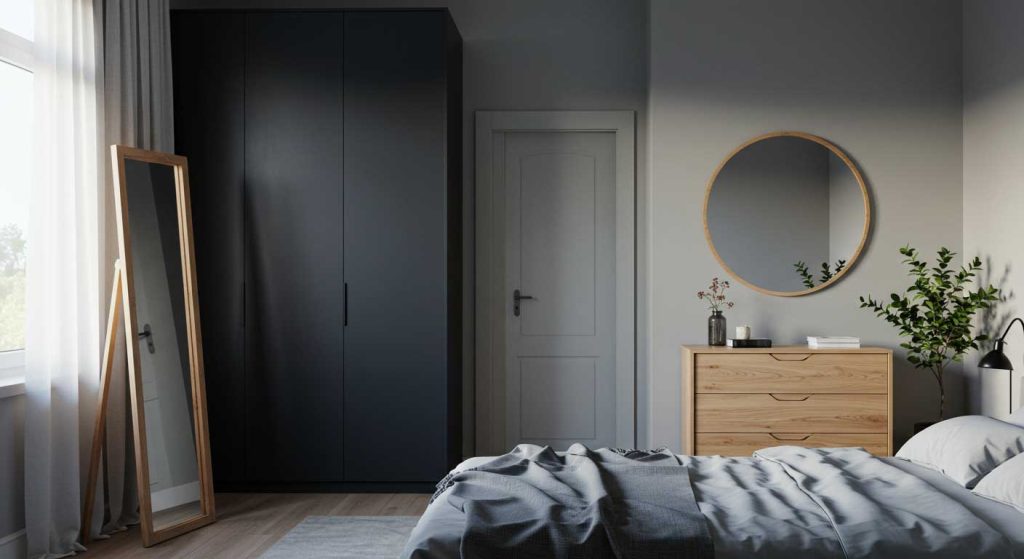
Prioritize full-length mirrors for dressing. To add a touch of luxury, place matching mirrors above nightstands to reflect bedside lighting and add depth to the headboard area.
Bathroom
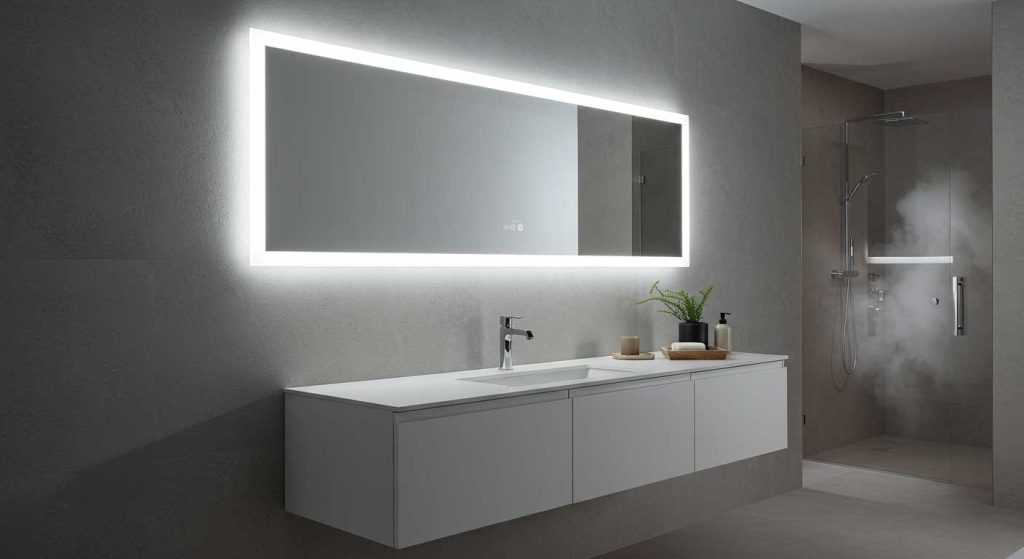
Opt for moisture-resistant backings. Modern trends include LED-backlit mirrors or anti-fog technology to maintain clarity in high-humidity environments.
Entryway
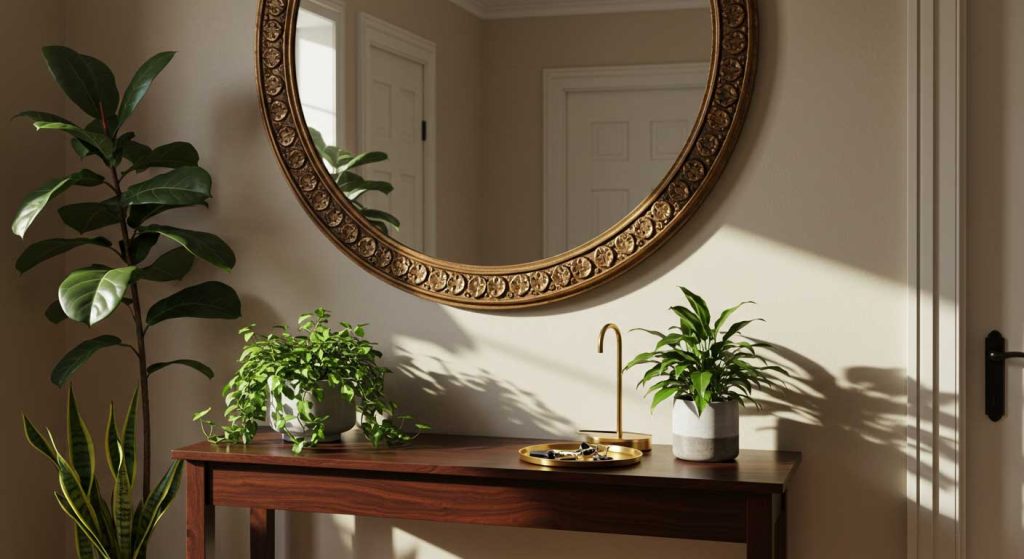
A round or oval mirror softens the transition into the home. It provides a convenient “check-point” for residents while making narrow hallways feel significantly wider.
Expert FAQ: Choosing Wall Mirrors
How high should you hang a wall mirror?
For optimal viewing, the center of the mirror should be at eye level, typically 57 to 65 inches from the floor. When hanging above furniture, maintain a 6 to 8-inch gap between the bottom of the frame and the top of the furniture piece.
What mirror shape is best for small rooms?
Round or oval mirrors are often best for small spaces. The lack of sharp corners creates a visual “flow” that tricks the eye into seeing more open space.
Do mirrors actually make a room look bigger?
Yes. By reflecting both light and the opposite side of the room, mirrors create an optical illusion of depth, effectively doubling the perceived square footage of a room.
Are frameless mirrors still in style?
Absolutely. Frameless mirrors offer a timeless, clean look that is essential for minimalist, contemporary, and ultra-modern interior designs.