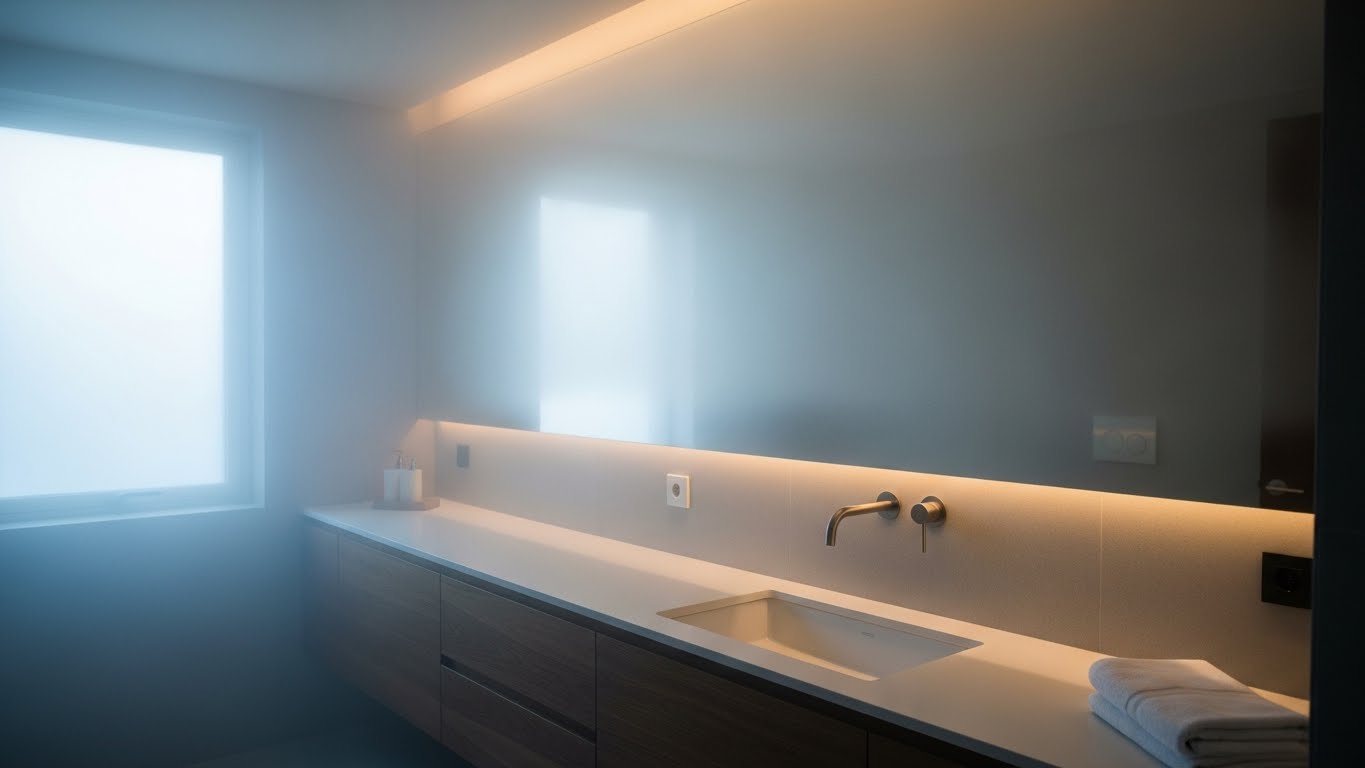
It’s a familiar scene: you step out of a nice, hot shower, ready to get on with your day, only to be greeted by a bathroom mirror completely clouded over. This foggy mirror forces you to either wait for it to clear or wipe it down, leaving streaks. While a minor annoyance, the phenomenon behind it is a perfect, everyday example of science in action.
This article will explain exactly why mirrors fog up. We’ll explore the science of condensation, the role of temperature and humidity, and how this process unfolds on your mirror’s surface. More importantly, we’ll provide practical tips and tricks to prevent mirror fog and keep your reflection clear.
The Science Behind Foggy Mirrors: Condensation
Advertisement


The culprit behind a foggy mirror is a simple scientific process called condensation. Condensation is the process by which water vapor in the air is changed into liquid water. This happens all around us, from the dew on the grass in the morning to the water droplets on the outside of a cold drink on a summer day. For your mirror to fog up, three key ingredients are needed: a cold surface, warm air, and humidity.
The Role of Temperature and Humidity
When you turn on a hot shower, you rapidly increase both the temperature and the humidity in your bathroom. The hot water evaporates, filling the air with a large amount of invisible water vapor. This creates a warm, humid environment.
Your bathroom mirror, however, is typically at room temperature, which is much cooler than the steamy air produced by the shower. Glass is a poor conductor of heat, so it doesn’t warm up as quickly as the air around it. This temperature difference between the warm, moist air and the cool, solid surface of the mirror is the critical factor that triggers condensation.
How Water Vapor Becomes Liquid
Air can only hold a certain amount of water vapor at a given temperature. This is known as the dew point—the temperature at which air becomes saturated with water vapor and must release it in liquid form.
As the warm, humid air from your shower comes into contact with the cool surface of the mirror, the air right next to the glass is rapidly cooled. This sudden drop in temperature brings the air below its dew point. Because the cooled air can no longer hold all the moisture it contains, the excess water vapor has to go somewhere. It changes from a gaseous state (vapor) back into a liquid state, forming thousands of tiny water droplets on the mirror’s surface.
These minuscule droplets scatter light in all directions, which is why the mirror appears opaque or “foggy.” You are not seeing through a mist; you are looking at a surface covered in a fine layer of liquid water that prevents a clear, specular reflection.
Why Some Surfaces Fog Up and Others Don’t
Advertisement


You might notice that the mirror fogs up, but the painted walls or the shower curtain do not, even though they are in the same room. This comes down to the properties of the surface itself.
- Smoothness: The extremely smooth, non-porous surface of glass provides an ideal platform for water droplets to form uniformly.
- Temperature: Materials like plastic or wood might warm up faster than glass, reducing the temperature difference needed for condensation to occur as readily. Porous surfaces like painted drywall can absorb some of the moisture, making condensation less visible.
The condensation on mirrors is simply the most obvious demonstration of a process happening throughout the room.
Practical Tips to Prevent Mirror Fog
While condensation is a natural process, there are several effective ways to combat a foggy mirror. These methods work by either reducing the humidity, warming the mirror’s surface, or changing the surface properties to prevent water droplets from forming.
1. Improve Ventilation
The most straightforward solution is to reduce the amount of humid air in the bathroom.
- Use the exhaust fan: Turn on your bathroom’s ventilation fan before you start the shower and leave it running for 15-20 minutes afterward. This will pull the warm, moist air out of the room.
- Open a window or door: If you don’t have a fan, cracking a window or leaving the door slightly ajar can help the humid air escape and mix with the drier, cooler air from the rest of the house.
2. Warm Up the Mirror
If you eliminate the temperature difference between the mirror and the air, condensation can’t occur.
- Heated Mirrors: The most high-tech solution is to install a heated mirror or a heating pad behind your existing mirror. These devices gently warm the glass, keeping its surface temperature above the dew point.
- Hair Dryer: A quick blast from a hair dryer will warm the glass and evaporate the fog in seconds.
3. Apply a Hydrophilic Coating
You can treat the mirror with a substance that prevents water from beading up into tiny, light-scattering droplets. These coatings are “hydrophilic,” meaning they attract water.
- Commercial Anti-Fog Sprays: You can buy sprays specifically designed for this purpose. They leave behind a thin, invisible film that forces the water to form a transparent sheet instead of individual droplets.
- DIY Solutions: Several common household items can achieve a similar effect. Apply a small amount of one of the following to a clean, dry mirror and buff it with a soft cloth until it’s clear:
- Shaving cream
- A bar of soap (rub it on and buff off the residue)
- A 50/50 solution of white vinegar and water in a spray bottle
These coatings typically last for a few days to a few weeks before they need to be reapplied.
A Clearer Understanding
Advertisement


The next time you find your reflection obscured by fog, you’ll know it’s just the laws of physics at work. The battle between the warm, moist air of your shower and the cool, smooth surface of your mirror results in condensation. By managing the humidity, adjusting the temperature, or treating the surface, you can easily win the fight against foggy mirrors and enjoy a crystal-clear reflection every time.