
Last Updated on February 25, 2026 by Umar Farooq
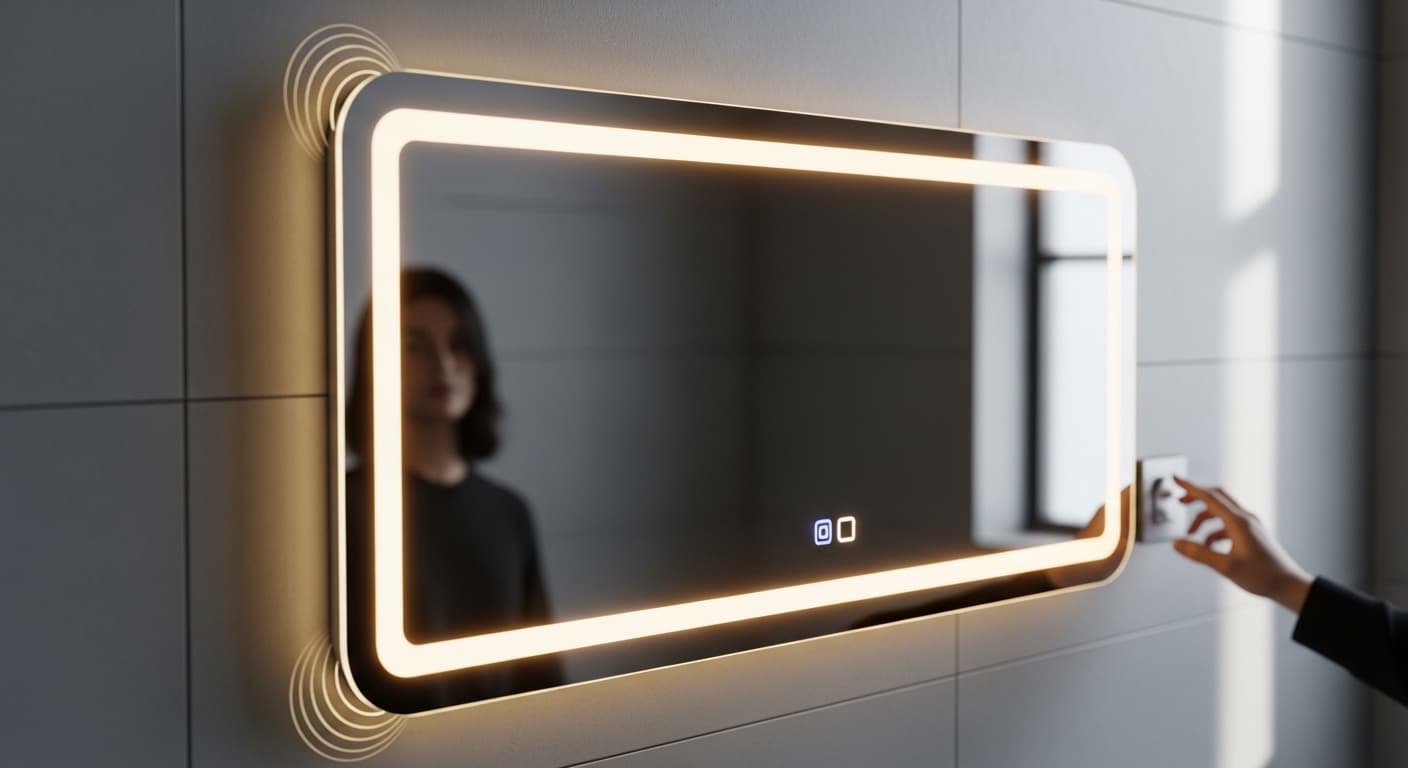
You step into the bathroom for a relaxing moment, maybe to get ready for the day or wind down at night. You flick the switch on your sleek, modern LED mirror, expecting a soft, silent glow. Instead, you’re greeted by an annoying, persistent buzz. It’s like a mosquito that won’t go away, completely ruining the ambiance of your space.
If you’ve ever noticed your LED mirror making a weird buzzing sound, you aren’t alone. It is a surprisingly common issue, but that doesn’t make it any less frustrating. The good news is that your mirror isn’t necessarily broken, and you probably don’t need to replace the whole unit.
This noise usually stems from a few specific culprits: electrical interference, loose connections, or incompatibility between your dimmer switch and the mirror’s driver.
In this guide, we will walk you through exactly why this happens, how to diagnose the specific root cause, and the simple steps you can take to silence the buzz for good.
Common Causes of Buzzing LED Mirrors
Before you grab a screwdriver, it helps to understand what is actually happening behind the glass. The buzzing sound—often called “mains hum” or “coil whine”—is usually a symptom of vibration within electrical components. Here are the most likely suspects.
Dimmer Switch Issues
This is the number one reason for buzzing lights of any kind. Many older dimmer switches were designed for traditional incandescent bulbs, which use a simple resistive load. LED mirrors, however, use complex electronic drivers.
If you pair a modern LED mirror with an older “leading-edge” dimmer, the two often clash. The dimmer chops up the electrical current in a way the LED driver doesn’t like, causing the internal components to vibrate and buzz. Even some newer dimmers can be incompatible if they aren’t specifically rated for LEDs.
Low-Quality or Incompatible LED Drivers
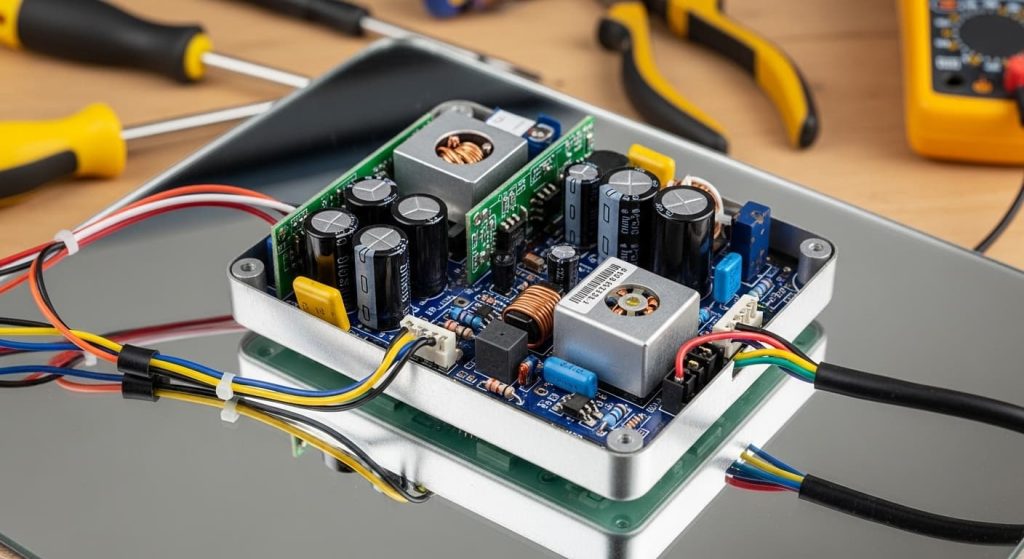
Every LED mirror has a “driver.” Think of this as the mirror’s power supply. It converts the high-voltage AC power from your wall into the low-voltage DC power the LEDs need.
High-quality drivers handle this conversion silently. Cheaper or faulty drivers, however, may struggle to regulate the power smoothly. This struggle creates electromagnetic interference, which manifests as that irritating humming noise. If the driver is failing, you might also notice the lights flickering faintly even when the mirror is at full brightness. Sometimes the driver simply isn’t powerful enough for the wattage of the lights, forcing it to work overtime. The driver is usually a small metal or plastic box mounted on the back of the mirror—if it’s buzzing, that’s a strong clue.
Poor Electrical Connections
Sometimes the solution is incredibly simple: something is loose. If the wire nuts connecting your mirror to the house wiring aren’t tight enough, electricity can arc across the tiny gaps. This not only creates a buzzing sound but can also be a fire hazard.
Similarly, a loose ground wire or a faulty outlet (if your mirror is a plug-in model) can disrupt the smooth flow of electricity, leading to noise.
Frequency and Voltage Differences
Electricity flows in waves (frequency). If there is a mismatch between the frequency your mirror expects and what your home provides, components can oscillate. This is extremely rare in standard residential setups if the mirror was purchased locally. It can happen if you have moved a mirror from a country with different voltage standards (e.g., bringing a 230V European mirror to a 120V US home) or if there are significant fluctuations in your home’s power grid.
How to Diagnose the Problem
You don’t need to be a master electrician to figure out what’s going on. You just need to be observant. Follow these steps to pinpoint the source of the noise.
1. Listen for Patterns
Turn your mirror on and adjust the settings.
- Does it buzz immediately? If the noise is constant as soon as you flip the switch, the issue might be the driver or a loose wire.
- Does it only buzz when dimmed? If the noise appears or gets louder as you lower the brightness, your dimmer switch is almost certainly the culprit.
- Does the pitch change? Try touching the frame of the mirror (safely). If the sound changes when you apply pressure, it might be a mechanical vibration rather than an electrical one.
2. Isolate the Circuit
Turn off other appliances in the room or on the same circuit (like exhaust fans or hair dryers). If the buzzing stops when you turn off a high-power device, you might have “dirty power” or an overloaded circuit, causing interference with the mirror.
3. Check the Switch
Put your ear close to the wall switch (not just the mirror). Sometimes the buzzing is actually coming from the dimmer switch itself, not the mirror. If the switch is buzzing, it is struggling to handle the electrical load and needs replacing.
Easy Fixes You Can Try
Once you have a hunch about what is causing the noise, you can try these fixes. Important: Always turn off the power at the circuit breaker before working on any electrical wiring.
Tighten All Connections
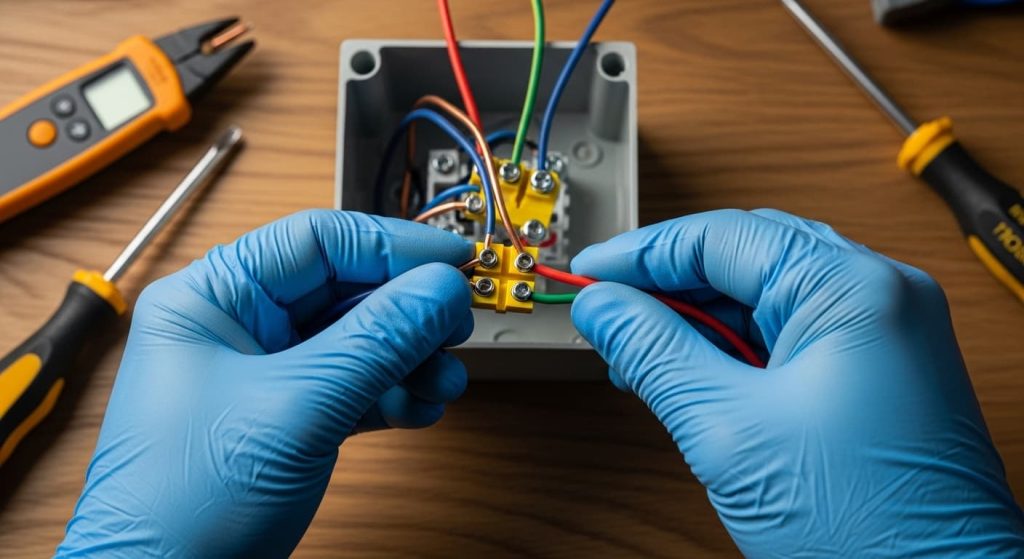
This is the best place to start because it costs nothing.
- Turn off the power at the breaker.
- Remove the mirror from the wall carefully.
- Check the wire nuts connecting the mirror’s wires to the house wires. Give them a gentle tug. If they come loose, they weren’t tight enough.
- Reconnect them securely and wrap them with electrical tape for good measure.
- Check that the mounting brackets are tight against the wall to prevent mechanical rattling.
Replace the Dimmer Switch
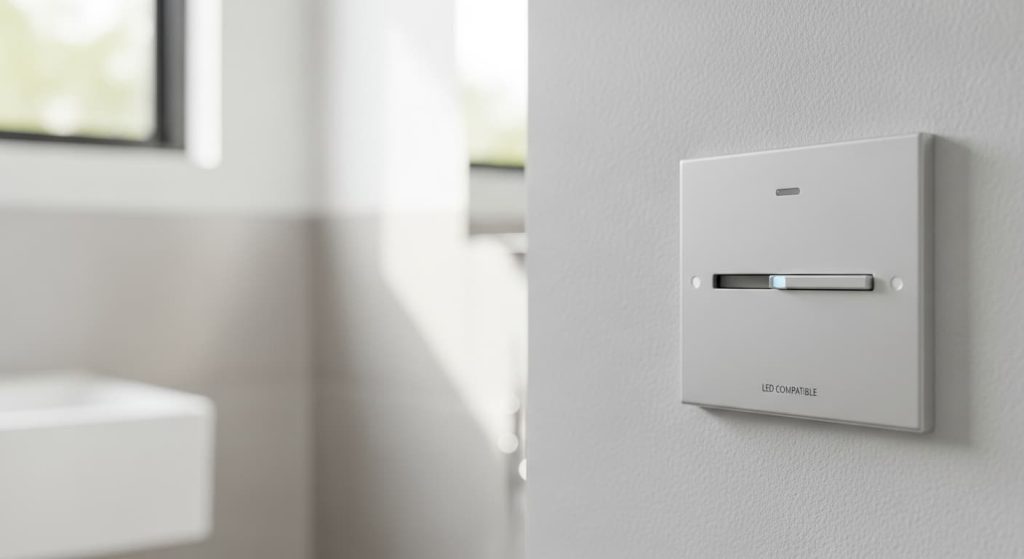
If you determined the buzzing happens mostly when dimming, you need a new switch. Look for a “trailing-edge” dimmer or one specifically labeled as “LED Compatible” or “CL” (CFL/LED). These switches handle the electrical load differently and are much gentler on LED drivers.
Brands like Lutron or Leviton often have compatibility charts on their websites. Cross-reference your mirror’s brand with their lists to find a guaranteed match.
Swap Out the LED Driver
If the connections are tight and the dimmer is new, but the buzz persists, the driver itself might be the issue.
- Check your warranty. Many LED mirrors have multi-year warranties that cover the driver.
- If you are out of warranty, you can buy a replacement LED driver online. You need to match the Output Voltage (usually 12V or 24V DC) and ensure the Wattage is equal to or higher than the old one.
- Crucially, ensure the new driver’s input voltage (e.g., 110-120V AC for North America) matches your home’s electrical system.
- Replacing it involves disconnecting the old box inside the mirror housing and wiring in the new one. It’s a straightforward swap for anyone handy with DIY projects.
Test a Different Circuit
If your mirror is a plug-in model, run an extension cord to an outlet in a different room (on a different circuit). If the buzzing stops, the problem isn’t the mirror—it’s the electrical wiring in your bathroom. You may have too many devices on that one bathroom circuit.
- Warning: For a hardwired mirror, this test requires creating a temporary plug-in cord (a “pigtail”). If you are not comfortable with this, skip this test and call an electrician.
When to Call a Professional
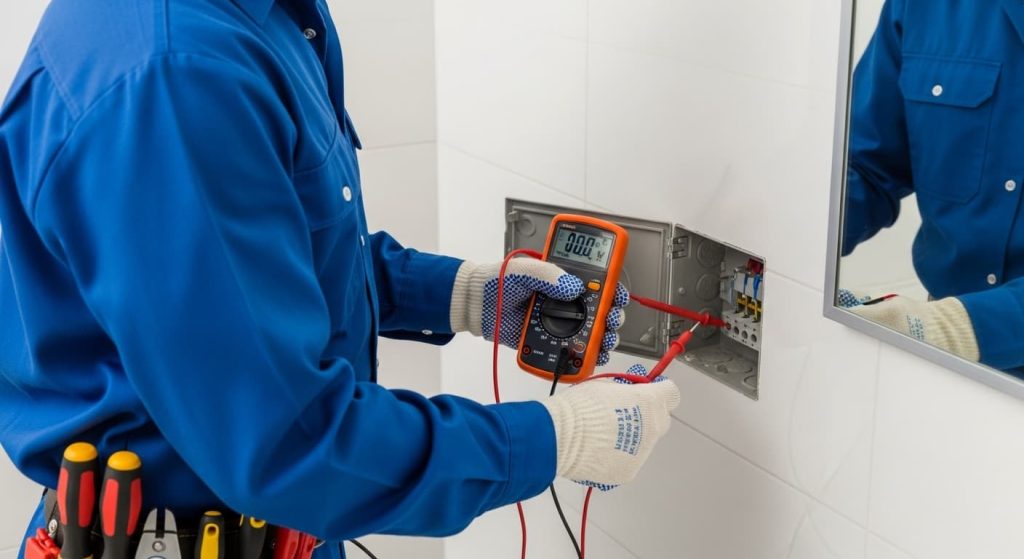
While many buzzing issues are simple DIY fixes, electricity is dangerous. There is no shame in calling a pro, and in some cases, it is necessary.
You should contact a certified electrician if:
- You see sparks or smoke: This is an immediate fire hazard. Turn off the breaker and call for help.
- The lights flicker dramatically: This suggests a deeper wiring issue that tightening a nut won’t fix.
- The mirror or switch feels hot: Electronic components should get warm, but never hot to the touch. Overheating indicates a serious failure.
- You aren’t comfortable: If the idea of stripping wires or testing voltage makes you nervous, hire a professional. It is worth the cost for your safety and peace of mind.
- The buzzing persists: If you have tried every fix on this list and the sound remains, the issue might be in your home’s internal wiring, which requires professional diagnostic tools.
Prevention Tips: Keeping the Silence
Once you have fixed the buzz, you want to make sure it stays away. Here is how to keep your bathroom lighting silent and serene.
Use High-Quality Components
When buying new fixtures or replacement parts, don’t just look at the price tag. Cheap drivers and generic dimmer switches are the most common causes of noise. Investing in reputable brands ensures better build quality and proper shielding against interference.
Check Compatibility First
Before installing a new dimmer, read the manual. Manufacturers often list specific dimmer models they have tested and approved. Sticking to this list is the easiest way to prevent headaches.
Don’t Overload Circuits
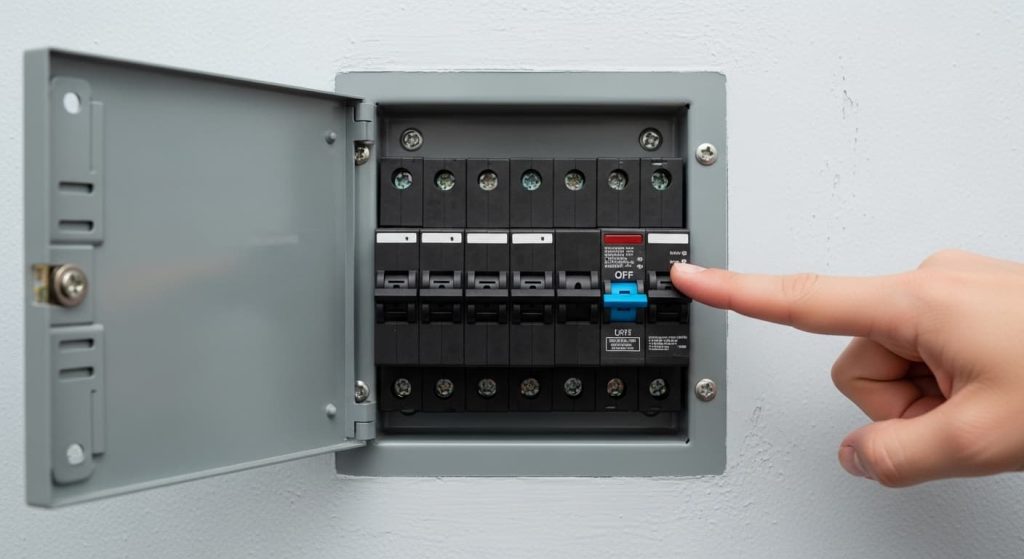
Modern bathrooms are power-hungry places, filled with heated floors, towel warmers, powerful hair dryers, and bright lights. Ensure your bathroom circuit can handle the load. If your lights dim every time you turn on the hair dryer, you are putting strain on your LED drivers, which can lead to damage and buzzing over time.
Conclusion
A buzzing LED mirror is more than just a nuisance; it’s a sign that something in your electrical setup isn’t quite right. Fortunately, it is rarely a catastrophic failure. Whether it’s a mismatched dimmer switch, a loose wire, or a tired driver, the solution is usually within reach.
By following the diagnostic steps above, you can isolate the problem and restore the peace your bathroom deserves. Remember to prioritize safety—turn off that breaker before you start tinkering.
Quick FAQ: Silencing Your Buzzing Mirror
Is it dangerous if my LED mirror is buzzing?
Not always, but it can be. If the buzz comes with flickering lights, heat, or a burning smell, turn off the power immediately—it could be a wiring issue. If it’s just a quiet hum, it’s usually just an annoying compatibility problem.
Can I use any dimmer switch with my LED mirror?
No. You must use a dimmer specifically labeled “LED Compatible” or “CL.” Using an old dimmer meant for incandescent bulbs is the most common cause of buzzing.
Why does my mirror only buzz when I dim the lights?
This is a classic sign of dimmer incompatibility. The dimmer and your mirror’s LED driver are fighting over the electrical current. Replacing the switch with a trailing-edge LED dimmer usually solves it instantly.
The buzzing is coming from the wall switch, not the mirror. What do I do?
The dimmer switch itself is likely overheating or failing. You need to replace the switch. It is not designed to handle the load properly.
My mirror is new, and it’s buzzing. Is it defective?
Not necessarily. It could be a cheap internal driver, but it’s more likely an issue with your home’s wiring or the dimmer switch you connected it to. Check the compatibility first.
Can I fix a buzzing mirror myself, or do I need an electrician?
If you are comfortable turning off a breaker and using a screwdriver, you can try tightening connections or swapping a dimmer. If you see sparks, smoke, or feel unsure, definitely call a professional.