
Last Updated on February 25, 2026 by Umar Farooq
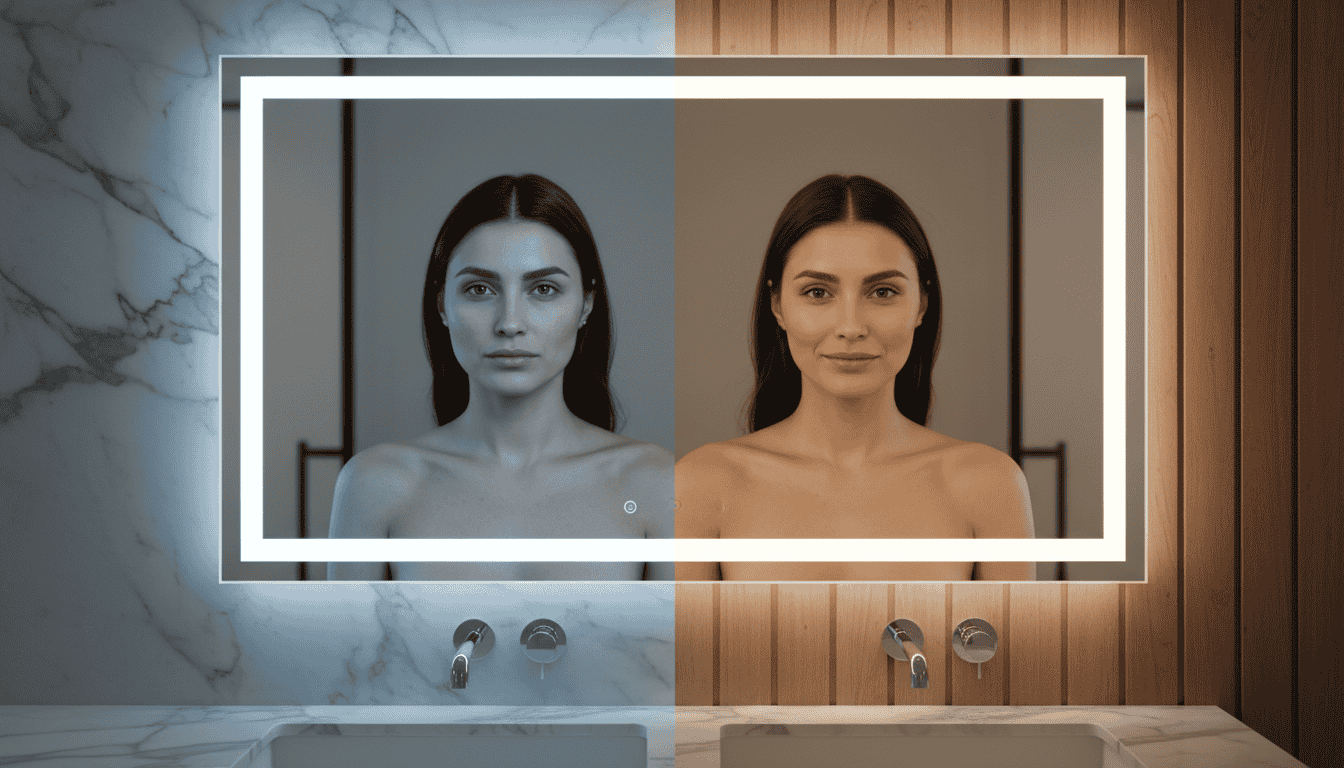
You switch on your new LED mirror, ready to start your day, but something feels off. The light hitting your face seems harsh and sterile, or maybe it casts a strange, yellow glow. Your skin looks sallow and tired, or perhaps the shadows under your eyes seem deeper than they actually are. Your reflection looks unnatural, and the entire vibe of your bathroom is ruined. This frustrating experience is a common problem, and it all comes down to a single factor: color temperature.
Getting the lighting right isn’t just about brightness; it’s about the color of the light itself. The wrong LED mirror color temperature can make your makeup look completely different in natural daylight, cause eye strain, and turn your sanctuary into a clinical-feeling space. Understanding and fixing this issue is key to creating a functional and beautiful bathroom.
This guide will walk you through what color temperature means, how to tell if yours is wrong, and the steps you can take to fix it for good.
What is LED Color Temperature?
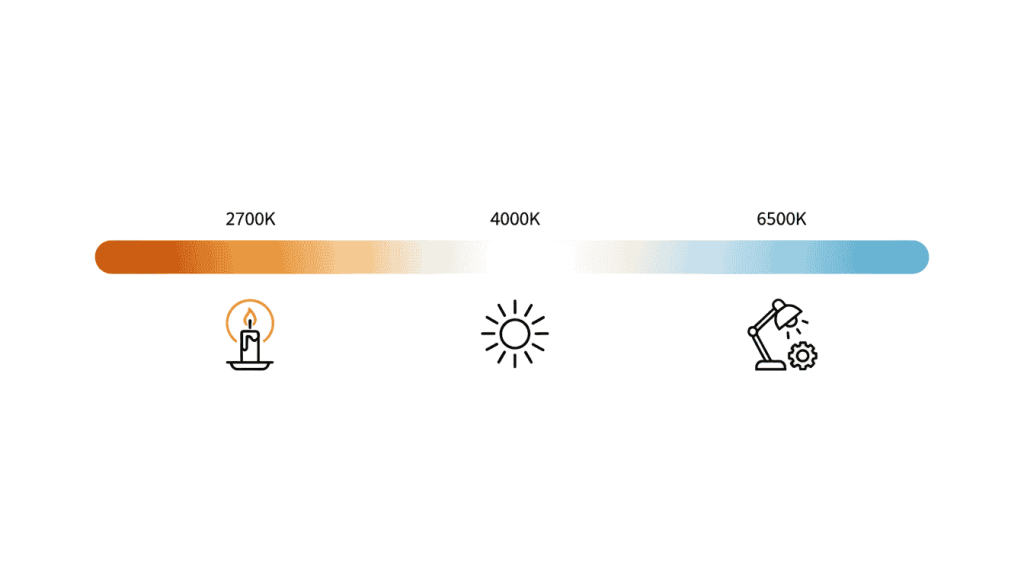
Color temperature is a way to describe the appearance of light provided by a light source. It’s measured in units called Kelvin (K). The lower the Kelvin rating, the warmer or more yellow the light appears. The higher the Kelvin rating, the cooler or bluer the light seems.
Think of it like the light from a sunrise versus the light at high noon. The morning sun has a warm, soft glow, while the midday sun is bright and white. Here’s a simple breakdown:
- Warm Light (2700K–3000K): This light has a soft, yellowish glow, similar to a traditional incandescent bulb. It creates a cozy, inviting, and relaxing atmosphere.
- Neutral Light (3500K–4000K): This is a balanced, crisp white light. It’s neither too yellow nor too blue, making it an excellent all-purpose choice that mimics natural daylight.
- Cool Light (5000K–6500K): This light is bright and has a slightly bluish tint, resembling bright daylight. It’s energizing and great for tasks that require high focus.
For a mirror, the color temperature is critical. It directly affects how you see your skin tone, apply makeup, and perform grooming tasks like shaving. The wrong temperature can distort colors, leading to unflattering results.
Signs Your LED Mirror Color Temperature is Wrong
How do you know if your mirror’s Kelvin rating is the problem? The signs are often subtle but have a significant impact on your daily routine.
- Makeup Looks Different Outside: You spend time perfecting your foundation and blush, only to step outside and realize the colors look completely wrong. If your mirror is too warm, you’ll likely apply too much foundation to compensate, making you look ‘cakey’ in daylight. If it’s too cool, you might under-apply your blush, leaving you looking washed out. This happens when your mirror’s light distorts how you perceive the makeup shades.
- Your Skin Tone Looks Unhealthy: If your reflection appears washed out, overly pale, or has a sickly yellow tint, the color temperature is likely to blame. A cool, blue-toned light can make you look tired, while an overly warm light can create a jaundiced appearance.
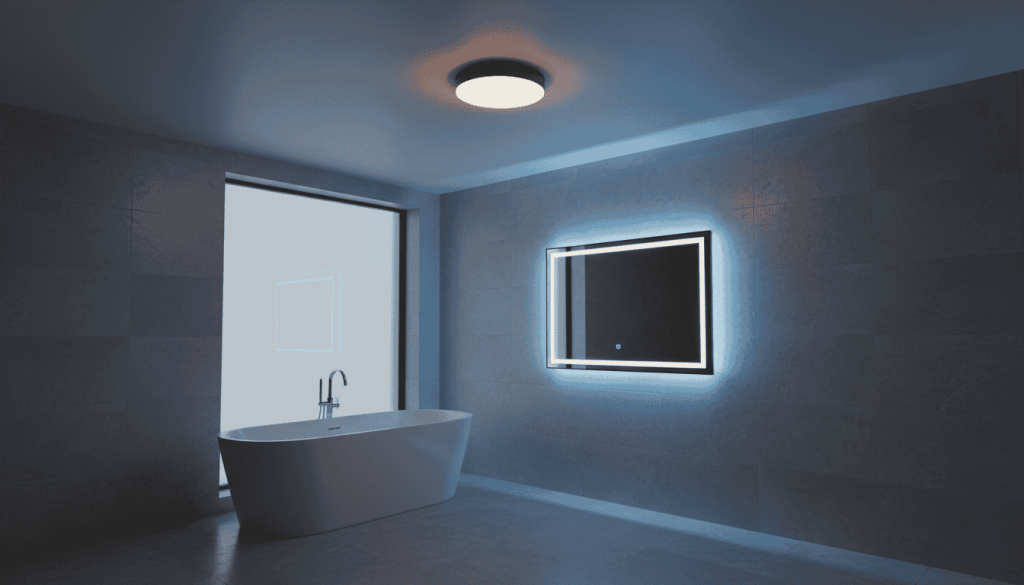
- The Bathroom Feels Cold and Clinical: A mirror with a very high Kelvin rating (6000K or more) can make your bathroom feel like a hospital or laboratory. The harsh, bluish light strips away any sense of warmth or comfort.
- You Experience Eye Strain or Headaches: Poor quality or improperly colored light can force your eyes to work harder, leading to discomfort, strain, and even headaches after prolonged use.
Common Reasons for the Wrong Color Temperature
If you’re experiencing any of the issues above, one of these common causes is likely responsible.
You Chose the Wrong Kelvin Rating
The simplest explanation is that the mirror has a fixed color temperature that isn’t right for your needs. Many standard LED mirrors come in a single Kelvin rating, often a cool 6000K, which is too harsh for many residential bathrooms. The color temperature might not match your personal preference or the room’s overall lighting scheme.
The Mirror Was Advertised Incorrectly
In some cases, the product doesn’t live up to its description. The manufacturer may list a specific Kelvin rating, but the actual output is different due to lower-quality components. Furthermore, cheap LEDs can experience “color shift” over time, meaning their color temperature changes as they age.
Your Bathroom Lighting is Clashing
A successful lighting design depends on harmony. If your overhead ceiling lights are a warm 3000K, but your new LED mirror is a cool 5000K, the two light sources will clash. This mix of warm and cool light creates strange shadows and an unbalanced, confusing visual effect that makes everything look slightly off.
Wiring or Dimmer Compatibility Issues
Technical problems can also affect your LED mirror’s performance. Many older dimmers are designed for the higher wattage of incandescent bulbs. LEDs use so little power that these dimmers can’t regulate them properly, causing flickering, a limited dimming range, or a shift in color temperature (often towards a pinkish or greenish hue). You need dimmers specifically labeled ‘LED-compatible’ to avoid this. In other instances, improper wiring or voltage fluctuations in your home can cause the LEDs to perform poorly and produce an inconsistent color.
How to Fix Your LED Mirror Lighting
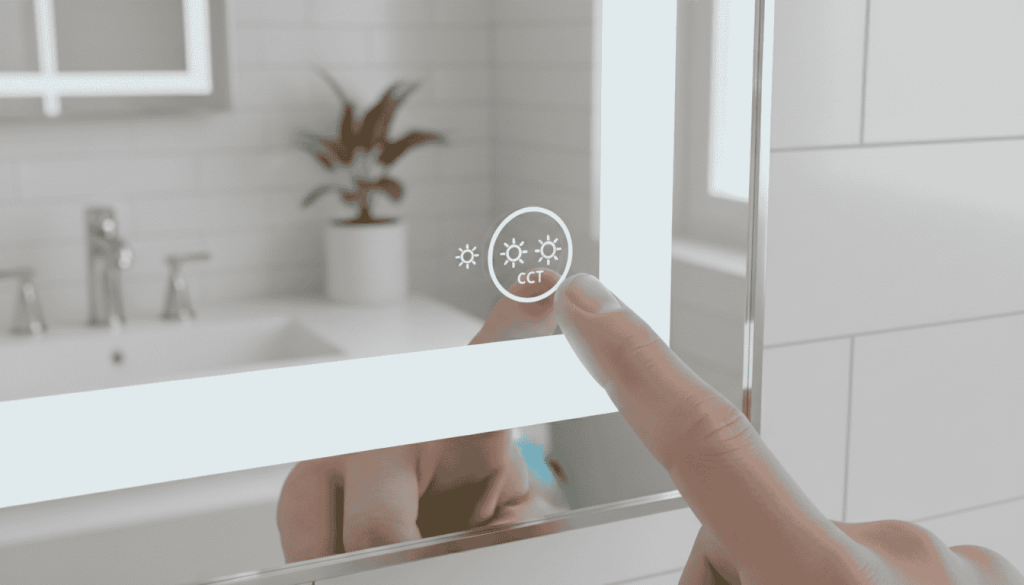
The good news is that you have several options for correcting the color temperature in your bathroom.
Option 1: Check If Your Mirror Is Adjustable
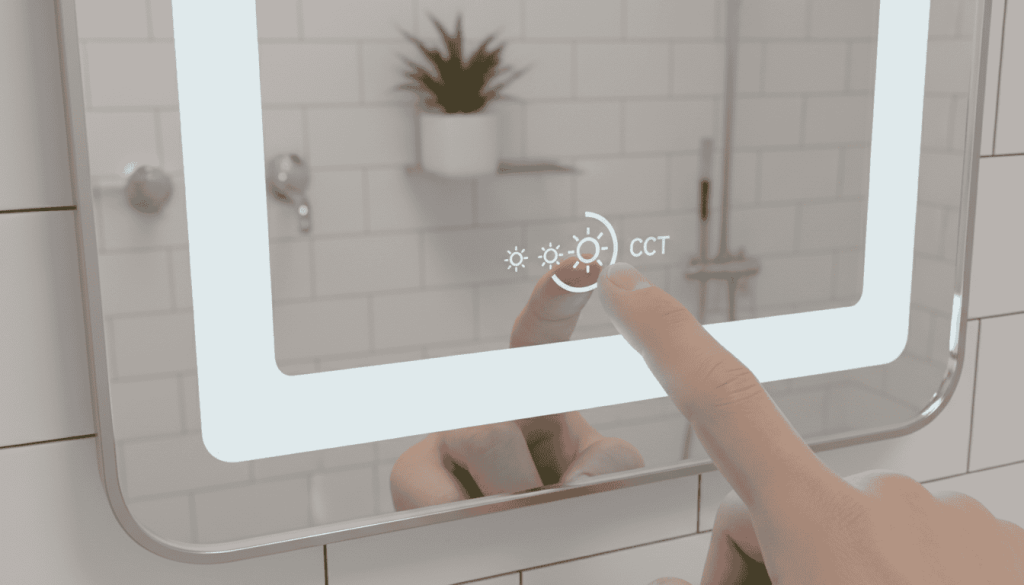
Before trying anything else, check your mirror’s features. Many modern LED mirrors are CCT-adjustable (Correlated Color Temperature). This means you can cycle through different color temperatures—usually warm, neutral, and cool—with the touch of a button. Consult your mirror’s manual to see if this feature is available and how to use it.
Option 2: Add Matching Bathroom Lighting
If your mirror’s color temperature is fixed, you can create a more balanced look by matching it with other light sources. If your mirror is a cool 5000K, consider updating your overhead or vanity lights to the same Kelvin rating. This creates a cohesive and uniform lighting environment, eliminating the clash between warm and cool tones.
Option 3: Replace the LED Driver
Sometimes, the issue isn’t the LEDs but the driver that powers them. The driver is a small electronic device that converts your home’s high-voltage AC power to the low-voltage DC power that the LEDs need. A faulty or failing LED driver can affect both brightness and color output. Replacing it might solve the problem, but this task is best left to a professional electrician who can safely diagnose and fix the electrical components.
Option 4: Replace the Mirror
If your mirror has a fixed color temperature that you find unusable, and other solutions aren’t practical, the best long-term fix is to replace it. When shopping for a new one, look specifically for models that offer adjustable color temperature. This gives you the flexibility to choose the perfect light for any task or mood.
How to Choose the Right Color Temperature for Your Bathroom
To avoid this problem in the future, select a Kelvin rating that aligns with your needs and the room’s function. However, color temperature isn’t the only factor. You must also consider CRI (Color Rendering Index). While color temperature is the tone of the light, CRI is the accuracy. A high CRI (90+) ensures that reds look truly red, not muddy, and that your skin tone looks natural. For tasks like makeup application, a high CRI is just as important as the right Kelvin rating.
- For Makeup Application and Grooming (4000K–5000K with CRI 90+): This neutral-to-cool range is widely considered the best for task lighting. It closely mimics natural daylight, providing clear, accurate color rendering so you can see your true skin tone and makeup shades.
- For Cozy and Relaxing Bathrooms (3000K–3500K): If you use your bathroom as a spa-like retreat for unwinding, a warmer light is ideal. This temperature range creates a soft, inviting ambiance perfect for a relaxing bath.
- For Modern, Bright Spaces (5000K): For a crisp, clean, and energizing look in a modern bathroom, a 5000K temperature works well. Just be sure to balance it so the space doesn’t feel too sterile.
A key strategy is to separate task vs. ambient lighting. You might want a relaxing 3000K for your general bathroom lighting to unwind, but a focused, adjustable 4000K-5000K light at the mirror itself for your grooming tasks. Most importantly, always aim to match the color temperature of all light sources in the room. Consistency is the key to a well-lit and harmonious space.
Final Thoughts
The wrong LED mirror color temperature is more than a minor annoyance; it changes how you see yourself and how you feel in your own space. Ultimately, the light from your mirror sets the stage for your entire day. It’s the light in which you prepare to face the world and the light in which you unwind at night. By mastering the simple concept of color temperature, you transform your bathroom mirror from a simple reflective surface into a powerful tool for confidence, comfort, and personal care. Don’t settle for a reflection that feels ‘off’—take control of your light and see yourself in the best possible light, every single day.
Frequently Asked Questions (FAQ)
What is the best color temperature for a bathroom mirror?
For grooming and makeup, 3500K to 4500K (neutral white) is best as it mimics natural daylight. For a relaxing bath, 2700K to 3000K (warm white) is ideal.
What does CRI mean for an LED mirror?
CRI stands for Color Rendering Index. It measures how accurately the light shows true colors. For a bathroom mirror, you should look for a CRI of 90 or higher to ensure natural-looking skin tones.
Can I change the color temperature of my existing LED mirror?
It depends on the model. First, check if your mirror has a CCT-adjustable feature (often controlled by a button or switch). If it doesn’t, the color temperature is fixed and cannot be changed without replacing internal parts.
Why does my LED mirror light look pink or green?
This is often caused by using an incompatible dimmer switch. Older dimmers designed for incandescent bulbs can cause LEDs to flicker or shift color. You need a dimmer specifically labeled ‘LED-compatible’.
Is 6000K too bright for a bathroom?
6000K is a very cool, blue-white light. While it is very bright, it can make a bathroom feel cold, clinical, and unflattering for skin tones. It is generally not recommended for residential bathrooms.
What is the difference between 3000K and 5000K light?
3000K is a warm, yellowish light (similar to a halogen bulb) that feels cozy. 5000K is a cool, bluish-white light (similar to midday sun) that feels energizing and is better for detailed tasks.