
Last Updated on February 25, 2026 by Umar Farooq
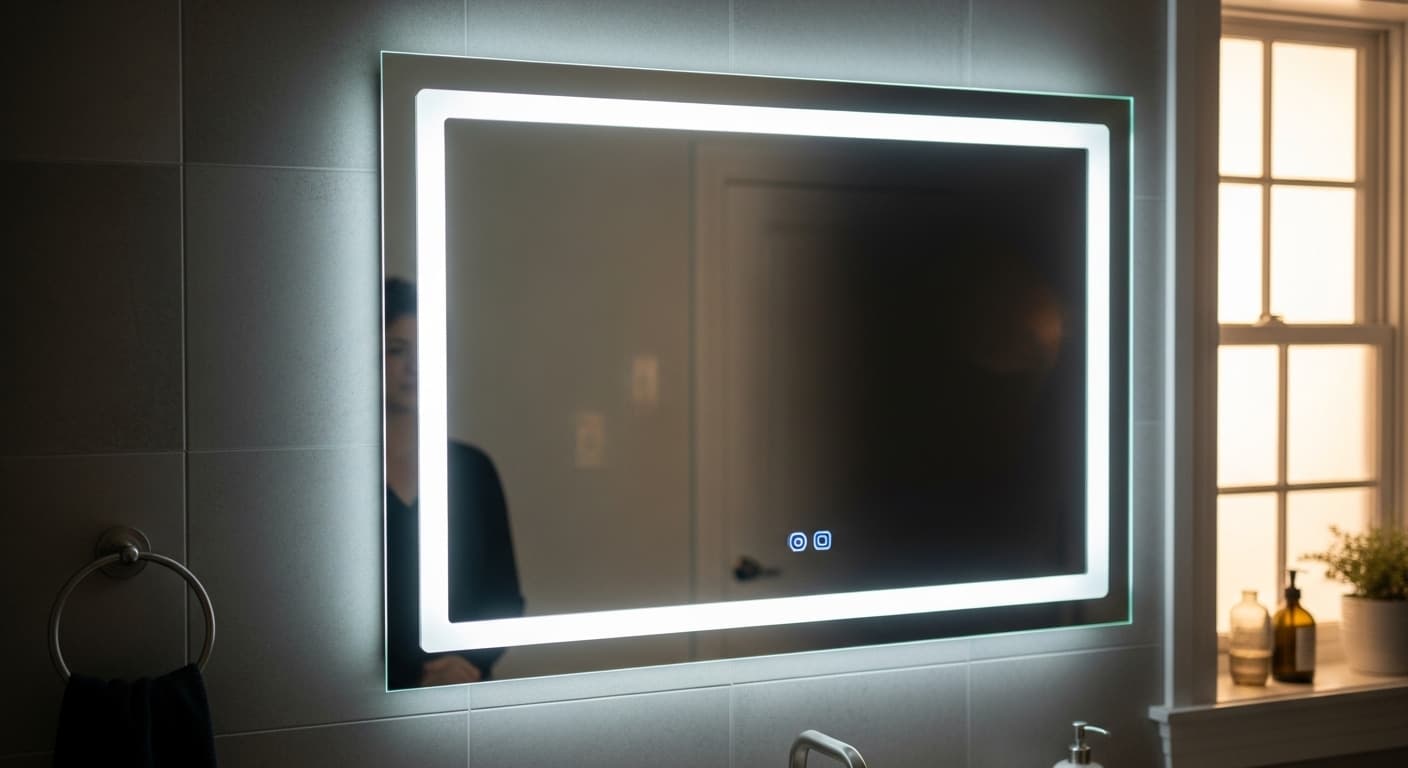
You step in front of your LED mirror, ready to start your morning routine. The light flicks on, bright and clear, and then… it just shuts off. You tap the sensor, and it comes back on, only to go dark again a few minutes later. It’s a frustrating and inconvenient problem that can disrupt your entire day. What’s supposed to be a piece of modern luxury is suddenly a source of annoyance.
An LED mirror that randomly turns itself off is a common issue, but it doesn’t mean you need to buy a new one. This problem often points to a simple, fixable cause related to power, heat, or a faulty component.
This guide will walk you through the most common reasons why your mirror is misbehaving. We will cover quick troubleshooting steps you can perform yourself, explain when it is time to call a professional, and offer tips to prevent it from happening again.
Common Causes for an LED Mirror Randomly Shutting Off
Understanding why your mirror is turning off is the first step toward a solution. The issue almost always falls into one of these four categories.
Power Supply Issues
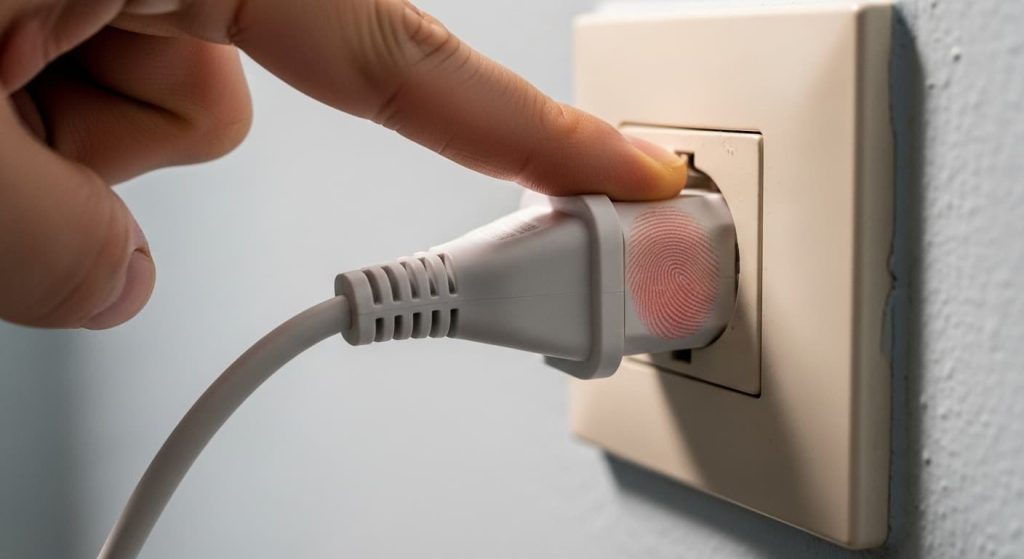
The most frequent culprit is an unstable or interrupted power supply. Your LED mirror needs a consistent flow of electricity to function correctly. If that flow is disrupted, even for a split second, the internal electronics will reset, causing the light to shut off.
This can happen for several reasons:
- A Loose Plug: For plug-in models, the plug might not be seated firmly in the outlet.
- Faulty Wiring: In hardwired mirrors, the connections behind the wall or inside the mirror’s housing could be loose.
- Unstable Voltage: Fluctuations in your home’s power, sometimes called “dirty power,” can cause sensitive electronics like an LED driver to shut down.
- Incompatible Dimmer Switch: If your hardwired mirror is controlled by a wall dimmer, ensure the mirror is rated as “dimmable.” Using a standard dimmer with a non-dimmable LED driver can confuse the electronics, causing flickering, buzzing, or sudden shut-offs.
Overheating Protection
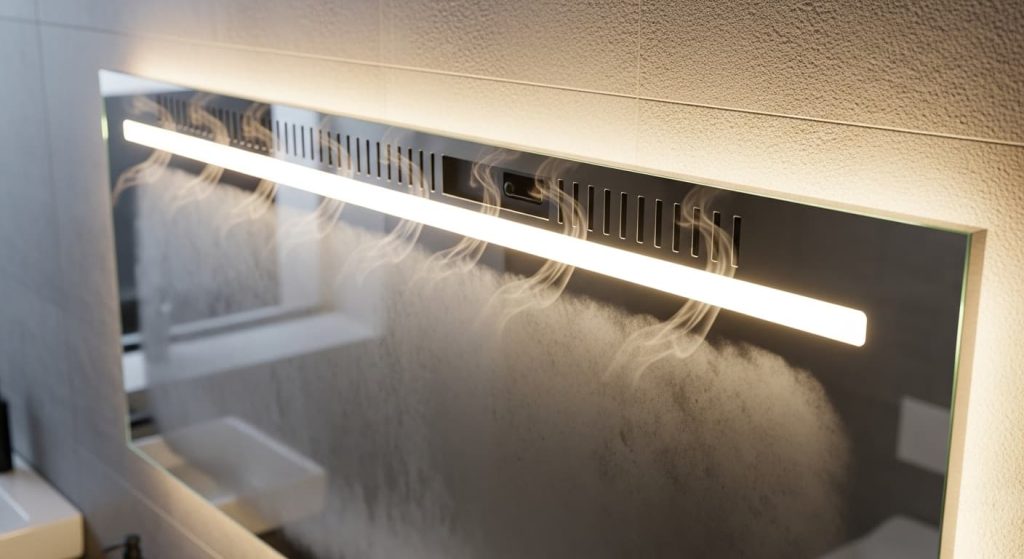
LEDs are efficient, but they still produce some heat. High-quality LED mirrors have built-in thermal protection features that automatically shut the unit down if it gets too hot. This is a safety mechanism designed to prevent damage to the LEDs and the internal driver, and to reduce fire risk.
Overheating can be caused by:
- Poor Ventilation: If the mirror is installed in a tight space or if something is blocking its vents, heat can build up.
- High Ambient Temperature: A very warm bathroom, combined with the heat from the LEDs, can push the temperature over the safety threshold.
- Prolonged Use: Leaving the mirror on for many hours can sometimes lead to a gradual heat increase.
Faulty LED Driver
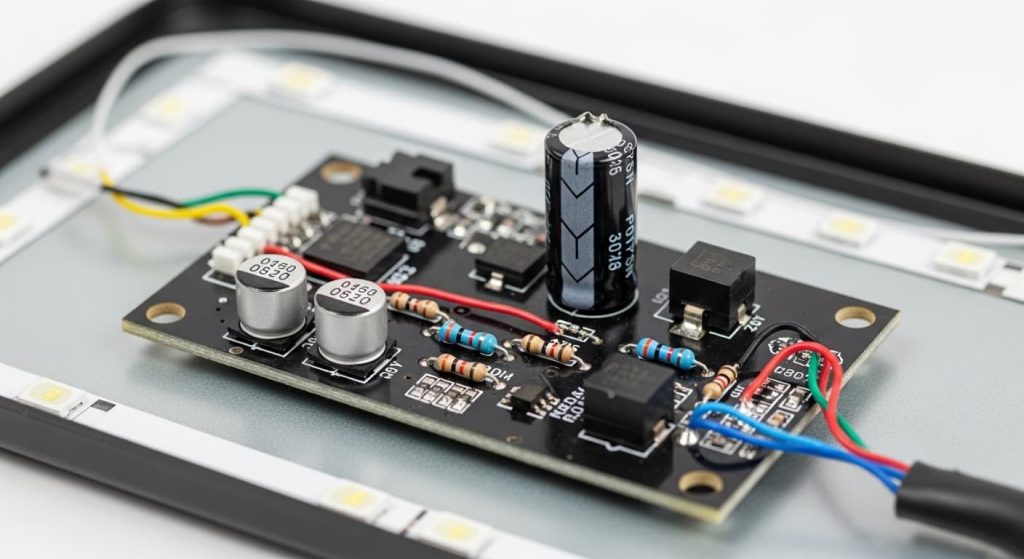
The LED driver is the heart of your mirror. It’s a small electronic power supply that converts the standard 120-volt AC power from your wall into the low-voltage DC power that the LEDs use. Like any electronic component, a driver can fail over time.
When a driver starts to go bad, it may struggle to provide a stable current. You might notice the lights flickering or dimming before they shut off completely. This is especially common in lower-quality units or after a power surge. The driver might work fine when it’s cool but fail once its internal components heat up, expand, and lose connection—a classic sign of failing electronics.
Touch Sensor or Switch Problems
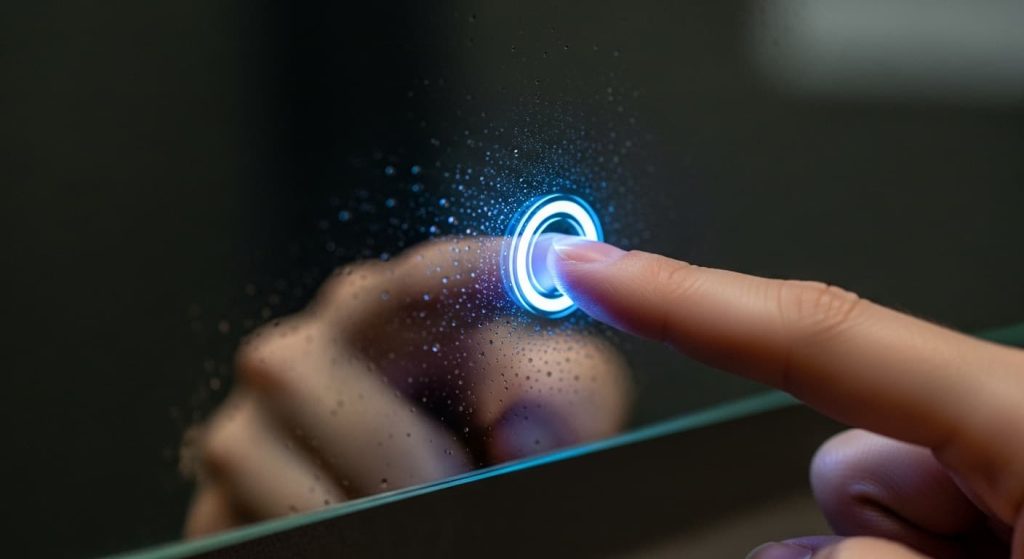
Most modern LED mirrors use a touch sensor or a proximity sensor to turn on and off. These sensors can become faulty, overly sensitive, or damaged.
- Sensitivity Issues: Sometimes, steam, water droplets, or even dust on the sensor can be misinterpreted as a “touch,” causing the mirror to turn off.
- Internal Damage: The sensor itself or its connection to the main circuit board can become loose or corroded, leading to erratic behavior.
- Proximity Sensor Glitch: If your mirror has a motion or proximity sensor, it might be detecting false movement or failing to detect your presence correctly, causing it to shut down.
Quick Reference: Symptoms and Likely Causes
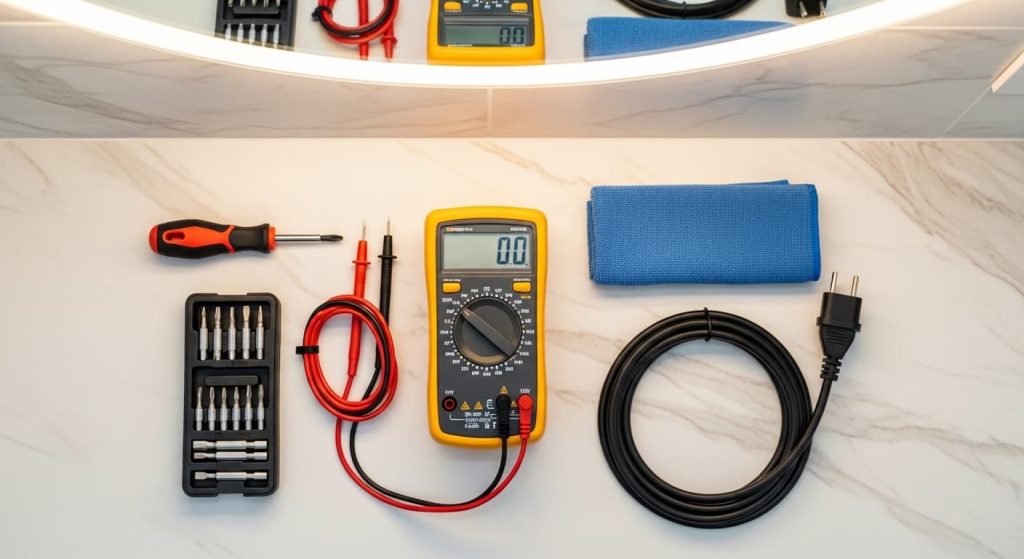
| Symptom | Most Likely Cause | Quick Fix to Try |
|---|---|---|
| Flickers then turns off | Loose connection | Check plug and wiring connections. |
| Turns off after 5-10 minutes | Overheating / Failing Driver | Power cycle, check for ventilation. |
| Turns off randomly when touched | Sensor issue | Clean the sensor area thoroughly. |
| Doesn’t turn on at all | Power supply / Driver failure | Test a different outlet. |
| Buzzing or dimming before shut-off | Failing LED driver / Dimmer mismatch | Check if dimmer switch is compatible. |
Quick Troubleshooting Steps You Can Take
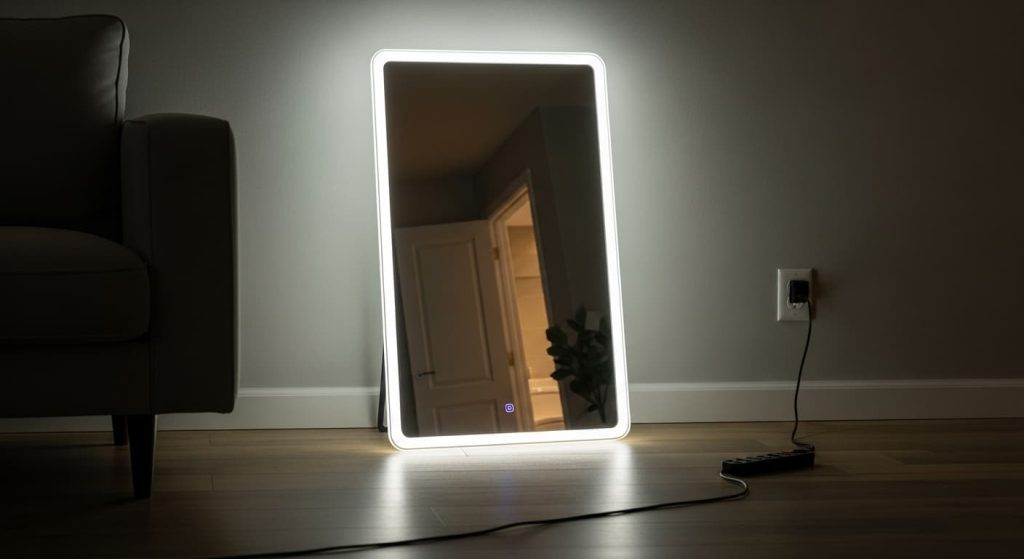
Before you call an expert or start shopping for a replacement, try these simple diagnostic steps. Always remember to be cautious when dealing with any electrical device.
1. Check the Power Source and Connections
Start with the easiest fix. For plug-in models, ensure the plug is pushed all the way into the outlet. Try wiggling it gently to see if that causes the light to flicker or shut off, which would indicate a loose connection inside the outlet itself. For hardwired mirrors, turn off the power at the circuit breaker first, then check that the wire nuts connecting the mirror to your home’s wiring are secure.
2. Test a Different Outlet
To rule out a faulty wall outlet, use an extension cord to temporarily plug your mirror into a different outlet in another room. If the mirror stays on without any issues, the problem is likely with the original outlet or circuit, not the mirror.
3. Power Cycle the Mirror
The classic “turn it off and on again” works for a reason. It allows the internal electronics to reset. Turn the mirror off using its switch, then unplug it or turn off the power at the breaker. Wait for at least five minutes before turning it back on. This gives the components time to cool down and discharge any stored energy, which can resolve temporary glitches.
4. Inspect for Visible Damage
Look closely at the mirror’s sensor area. Is it clean? Wipe it down with a dry, soft cloth to remove any smudges, moisture, or dust that might be interfering with its operation. Check the frame and back of the mirror for any cracks or signs of damage that could indicate a bigger problem.
When to Call a Professional
DIY troubleshooting is great, but some issues require an expert. Your safety is the top priority, and working with internal wiring can be dangerous if you’re not experienced.
Call a certified electrician if you encounter any of the following:
- You smell something burning: A burning plastic or electrical smell is a major red flag. Turn off the power at the breaker immediately and do not use the mirror until it has been inspected.
- You see sparks: If you notice sparks from the switch, outlet, or mirror itself, stop using it and call a professional.
- The problem persists after basic checks: If you’ve tried all the troubleshooting steps and the mirror still shuts off randomly, the issue is likely internal, such as a failing driver or faulty circuit board.
- You are uncomfortable with electrical work: If the thought of checking wires or opening the mirror’s housing makes you nervous, it’s best to leave it to someone with the right tools and training.
Prevention Tips for a Long-Lasting LED Mirror
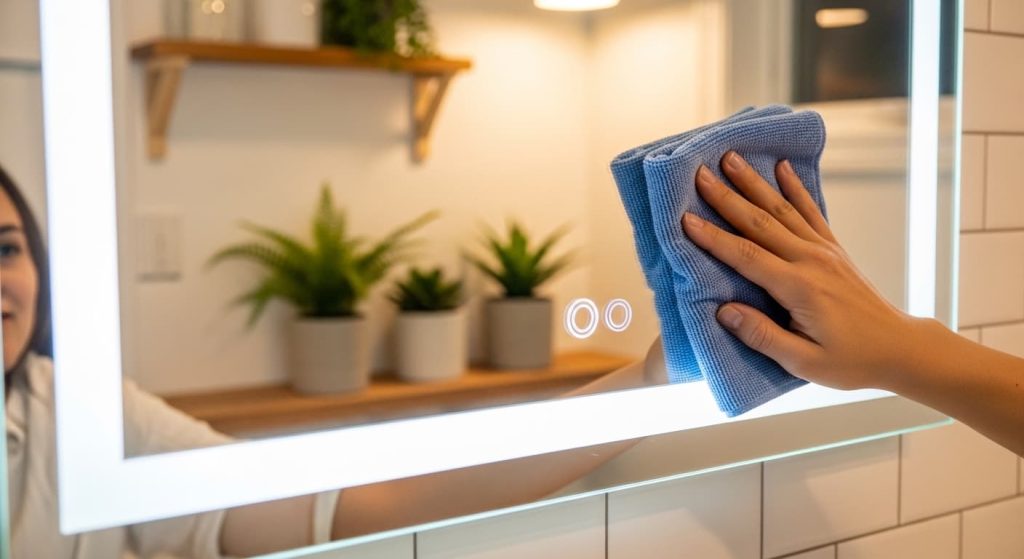
Once your mirror is working correctly, a little preventive care can keep it that way.
- Avoid Overloading the Circuit: Bathroom circuits often power lights, fans, and outlets for high-wattage devices like hair dryers. Try to avoid running multiple high-power appliances at the same time as the mirror to ensure stable voltage.
- Keep the Mirror Clean and Dry: Regularly wipe down the mirror, paying special attention to the sensor area. Use a dry or lightly dampened microfiber cloth. Avoid spraying cleaning solutions directly onto the mirror, as moisture can seep inside and damage the electronics.
- Ensure Proper Airflow: Make sure the mirror isn’t installed flush against a surface that blocks its ventilation ports. Good airflow is essential for dissipating heat and preventing the overheating protection from kicking in.
A Clear View Ahead
A randomly shutting-off LED mirror is almost always a sign of a fixable problem, not a complete failure. By systematically checking the power supply, testing for overheating, and resetting the system, you can often identify and solve the issue yourself.
Take the time to carefully inspect your mirror and its connections. And most importantly, always put safety first. If you’re ever in doubt, calling a professional is the smartest move. With a little maintenance and timely troubleshooting, you can ensure your mirror remains a reliable and functional centerpiece in your bathroom for years to come without unexpected blackouts.
Frequently Asked Questions (FAQ)
Why does my LED mirror turn off after a few minutes?
This is usually caused by overheating protection or a failing LED driver. The mirror may be working fine when cold, but shuts down once the components heat up. Try power cycling the mirror and ensuring it has proper ventilation.
Can a dimmer switch cause my LED mirror to shut off?
Yes. If your mirror is not rated as “dimmable” but is connected to a dimmer switch, it can cause flickering, buzzing, or random shut-offs. Check your mirror’s specifications to confirm compatibility.
How do I reset my LED mirror?
Power cycle it. Turn the mirror off, unplug it (or switch off the circuit breaker), and wait at least 5 minutes before turning it back on. This allows internal electronics to reset and cool down.
Why does my touch sensor mirror turn off by itself?
The sensor may be dirty, wet, or overly sensitive. Wipe the sensor area with a dry, soft cloth to remove steam, dust, or moisture that could be triggering false touches.
Is it safe to use an LED mirror that keeps shutting off?
Not always. If you notice a burning smell, sparks, or the mirror feels excessively hot, turn it off immediately and call a professional. Otherwise, intermittent shut-offs are usually safe to troubleshoot.
Can I fix a faulty LED driver myself?
Only if you’re experienced with electrical work. The driver is inside the mirror and involves live wiring. For most people, it’s safer and smarter to call an electrician.
How long should an LED mirror last?
A quality LED mirror should last 10–15 years with proper care. The LEDs themselves can last up to 50,000 hours, but drivers and sensors may fail sooner.
Will leaving my LED mirror on overnight damage it?
It’s not recommended. Prolonged use can lead to heat buildup and may trigger thermal protection or shorten the lifespan of internal components.