
Last Updated on February 25, 2026 by Umar Farooq
You walk into your bathroom, ready to start your morning routine. You tap the sensor on your sleek LED mirror, expecting that perfect, flattering glow—but nothing happens. You tap it again. Still nothing.
Few things are more annoying than a piece of technology that suddenly decides to quit, especially when it’s central to getting ready for your day. We install LED mirrors because they bring a touch of modern luxury to our homes. They offer fantastic lighting for grooming, save energy compared to traditional bulbs, and honestly, they just look cool. But when they go dark, they become just an expensive piece of glass.
Before you panic or start shopping for a replacement, take a breath. Most of the time, the issue isn’t catastrophic. It could be as simple as a loose plug or a tripped breaker. This guide will walk you through a logical troubleshooting process to help you get your lights back on.
1. Is It Getting Power? The Basic Checks First
It sounds obvious, but you would be surprised how often the simplest solution is the right one. Before we start unscrewing things, let’s rule out basic setup issues.
- Ensure the Mirror is Plugged In: If your mirror uses a plug rather than being hardwired, check the connection. Plugs can easily get nudged loose, especially in busy bathrooms. Ensure the plug is firmly seated in the socket.
- Verify the Power Outlet: Just because the mirror is plugged in doesn’t mean the outlet is live.
- The Hair Dryer Test: Unplug the mirror and plug in a small appliance you know works, like a hair dryer. If that device doesn’t turn on, the problem is your outlet, not the mirror.
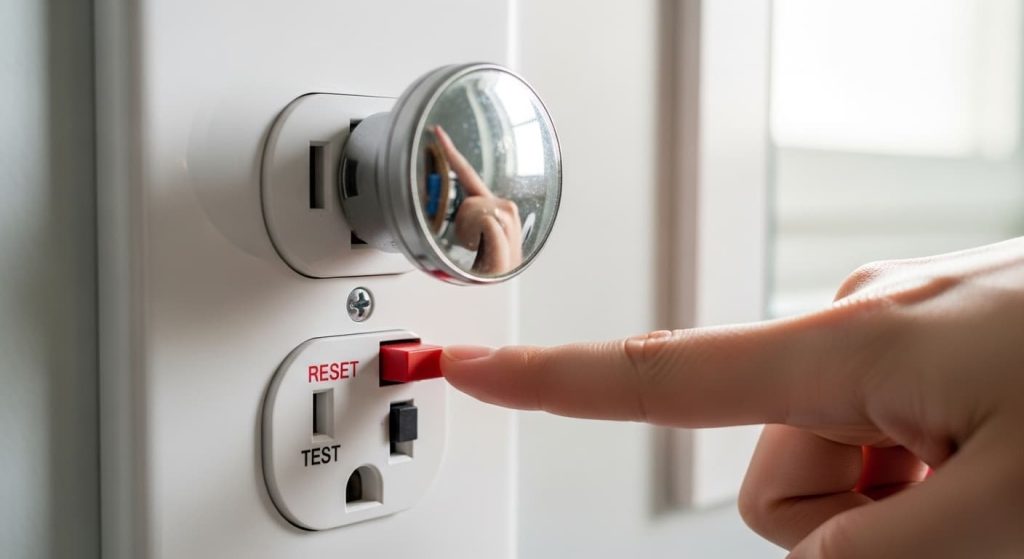
- GFCI Outlets: Bathrooms are required to have Ground Fault Circuit Interrupter (GFCI) outlets. These have “Test” and “Reset” buttons. Sometimes, a surge can trip the outlet itself. Press the “Reset” button firmly until it clicks.
- Check the Switch and Sensor Status:
- Does your mirror connect to a wall switch? Make sure no one accidentally flipped it off.
- If the mirror relies on a touch sensor on the glass, ensure your hands are dry. Sometimes, moisture or grease can prevent the sensor from registering your touch.
2. The “Hard Reset”: Clearing Electronic Glitches
Like a computer, sometimes the electronics inside your mirror just get confused. Before you move on to more technical steps, try this simple fix:
- Unplug the mirror or flip the breaker off.
- Wait for at least 5 minutes. This drains residual power from the internal capacitors and can clear minor electronic glitches.
- Restore power and test the mirror again. You might be surprised how often this works.
3. Inspect the Power Source
If the outlet works for other devices but your mirror remains dark, we need to look upstream at how power is reaching that location.
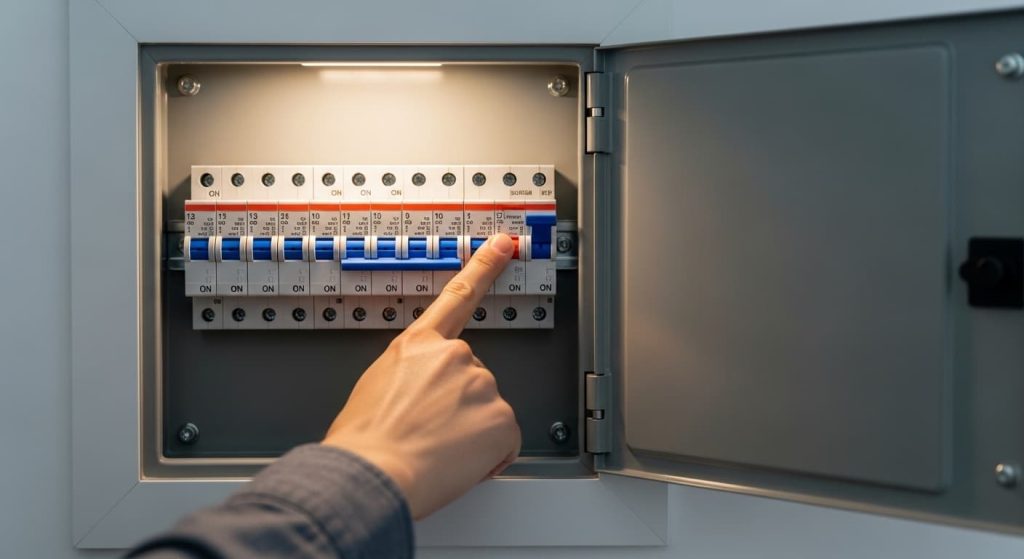
- Look for Tripped Breakers: Head to your home’s electrical panel. Look for any switches that are in the “Off” position or stuck in the middle (tripped).
- If you find a tripped breaker labeled for the bathroom, flip it completely off, then back on.
- Warning: If the breaker trips again immediately when you try to turn on the mirror, you likely have a short circuit. This is a more serious electrical issue—skip to Section 7.
- Assess the Fuse Box: If you live in an older home that uses fuses instead of breakers, check for a blown fuse. The metal strip inside the glass fuse will be melted or broken if it has blown. Replace it with a fuse of the same amperage.
4. Examine the LED Components
If power is definitely flowing to the mirror but there is still no light, the issue likely lies within the mirror’s internal components. Safety Note: Before doing this, unplug the mirror or turn off the circuit breaker to avoid electric shock.
- Check for Burnt-Out LEDs: While LEDs last a long time (often 50,000 hours or more), they aren’t immortal. Look closely at the LED strip behind or around the mirror.
- Do you see dark spots or discoloration on the yellow chips? If individual chips are black, the strip might be burnt out. Note that LED strips often fail in sections, so you might see that only part of the mirror is dark.
- Inspect Internal Wiring: If you are comfortable doing so, take the mirror off the wall carefully.
- Loose Wires: Look for any wires that may have wiggled free from their connectors.
- Disconnected Clips: Many LED mirrors use simple plastic clips to connect the LED strip to the power supply. Ensure these are snapped together tightly.
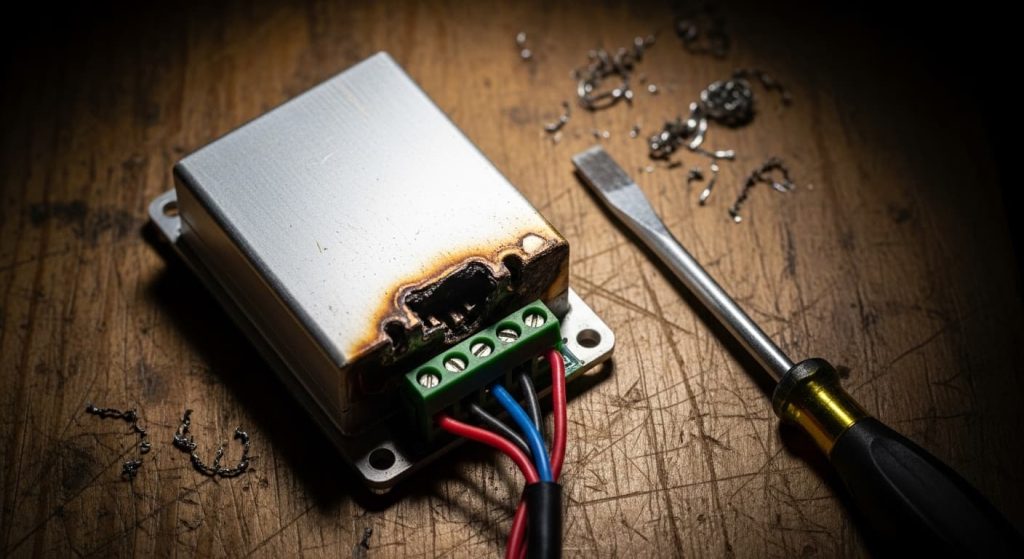
- Examine the Power Supply (Driver): The LED driver (also called a transformer) converts your home’s high voltage (110V/240V) into the low voltage (usually 12V or 24V) that LEDs need. This is the most common component to fail.
- Look for visible damage like melting, scorch marks, or a swollen casing.
- Smell the unit. A burnt plastic smell is a dead giveaway that the driver has failed.
5. Test the Switch or Touch Sensor
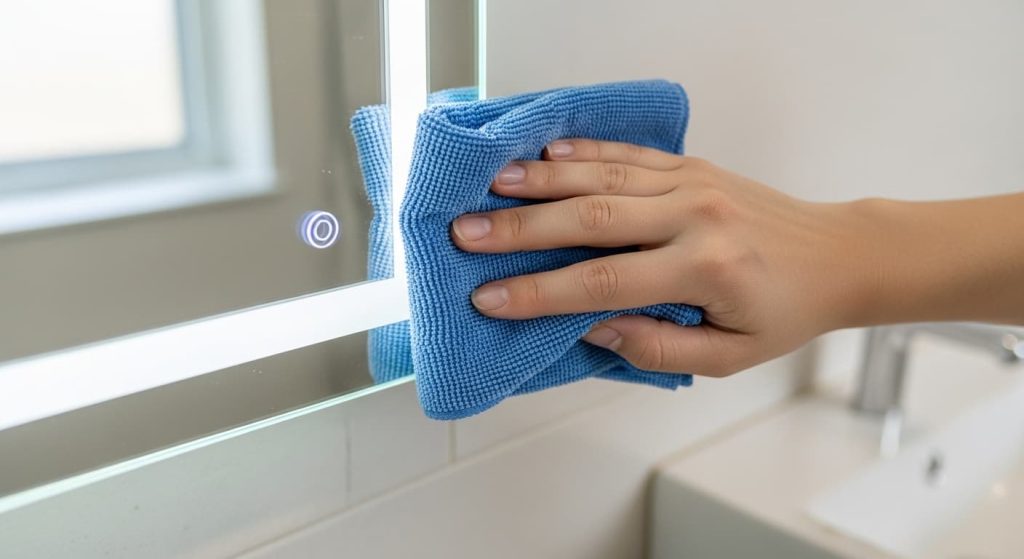
The touch sensor is the “brain” of the operation for many modern mirrors. If it’s not working, the lights won’t get the signal to turn on. Remember, your mirror likely uses either a wall switch or a touch sensor as its main control.
- Clean the Surface: It might sound too simple, but dirt, hairspray buildup, or water spots can confuse capacitive touch sensors. Clean the area over the button thoroughly with glass cleaner and a microfiber cloth.
- Recalibrate or Reset: Some mirrors have a “reset” function, usually involving holding the button down for 10–15 seconds while power is connected. Check your specific manual for this.
- Electrical Testing: If you have a multimeter and know how to use it safely, you can test if the switch is completing the circuit. Caution: If you are not experienced with electrical testing, skip this step. If power goes into the switch but doesn’t come out when pressed, the switch or sensor module is faulty.
6. Common Causes and Quick Fixes
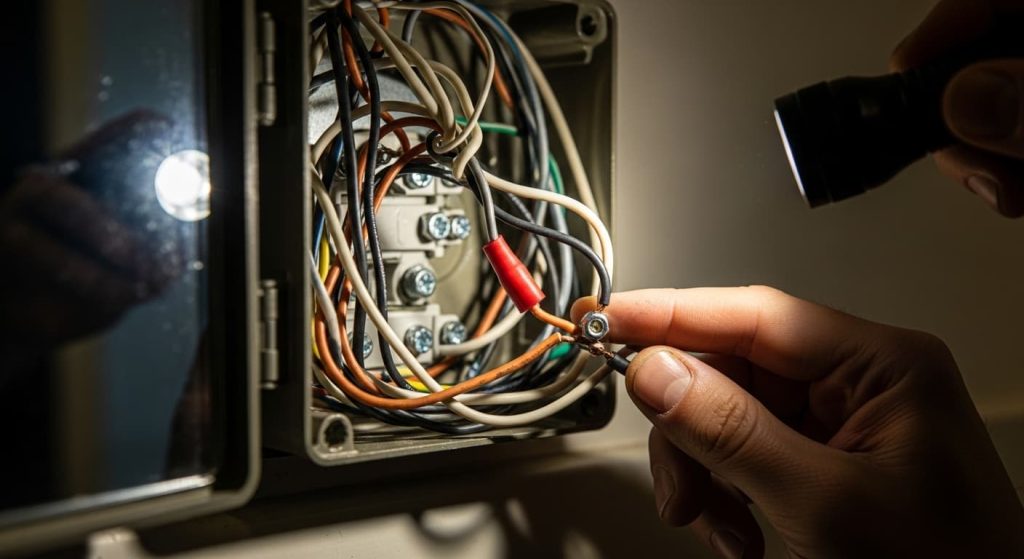
Sometimes the issue is specific to the environment or installation quality.
- Loose Wiring Connections: Vibrations from closing doors or temperature changes can cause wire nuts to loosen over time. Simply tightening the wire nuts connecting your mirror to the house wiring can often solve intermittent flickering or total failure.
- Faulty LED Driver: As mentioned earlier, the driver is the workhorse. If your LEDs flicker briefly before dying, or if they emit a faint buzzing sound, the driver is likely the culprit. Fortunately, these are often replaceable. You can usually order a compatible driver online if you match the voltage and wattage specifications.
- Water Damage and Humidity: Bathrooms are wet places. Over time, steam can penetrate the mirror’s housing.
- Look for corrosion (green or white powdery buildup) on the electrical contacts.
- If you find moisture inside the housing, dry it out completely with a hair dryer on a cool setting. You may need to reseal the edges of the mirror unit to prevent future issues.
7. When to Call a Professional
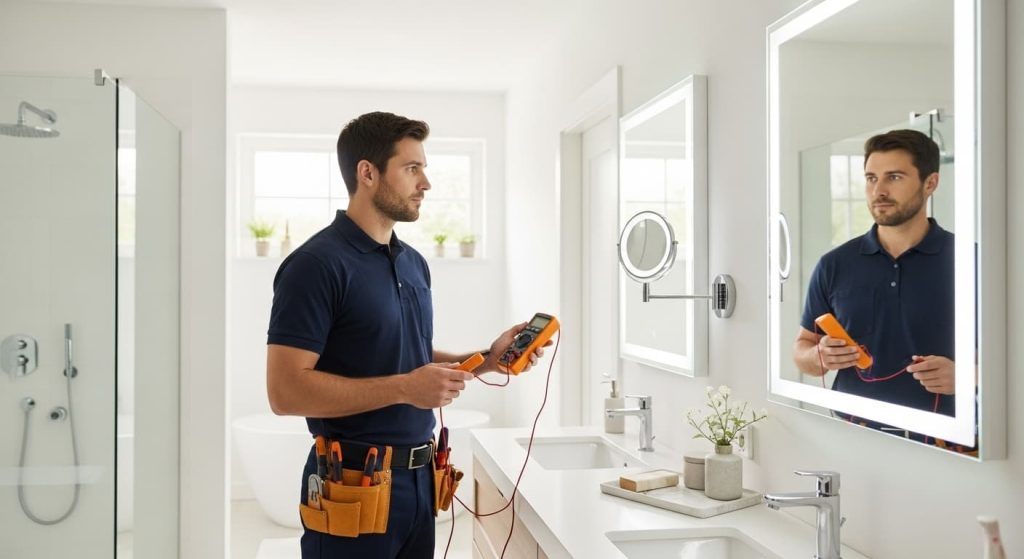
We love a good DIY fix, but electricity is dangerous. There is no shame in calling for backup. You should contact a professional electrician immediately if:
- You smell burning: If there is any scent of smoke or burning plastic, cut the power immediately and call a pro.
- Breakers keep tripping: This indicates a serious short circuit or overload that poses a fire risk.
- Wiring is complex: If you open the mirror and it looks like a confusing mess that doesn’t match the manual, don’t guess.
- You feel unsafe: If you are uncomfortable handling wires or testing voltage, it is always worth the cost of a service call for peace of mind.
Conclusion
A dark LED mirror is frustrating, but it isn’t usually a mystery. By systematically checking the power flow—from the outlet to the driver and finally to the LEDs themselves—you can identify the problem.
To recap, follow these steps:
- Verify that the plug and outlet are working.
- Try the 5-minute “hard reset” trick.
- Check your circuit breakers.
- Clean the touch sensor.
- Inspect internal wiring for loose connections.
- Look for signs of a burnt-out LED driver.
If you have gone through this list and the mirror still won’t light up, it’s time to dig out your receipt. Most reputable manufacturers offer warranties ranging from 1 to 5 years. Contact their support team; they may send you a replacement part or a whole new unit.
Don’t let a dark mirror dim your day. With a little patience and investigation, you can usually get that glow back in no time.
LED Mirror FAQ – Quick Answers
Why is only half of my mirror lit?
The LED strip is failing in sections, or there is a loose connection where the dark part begins.
Why is my mirror flickering?
Usually a failing LED driver or a loose wire. Check connections first.
Can I replace the LED strip myself?
Yes, if you can access the back of the mirror. Just match the voltage and length.
Why does my touch sensor turn on by itself?
Static electricity or power fluctuations can trigger it. Ensure proper grounding.
How long should an LED mirror last?
LED chips last up to 50,000 hours. The driver usually fails first (3–5 years).
Can a dimmer switch break my mirror?
Yes, if it’s not LED-compatible. Use only LED-rated dimmers.
Moisture inside the glass – what now?
Dry it with a cool hair dryer and reseal the edges to prevent steam damage.
Nightlight works,s but the main light doesn’t – why?
The main LED strip is likely burnt out, or the sensor for the main light is faulty.
Fix it or buy new?
Fix if it’s the driver ($15–$40) or LED strip ($10–$30). Replace if the glass is cracked.
Mirror died after a power outage – why?
The power surge likely fried the LED driver. Try a hard reset, then replace the driver.