
Last Updated on February 27, 2026 by Umar Farooq
It’s a frustrating moment. You tap the sensor on your vanity mirror or flip a switch, expecting that clean, bright glow, but you get nothing. A mirror with a non-working light strip can disrupt your entire routine, whether you’re in the bathroom, at a vanity, or using a modern backlit mirror. That halo of light isn’t just for looks; it’s essential for clear visibility.
This guide is for anyone dealing with a faulty LED mirror. We will walk you through simple fixes you can try in minutes and then move into deeper troubleshooting for more complex problems. You’ll learn how to diagnose the issue, from the power source to the LED strip itself, and make an informed decision about repairing or replacing your mirror.
Check the Simple Stuff First
Before you worry about complex wiring or faulty parts, always start with the most common and easiest-to-fix issues. You might be surprised how often the solution is simple.
Power Source
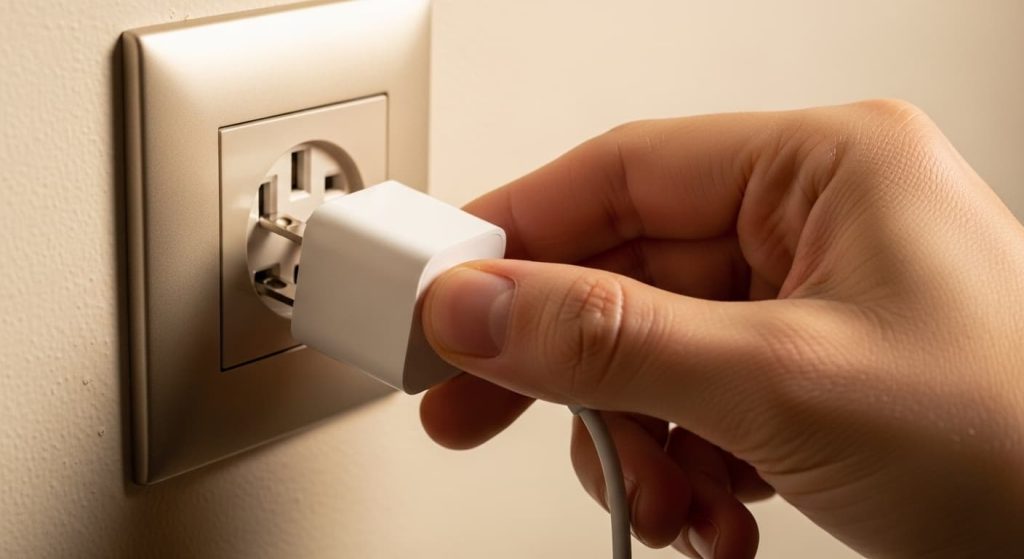
The first step is to confirm the mirror is receiving power.
- Is it plugged in correctly? If your mirror has a plug, ensure it’s firmly seated in the wall outlet.
- Try another outlet. Plug a different device, like a phone charger or lamp, into the same outlet to confirm the outlet itself is working. If that device doesn’t work, you may have a tripped circuit breaker.
- Check for loose connections. Follow the power cord from the mirror to the wall, checking for any loose connection points along the way.
Wall Switch
If your mirror is hardwired and controlled by a wall switch, the problem could be the switch itself.
- Make sure the switch is on. It sounds obvious, but it’s an easy thing to overlook.
- Test another device. If the switch controls the outlet the mirror is plugged into, test that outlet with another appliance to ensure the switch is functioning properly.
Remote or Touch Sensor
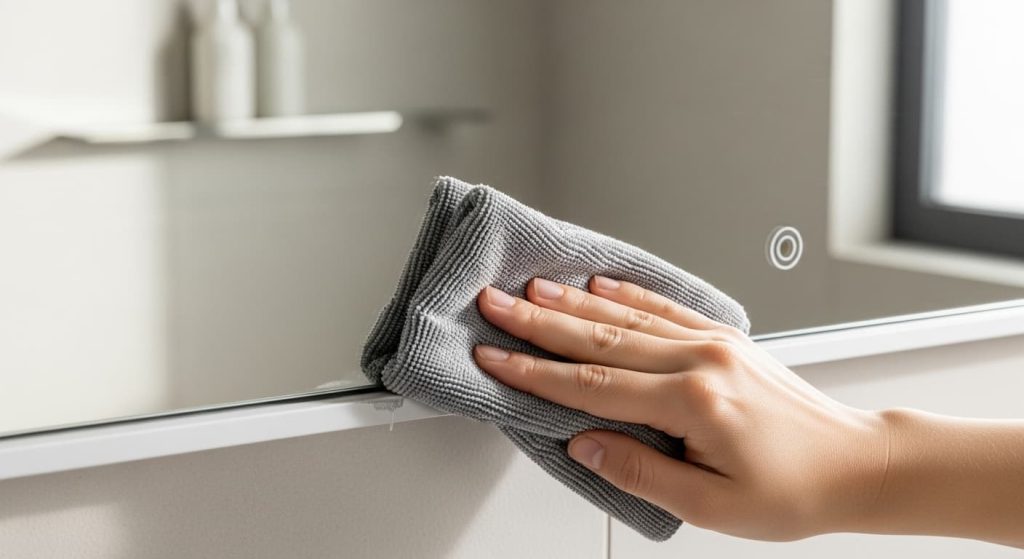
Many modern mirrors use a remote control or a built-in touch sensor.
- Replace remote batteries. This is the number one cause of a non-responsive remote.
- Clean the touch sensor. Wipe the sensor area on the mirror with a clean, dry microfiber cloth. Smudges, moisture, or residue can interfere with its operation.
- Reset the mirror. Some mirrors have a reset function. Check your user manual or try unplugging the mirror for a full minute before plugging it back in to reset the internal components.
Inspect the Power Adapter or Driver
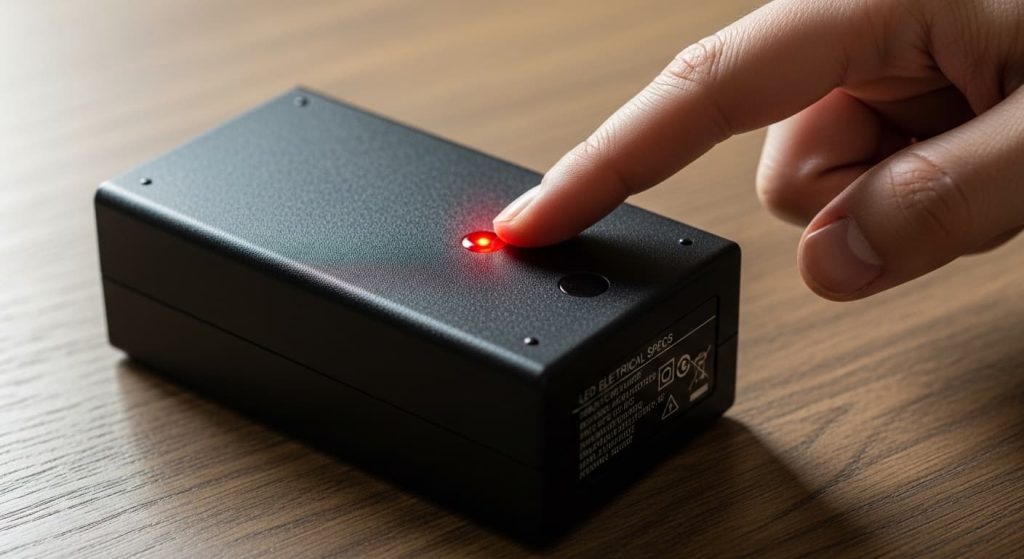
If the simple checks don’t solve the problem, the next component to investigate is the power adapter (for plug-in models) or the LED driver (for hardwired models). This small box converts your home’s AC power to the low-voltage DC power the LEDs need. Think of it as the “brains” and power plant for your lights.
- Look for indicator lights. Some drivers have a small LED that shows it’s receiving power. If it’s off or blinking, the driver may be faulty or not getting power.
- Feel for overheating. Unplug the mirror and carefully feel the driver. If it’s excessively hot to the touch, it might be failing.
- Check for a burnt smell. A distinct electronic burning smell is a clear sign that the driver has failed and needs to be replaced.
- Test with a compatible adapter (Plug-in models only). If you have a spare adapter, you can try it, but this must be done with extreme caution. Crucial Safety Note: Only do this if you are 100% certain the replacement adapter’s voltage (V) is an exact match, and its current (A or mA) is equal to or greater than the original. Using the wrong adapter can instantly destroy the new LED strip or create a fire hazard. This test helps confirm if the original adapter is the problem.
Look for Damaged Wiring
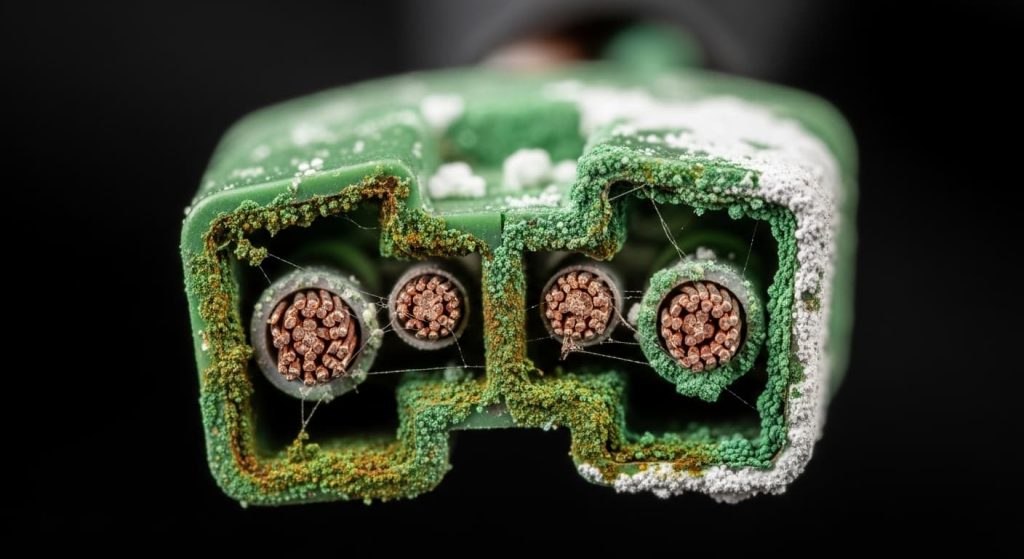
Damaged wires can cut off power to the LED strips completely. This requires careful inspection, often with the mirror off the wall.
- Loose wire connections: Vibrations or improper installation can cause wires to come loose from their terminals on the driver or the LED strip.
- Pinched wires: Wires can get pinched between the mirror and the wall during installation, causing a break in the connection.
- Tension on the wires: Check if the wires are being pulled tight. If the mirror is hung in a way that puts constant tension on the power cable or the internal wires, it can pull a connection loose over time.
- Corrosion: In humid bathroom environments, moisture can cause corrosion on connectors and wires. Look for green or white crusty buildup—this is a sign of a poor or non-existent electrical connection.
- Signs of water damage: Check the housing and internal components for any signs of moisture intrusion, which can short out the entire system.
LED Strip Issues
Sometimes, the problem lies with the LED strips themselves. LED lights have a long lifespan, but they are not immune to failure.
Burned-Out LEDs
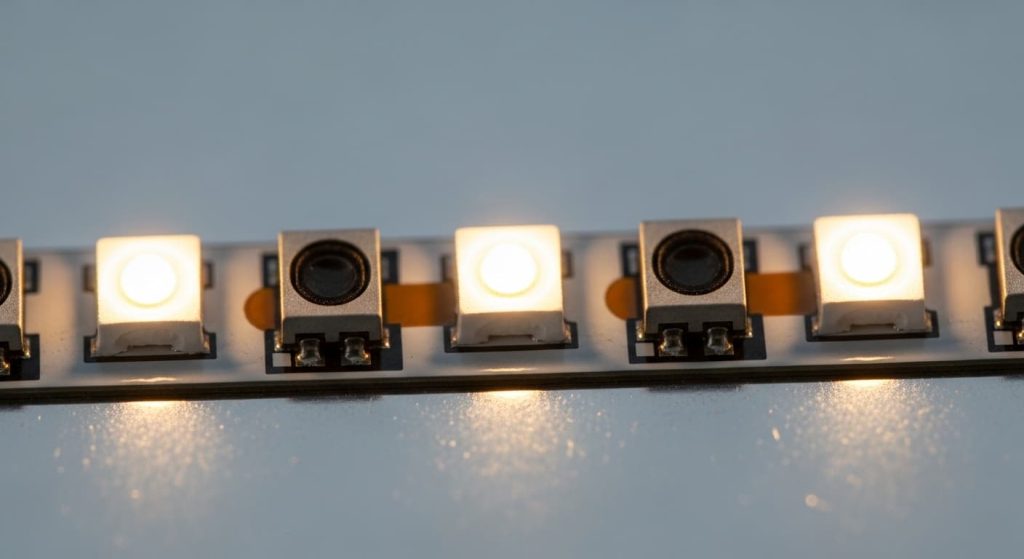
- Dark spots: The most obvious sign is one or more dark spots along the strip where individual LED chips have burned out. It’s important to note that a few burned-out LEDs will create dark spots, but the rest of the strip will usually stay lit. If the entire strip is dead, the problem is more likely with the power supply, a major connection, or the control board.
- Flickering before failure: Often, LEDs will flicker for a period before they fail. If you noticed this before the lights went out, the strip is a likely culprit.
Voltage Mismatch
- Wrong adapter: Using a power adapter that doesn’t match the voltage requirements of your LED strip can either provide too little power (no light) or too much power, burning out the strip instantly.
- Insufficient power supply: The power supply must provide enough wattage to support the entire length of the LED strip. An underpowered driver will fail to light them up.
Cheap LED Strips
Unfortunately, not all LED mirrors are created equal. Lower-quality models often use cheap LED strips with poor internal soldering and low-grade components, leading to a much shorter lifespan.
Mirror Light Strip Flickering Instead of Fully Dead
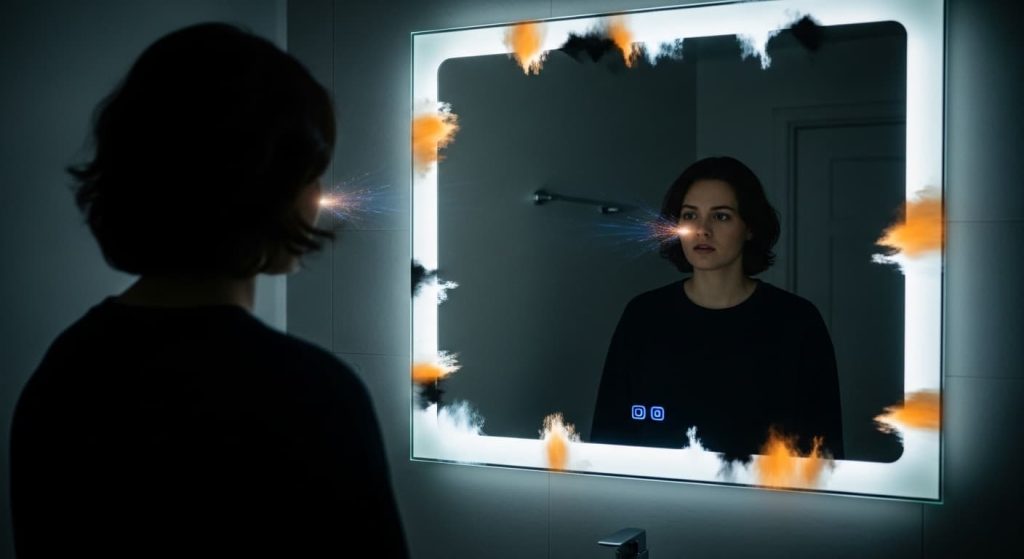
If your mirror lights are flickering, it indicates an inconsistent power supply. This is often a precursor to complete failure.
- Loose wiring: A flickering light is a classic symptom of a loose wire.
- Failing driver: The LED driver may be starting to fail, providing unstable power to the strips.
- Voltage fluctuations: Issues with your home’s electrical circuit can sometimes cause flickering.
- Dimmer compatibility: If your mirror is on a circuit with a dimmer switch, flickering can occur if the LED driver is not compatible with that specific type of dimmer.
When the Touch Button Lights Up But LEDs Don’t
This is a specific and telling symptom. If the touch sensor’s indicator light is on, it means the mirror is getting power, and the low-voltage control circuits are working. The problem is somewhere between the control board and the LEDs.
- Faulty control board: The part of the board that sends power to the LEDs may have failed.
- Broken internal transformer: The transformer that steps up the voltage for the LED strips could be broken.
- Disconnected LED strip: The wire connecting the control board to the LED strip may have become disconnected.
When to Replace vs. Repair
Facing a dead mirror, you have to decide whether to fix it or buy a new one.
- Cost of parts: A new LED driver or strip is usually affordable. However, if the main control board is fried, the part might be expensive or hard to find. Compare the cost of parts to the price of a new mirror.
- Availability of Parts: Finding an exact replacement driver or LED strip for an off-brand mirror can be very difficult. It’s worth searching online with your mirror’s model number before deciding to repair.
- Aesthetics & Age: Is the mirror itself old, scratched, or developing silvering issues (black spots on the reflective surface)? If the mirror is nearing the end of its life anyway, it might make more sense to replace the whole unit rather than just the electronics.
- Time & Effort vs. Money: How much is your time worth? Ordering a specific part, waiting for it to arrive, and spending time on repairs might not be worth it if a comparable new mirror is only slightly more expensive.
- Safety concerns: If you see signs of burning, extensive corrosion, or water damage, replacement is the safer option.
- Warranty check: Before you spend any money, check if your mirror is still under warranty. Most manufacturers will cover faulty components.
Quick Troubleshooting Checklist
Here’s a handy summary to run through when your mirror light strip stops working:
- Is it plugged in, andis the outlet working?
- Is the wall switch on?
- Did you try a remote reset (new batteries or unplugging for one minute)?
- Is the touch sensor clean and dry?
- Does the power adapter feel hot or smell burnt?
- Are there any loose, pinched, or corroded wires?
- Are there dark spots on the LED strip itself?
Safety Warning
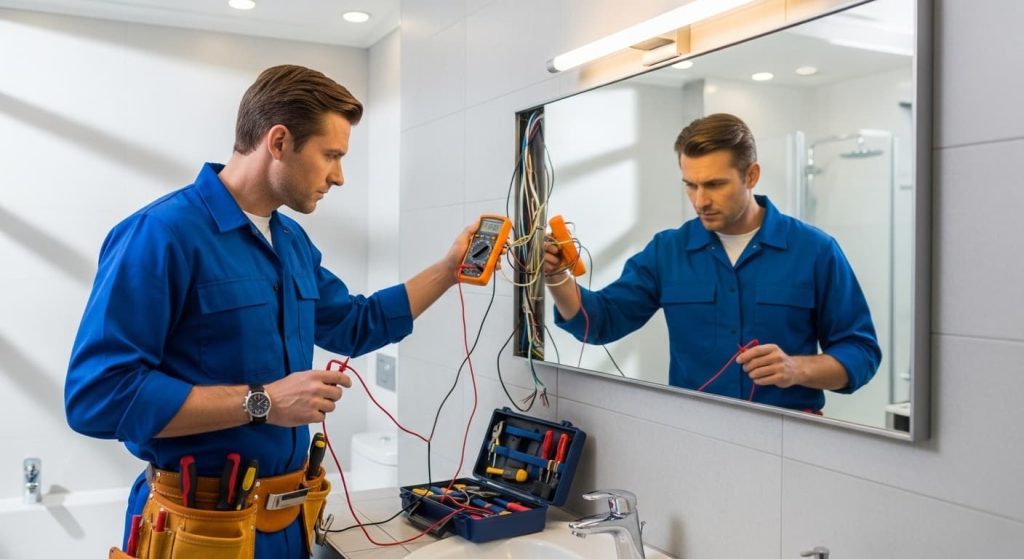
Your safety is the top priority. Working with electricity can be dangerous if you are not experienced.
- Turn off power: Before opening the mirror’s housing or touching any wires, always turn off the power at the circuit breaker.
- Avoid DIY if unsure: If you are not comfortable with electrical troubleshooting, do not attempt complex repairs. The risk of electric shock or creating a fire hazard is not worth it.
- Call an electrician: When in doubt, call a qualified electrician. They can safely diagnose and fix hardwired mirrors, replace faulty drivers, and ensure everything is up to code.
Frequently Asked Questions
Why is my LED mirror light not working, but the touch button lights up?
This means power is reaching the mirror, but the issue is between the control board and the LED strip. Check for disconnected wires or a faulty control board.
Can I replace just the LED strip in my mirror?
Yes, in most cases you can. However, finding an exact replacement can be tricky. Search online using your mirror’s model number first.
How long should LED mirror lights last?
Quality LED strips typically last 30,000 to 50,000 hours. If your mirror failed much sooner, it may have cheap components or a power issue.
Why is my mirror light flickering?
Flickering usually means loose wiring, a failing LED driver, or an incompatible dimmer switch. Check connections before the problem gets worse.
Is it safe to repair a hardwired mirror myself?
Only if you’re comfortable with electrical work. Always turn offthe ower at the circuit breaker first. When in doubt, call an electrician.
Why won’t my touch sensor work?
The sensor might be dirty or wet. Wipe it with a dry microfiber cloth. If that doesn’t work, the control board may be faulty.
Can a humid bathroom damage my mirror lights?
Yes. Moisture can cause corrosion on wires and connectors, leading to failure. Look for green or white crusty buildup on connections.
Should I repair or replace my mirror?
Compare repair costs to a new mirror. If parts are expensive, the mirror is old, or you see signs of burning/water damage, replacement is safer.