
Last Updated on February 27, 2026 by Umar Farooq
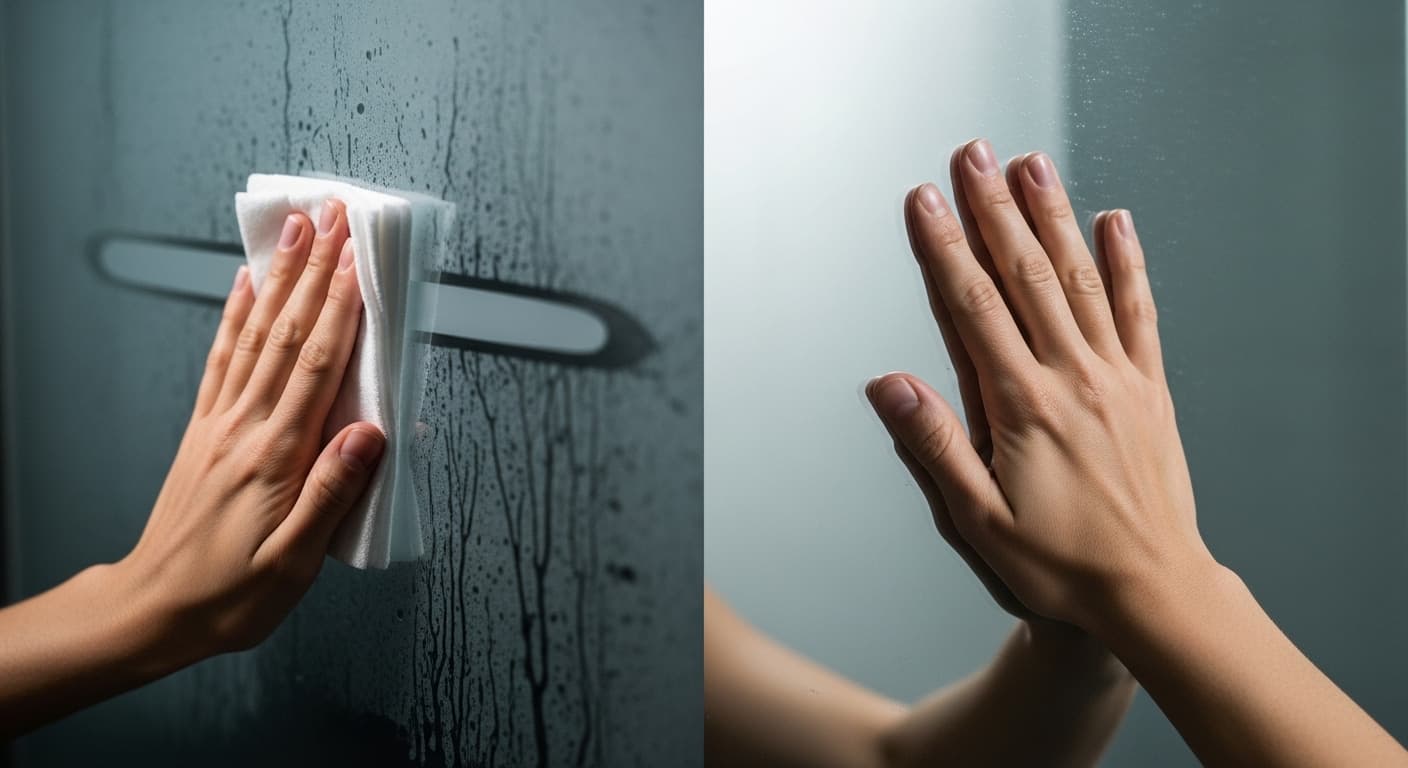
You step out of a steamy shower, ready to start your day, only to find your expensive anti-fog mirror has failed at its one job: it’s… half-foggy. Some spots are clear while others are completely obscured by condensation, leaving you to wipe away streaks with a towel—defeating the whole purpose of your purchase. This frustrating experience is more common than you think, and the solution is often within reach.
This guide will help you understand why your mirror isn’t clearing up completely. We will explore the common causes, show you how to diagnose the issue, and provide practical steps to fix it. From simple checks to knowing when it’s time for a replacement, we’ve got you covered.
What Does “Uneven Heating” Mean?
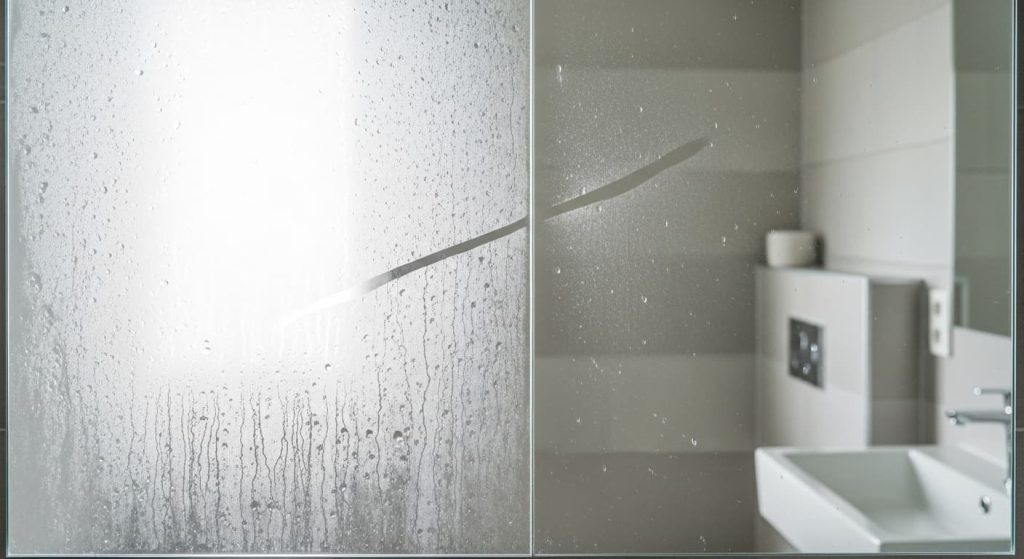
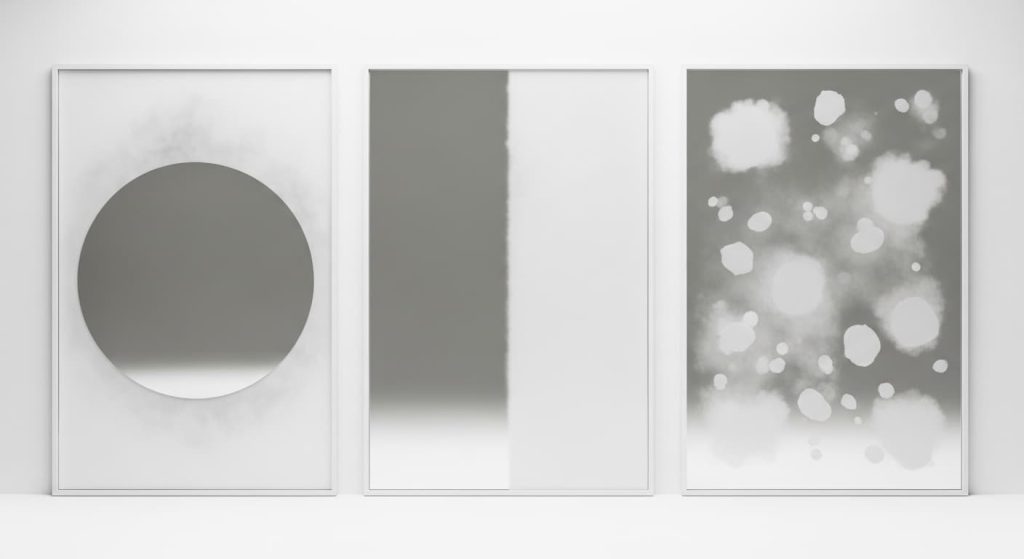
When an anti-fog mirror heats unevenly, it means the heat isn’t being distributed uniformly across the glass surface. Instead of a fully clear reflection, you will notice distinct patterns of fog and clarity.
Here are the common signs:
- Foggy Patches: Some sections of the mirror remain foggy while others are clear.
- Streaks: You might see vertical or horizontal streaks of condensation.
- Cold Edges: The center of the mirror gets warm, but the outer edges stay cold and fogged over.
- Partial Clarity: Only a small, specific area, often a square in the middle, clears up.
Simply put, the integrated heating system is not performing as it should, leaving you with a patchwork of clear and foggy glass.
How Anti-Fog Mirrors Are Supposed to Work
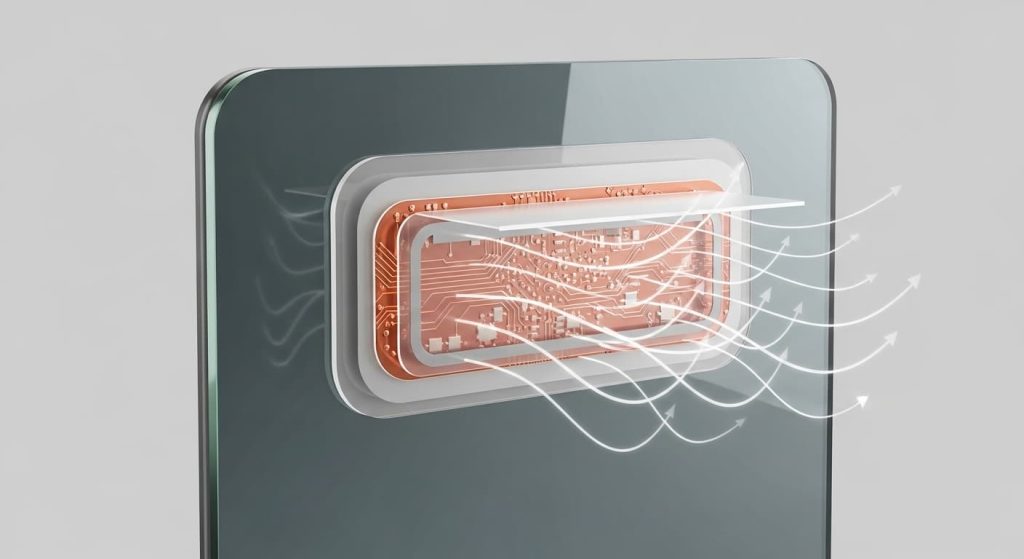
The technology behind an anti-fog mirror is straightforward yet effective. A thin, electric heating pad—essentially a resistive element, much like the defroster in your car’s rear window—is attached to the back of the mirror glass. When you turn it on, a low-wattage current flows through the pad, gently warming the surface of the mirror.
This warmth raises the mirror’s surface temperature just enough to prevent the moisture from your hot shower from condensing on the cooler glass. Condensation is what creates fog. When the heat spreads evenly across the entire pad, the whole mirror remains clear, giving you a perfect reflection every time.
Common Causes of Uneven Heating
If your heated mirror isn’t working correctly, the issue usually falls into one of four categories: poor placement, installation mistakes, power supply problems, or low product quality.
Poor Heating Pad Placement
The placement and size of the heating pad are critical. If it’s not installed correctly from the factory or during a custom build, you will see uneven results.
- Pad is Too Small: The heating pad may not be large enough for the mirror, leaving the edges and corners unheated.
- Not Centered: An off-center pad will cause one side of the mirror to be clear while the other remains foggy.
- Heated Center by Design: Some models are intentionally designed to only heat the central portion of the mirror. Always check the product specifications to see if this is the case.
Installation Problems
Even a high-quality mirror can fail if it’s installed improperly. The connection between the heating pad, the mirror, and the wall is crucial for performance.
- Air Gaps: If the mirror isn’t flush against the wall or the heating pad isn’t fully adhered to the mirror’s back, air gaps can form. These gaps trap air, which acts as an insulator and prevents heat from transferring to the glass.
- Bad Adhesive Contact: The adhesive used to bond the heating pad to the mirror can fail over time, causing parts of the pad to peel away and create cold spots. Humidity in a bathroom often accelerates this.
- Loose Wiring: A loose connection can interrupt the power flow to the heating element, leading to inconsistent or no heat.
Power Issues
Your mirror’s heating element needs a consistent and correct supply of electricity to function. Most mirrors are low-voltage (12V or 24V) and use a transformer, while some are line-voltage (120V).
- Low Voltage: If the mirror receives less voltage than it’s rated for, the heating pad won’t get warm enough to prevent fog.
- Faulty Transformer: A failing transformer is a very common culprit. It can deliver inadequate or fluctuating power to the mirror.
- Shared Circuit Overload: If the mirror is on a circuit with other high-draw appliances, it may not receive enough power to operate effectively.
Product Quality
Unfortunately, not all anti-fog mirrors are made equal. A lower price point can sometimes mean lower-quality components.
- Cheap Heating Elements: Low-grade heating elements may have inconsistencies in their wiring, causing hot and cold spots from day one.
- Thin Wiring: Flimsy wiring within the pad may not distribute heat well and can be more prone to breaking over time.
How to Test for the Problem
Before calling a professional, you can run a simple test to diagnose the issue. This will help you pinpoint where the failure is occurring.
- Create Steam: Run the shower on hot for 10-15 minutes with the door and any windows closed. The goal is to saturate the room with steam, not just get the mirror wet.
- Turn on the Mirror: Ensure the anti-fog feature is switched on.
- Observe the Pattern: Watch how the mirror clears. Does only the center clear? Are the edges staying foggy? Note the specific areas that fail to defog. (A clear center with foggy edges usually points to a pad that is too small.
- Carefully Check the Temperature: With dry hands, carefully touch different areas of the mirror. Compare the temperature of the clear spots to the foggy ones. You should feel a noticeable difference. For a more precise test, you can carefully use an infrared thermometer or the back of your hand. An IR thermometer will give you a clear temperature reading for different spots on the glass without leaving smudges.
Safety First: Never attempt to inspect wiring or open the mirror’s housing without shutting off the power at the circuit breaker first.
Quick Fixes You Can Try
Sometimes the fix is surprisingly simple. Before assuming the worst, run through this checklist:
- Check the Switch: Ensure the wall switch controlling the mirror defogger is fully on.
- Review Timer Settings: If your mirror has a timer, make sure it’s set correctly and hasn’t automatically turned off.
- Consult the Manual: If the mirror is new, read the manual. It might state that only the center panel is designed to be heated.
- Reset the Breaker: Go to your electrical panel and reset the breaker connected to the bathroom. This can resolve issues caused by a minor electrical trip.
When It’s an Installation Issue
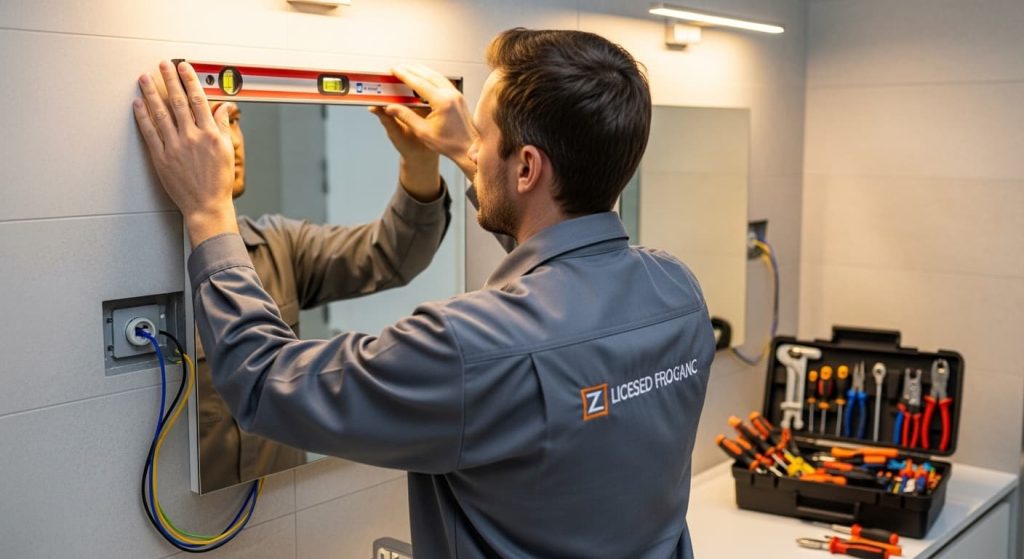
If the quick fixes don’t work, the problem likely lies with the installation. This is common if the mirror isn’t fully bonded to the wall, allowing cold air to get behind it. In many cases, the heating pad is stuck to the back of the mirror with a strong adhesive. Over time, humidity or poor initial application can cause the edges of the pad to lift. This creates an air gap, and since air is an insulator, that section of the glass stays cold.
Fixing this issue often involves removing the mirror from the wall (often a two-person job) to reapply the adhesive, press the pad back into place, or ensure a flush fit against the wall. Due to the risk of damaging the mirror or dealing with electrical wiring, it is highly recommended to hire a professional electrician or a glass specialist for this task.
When to Replace the Mirror
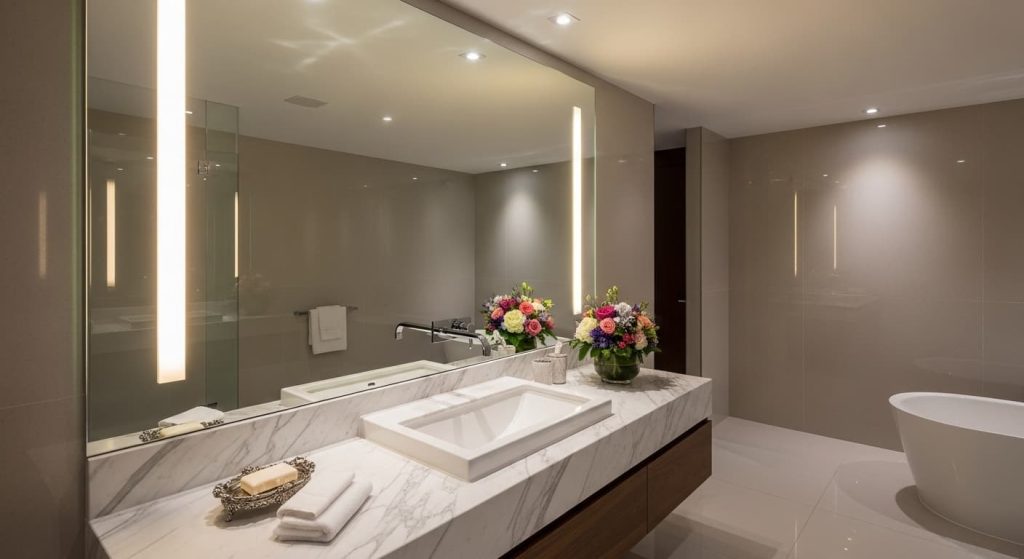
While many issues are fixable, sometimes a full replacement is the most practical solution.
- Heating Element is Dead: If a portion of the heating element has burned out, it cannot be repaired. The entire heating pad or mirror unit must be replaced.
- Burn Marks: If you notice discoloration or burn marks behind the glass, stop using the mirror immediately and unplug it. This is a serious fire hazard.
- Repeated Circuit Trips: If the mirror constantly trips the circuit breaker, it may have a dangerous electrical short.
- Out of Warranty: If the unit is out of warranty and the cost of a professional repair is close to or exceeds the price of a new mirror, replacement is the more economical choice.
How to Prevent Uneven Heating in the Future
If you are installing a new anti-fog mirror, you can take steps to ensure it works perfectly for years to come.
- Buy from Quality Brands: Invest in a mirror from a reputable manufacturer known for reliable heating elements.
- Match Pad to Mirror Size: If you are building a custom unit, choose a heating pad that covers the majority of the mirror’s surface area.
- Hire a Licensed Electrician: Proper installation is the key to performance and safety. An electrician will ensure the wiring, voltage, and connections are correct.
- Insulate Exterior Walls: If your bathroom is on an exterior wall, adding insulation behind the mirror will help it retain heat and work more efficiently.
A Clear Mirror Makes for a Better Morning
An anti-fog mirror is a small luxury designed to make your daily routine smoother, not more frustrating. When you see foggy patches on a heated mirror, it’s a clear sign that something is wrong. By using the steps in this guide—from checking your circuit breaker to inspecting for air gaps—you can often restore that luxury yourself, or know exactly when to call in a pro for a long-term fix. Don’t settle for a half-foggy reflection. With a little troubleshooting, you can get back to enjoying a completely clear reflection every time you step out of the shower.
Frequently Asked Questions
Why is the middle of my mirror clear, but the edges are foggy?
This is the most common sign that your heating pad is too small for the mirror glass. The heat simply doesn’t reach the outer edges.
Can I repair a heated mirror myself?
You can try quick fixes like resetting the breaker or checking the switch. However, if the heating pad itself is damaged or the wiring is faulty, you should hire a professional electrician to avoid safety risks.
How long should an anti-fog mirror take to clear?
A properly working mirror should start clearing condensation within 2 to 5 minutes of being turned on.
Do anti-fog mirrors use a lot of electricity?
No. They use a low-wattage heating pad, usually consuming about the same amount of power as a small light bulb, making them very energy-efficient.
Why does my mirror feel warm but still have fog?
If it feels warm but won’t clear, the heating pad may be partially detached from the glass. The air gap created by the detachment prevents the heat from transferring properly to the surface.
Is it worth replacing an anti-fog mirror?
Yes, if the heating element is burned out or the repair cost is high. A new, quality unit ensures safety and reliable performance for years.