
Last Updated on February 25, 2026 by Umar Farooq
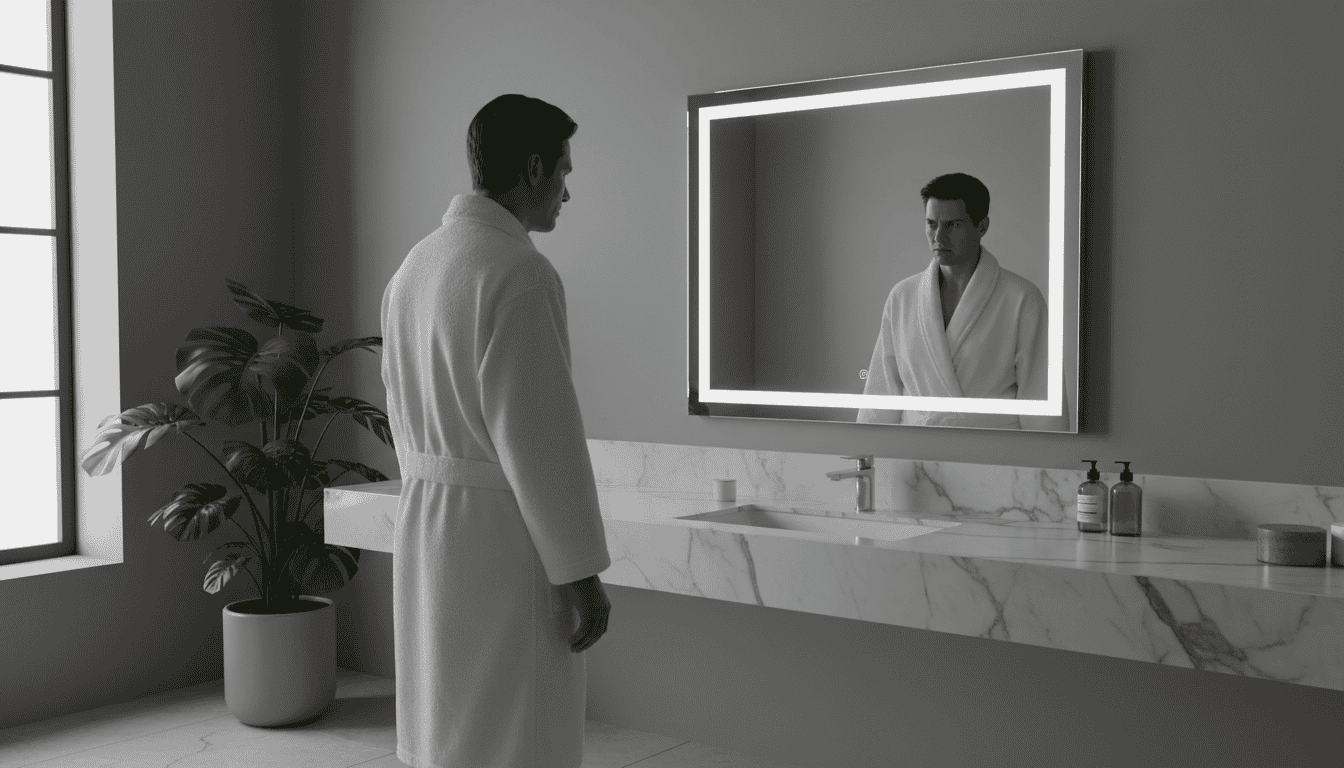
You just installed that sleek, new LED mirror. It looks like a five-star hotel feature. But the first time you try to pluck an eyebrow or get a perfect shave, you’re leaning so close your nose is almost touching the glass, squinting in frustration. The “ambiance” is ruining your routine.
This is a common frustration for many homeowners, renters, and even business owners in salons or hotels. You’re left dealing with bad makeup lighting, a difficult shave, or just a dull bathroom vibe that lacks energy.
The good news is that you’re not stuck with a mirror that only serves as a decoration. Understanding why your LED mirror is underperforming is the first step toward fixing it. This guide will walk you through the causes of dim lighting, how to fix them, and what to look for in a new mirror if it’s time for an upgrade.
7 Reasons Your LED Mirror Is Too Dim (and How to Fix Them)
An LED mirror’s brightness depends on more than just flicking a switch. Several technical factors contribute to the quality and intensity of the light. Often, a dim mirror is a result of one or more of these issues.
Low Lumen Output
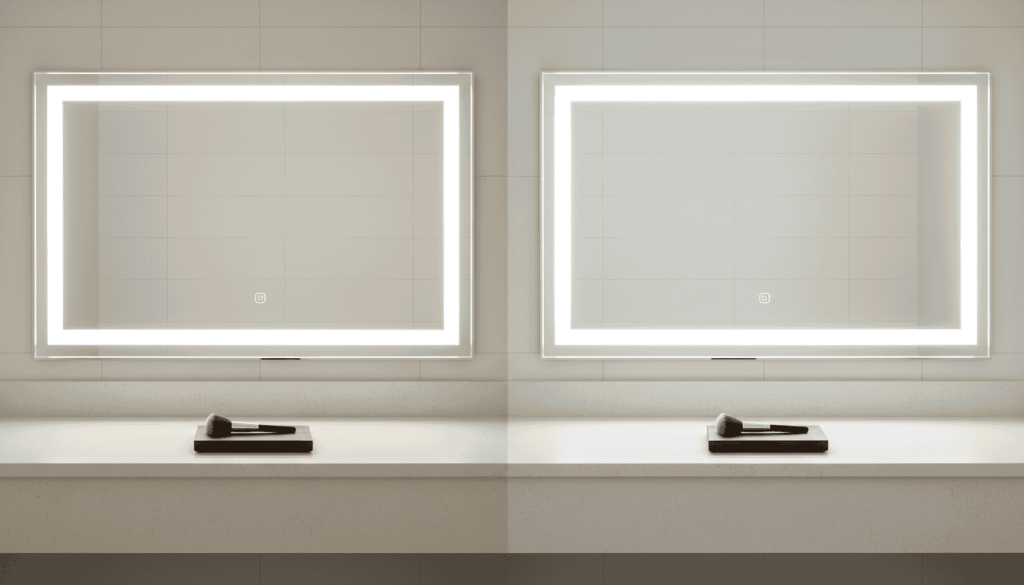
The most common culprit behind a dim mirror is low lumen output. Lumens (lm) are the measurement of a light’s total brightness—the higher the lumen count, the brighter the light. Many LED mirrors, especially more affordable models, are designed for “accent lighting” rather than “task lighting.” This means they are intended to create a soft, ambient glow instead of providing the focused, bright light needed for detailed grooming.
Wrong Color Temperature
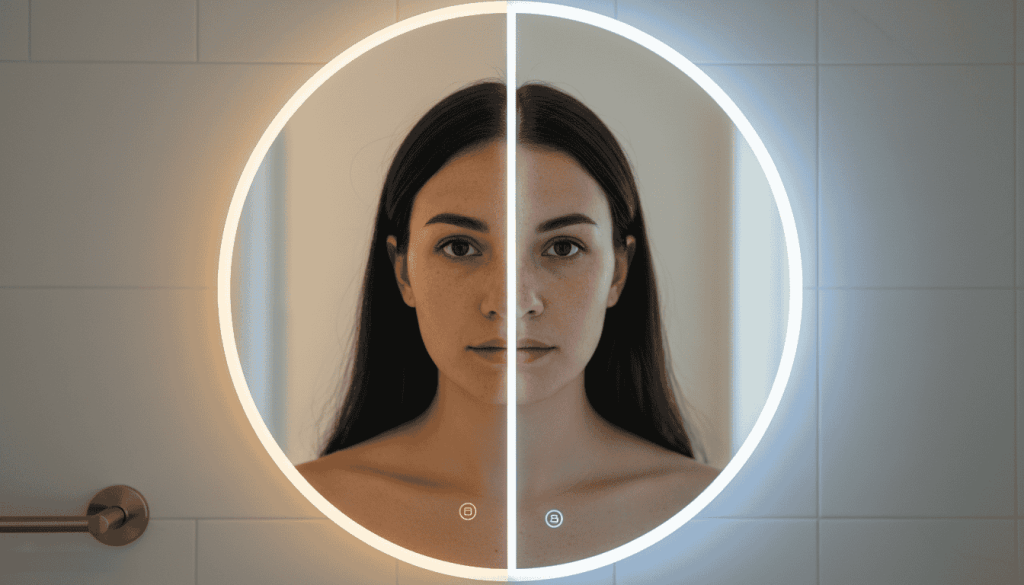
Color temperature, measured in Kelvin (K), determines the color appearance of the light, from warm to cool. This has a significant impact on how bright the light feels to your eyes.
- Warm White (2700K–3000K): This light produces a cozy, yellowish glow similar to a traditional incandescent bulb. While it’s great for creating a relaxing atmosphere, it can feel dim and make it difficult to see true colors.
- Cool White (4000K–6000K): This range emits a crisp, clear, and more neutral or blue-toned light. It mimics natural daylight, which makes it look significantly brighter and is far better for tasks like applying makeup or shaving.
Poor LED Strip Quality
Not all LEDs are created equal. The internal LED strips are the heart of the mirror, and their quality matters. Cheaper, low-grade LEDs can suffer from several problems, including rapid dimming over time, uneven lighting that creates distracting dark spots, and poor color accuracy. These issues can become apparent just months after installation.
Voltage or Power Supply Issues
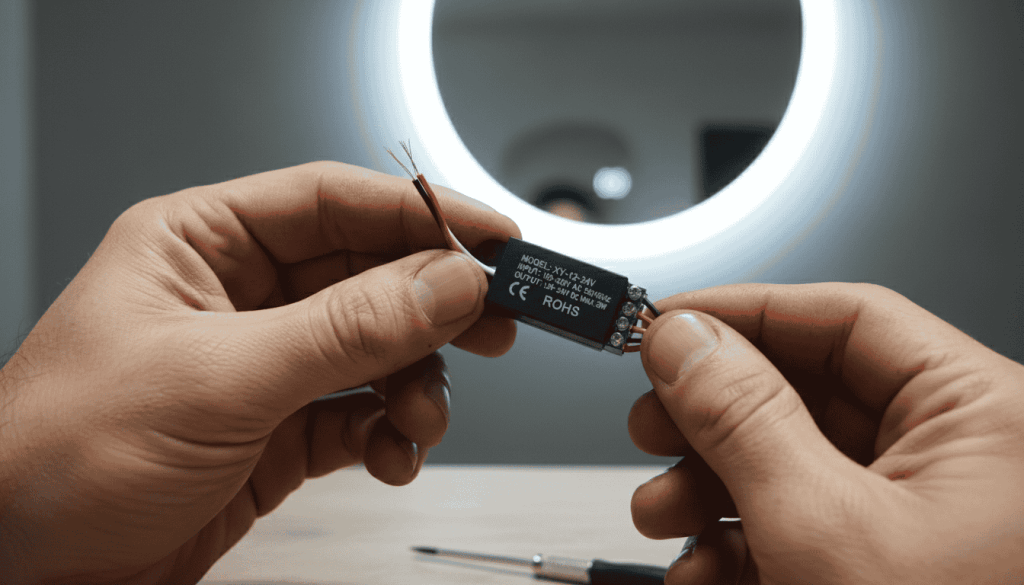
Every LED mirror uses a component called a “driver,” which converts your home’s high-voltage AC power into the low-voltage DC power the LEDs need. If this driver is underpowered or low-quality, it can’t supply enough electricity to the LEDs, resulting in a weak, dim light. Think of the driver as the engine of your LED mirror—if the engine is too small for the car, it won’t go fast. Similarly, long or inefficient wiring between the driver and the LED strips can cause a voltage drop, reducing brightness before the power even reaches the lights.
Frosted or Thick Diffusers
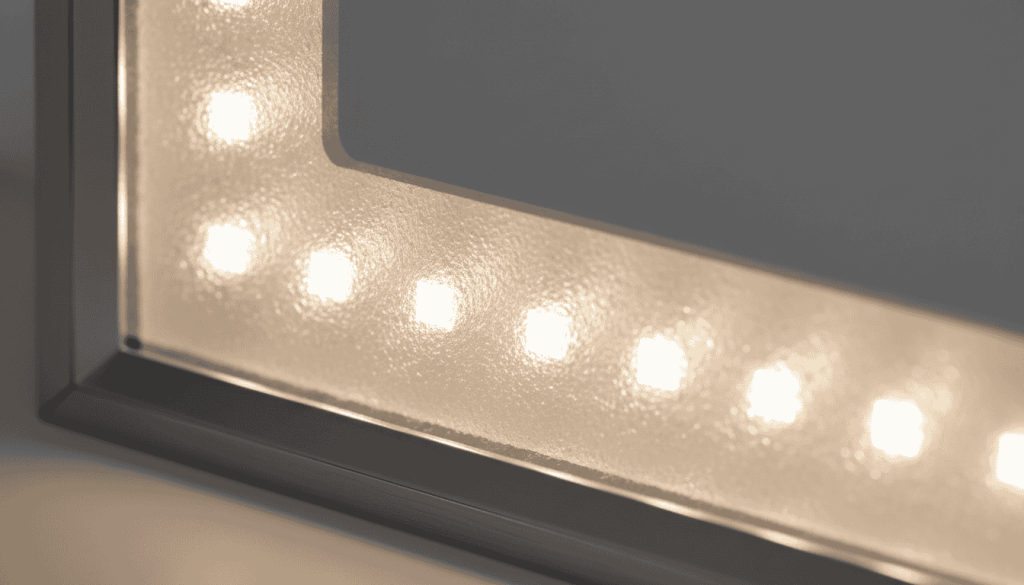
The frosted glass or plastic that covers the LEDs is called a diffuser. Its job is to soften and spread the light evenly to eliminate harsh glare. However, a very thick or heavily frosted diffuser can block a significant amount of light. While this creates a beautiful, soft mood, it sacrifices the raw brightness you need for detailed work.
Bathroom Lighting 101: How Many Lumens Do You Really Need?
To ensure your mirror is functional, you need to think in lumens. The ideal brightness depends on how you use your bathroom and what other light sources are present.
For primary bathroom lighting, you generally need about 75-100 lumens per square foot. However, for task lighting directly around the vanity and mirror, the needs are more concentrated. Here is a simple guide to help you choose:
| Intended Use | Recommended Lumens | Color Temp (Kelvin) | CRI |
|---|---|---|---|
| Ambient/Decorative | 200 – 500 | 2700K – 3000K (Warm) | >80 |
| General Grooming | 800 – 1,500 | 3500K – 4500K (Neutral) | >90 |
| Detailed Makeup/Shaving | 1,500 – 2,500+ | 4000K – 5000K (Cool/Daylight) | >90 |
If your LED mirror is your only light source, you’ll want to be on the higher end of that task lighting range. If you have excellent overhead lighting, you might get away with a mirror that offers fewer lumens.
3 Quick Fixes to Try Before Buying a New Mirror
Before you decide to replace the entire unit, there are a few practical solutions you can try to improve your bathroom’s lighting situation.
Add Overhead Lighting
If your mirror is the sole light source, the easiest fix is to add another fixture. A central ceiling light, like a flush mount or semi-flush mount, can fill the entire room with ambient light, making the mirror’s dimness less of an issue.
Install Side Sconces
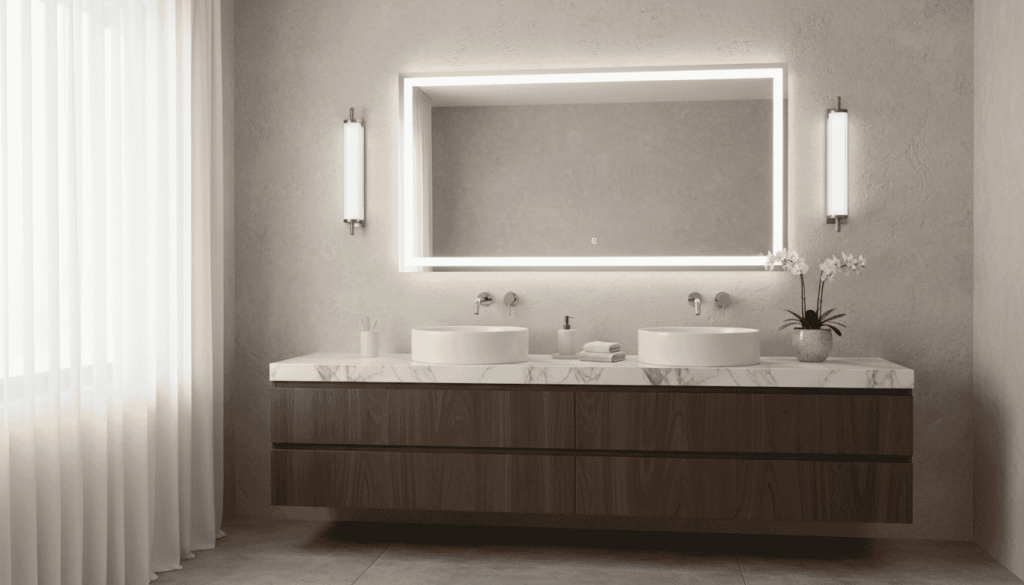
One of the best ways to improve task lighting is by adding vertical sconces on either side of the mirror. This placement provides even, cross-illumination that drastically reduces the shadows on your face that overhead lighting often creates.
Check the Connection and Dimmer
An often-overlooked culprit is the installation itself. Ensure the mirror is properly connected and that any dimmer switch in the circuit is specifically designed for LEDs. Older dimmers made for incandescent bulbs often don’t work correctly with LEDs, causing them to flicker or remain permanently dim.
Replace the Driver
If you suspect the power supply is the problem, a qualified electrician can often replace the existing driver with a stronger, compatible one. This can give your LEDs the power they need to perform at their full potential.
When It’s Time to Replace the Mirror
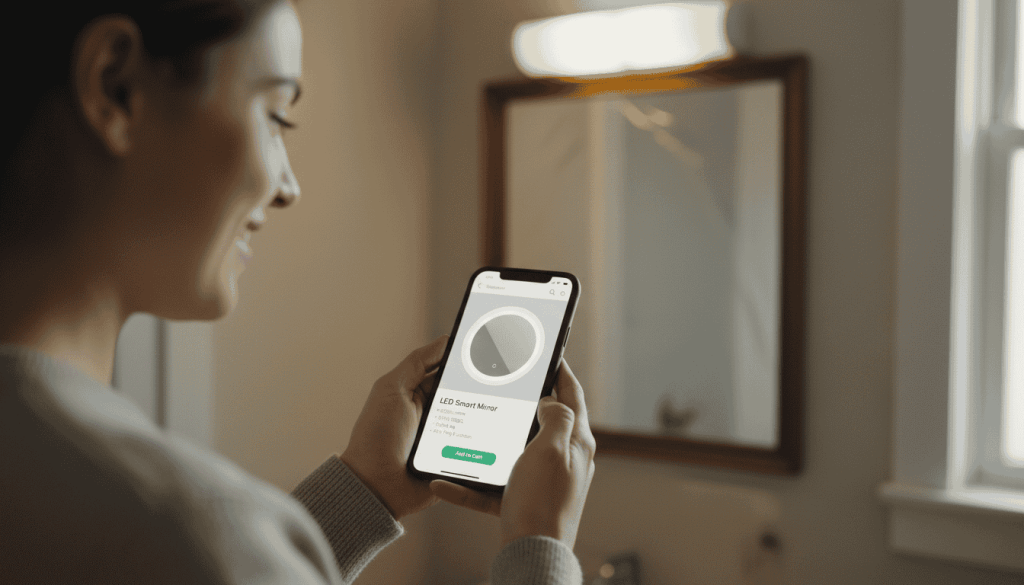
Sometimes, a mirror is just fundamentally underpowered for your needs. If you’ve tried adding other lights and are still unhappy, it may be time for a replacement.
Here are the key specifications to check before buying a new LED mirror:
- Lumens: Look for the specific lumen count in the product details. Ignore vague marketing terms like “super bright.” Aim for at least 1,000 lumens for a functional task mirror.
- Color Temperature (K): Choose a mirror with adjustable color temperature or one fixed in the neutral to cool white range (4000K-5000K) for the best clarity.
- Dimmable Features: A dimmable mirror gives you the best of both worlds—bright task lighting when you need it and soft ambient light when you don’t.
- CRI (Color Rendering Index): CRI is a score from 0 to 100 that measures how accurately a light source reveals the true colors of objects. For makeup application, you need a high CRI. Look for a mirror with a CRI of 90 or higher to ensure that reds look red and your foundation matches your skin tone.
Pro Tips Before You Buy Your Next Mirror
To avoid disappointment with your next purchase, keep these professional tips in mind.
- Don’t Rely on Photos: Product photos are often shot in professionally lit studios and can be digitally enhanced. They rarely represent how the mirror will perform in your actual bathroom.
- Check the Real Specs: Dig into the product description for hard numbers: lumens, Kelvin, and CRI. If a manufacturer doesn’t provide these details, it’s often a red flag that the product is designed for aesthetics over function.
- Think About Your Use Case: How do you actually use your mirror? If it’s your primary spot for grooming, prioritize high lumens and a high CRI. If it’s in a guest powder room, you can focus more on style.
The Right Light Makes All the Difference
A dim LED mirror is a common and solvable problem. Whether by supplementing with other fixtures or upgrading to a new unit with the right specifications, you can transform your bathroom from a frustratingly dull space into a functional and inviting one. The right brightness doesn’t just help you see better—it changes the entire feel and utility of the room.
LED Mirror FAQs
Why is my new LED mirror so dim?
The most common reasons are low lumen output, the wrong color temperature (warm light feels dimmer), or a poor-quality LED driver not supplying enough power.
How many lumens should a good bathroom mirror have?
For detailed tasks like makeup or shaving, aim for 1,000 to 2,500 lumens. If the mirror is just for decoration or ambiance, 200-500 lumens may be enough.
What color temperature is best for bathroom mirrors?
Cool white (4000K to 5000K) is best. It mimics natural daylight, feels brighter, and is ideal for grooming. Warm white (2700K-3000K) creates a cozy feel but can appear dim.
Can I make my existing LED mirror brighter?
Yes. You can try adding overhead lights or side sconces. If the issue is the driver, a qualified electrician may be able to replace it with a stronger one.
What does CRI mean, and why does it matter?
CRI stands for Color Rendering Index. It measures how accurately colors appear under the light. For makeup application, look for a CRI of 90 or above so colors look true.
Should my LED mirror be dimmable?
Yes, if possible. A dimmable mirror offers flexibility—bright light for tasks and soft light for a relaxing bath or nighttime use.