
Last Updated on February 25, 2026 by Umar Farooq
You lean in for a closer look. Maybe you are applying eyeliner with precision or trying to get a close shave. Suddenly, the light stutters. It is quick—a blink-and-you-missed-it moment—but then it happens again. And again. Instead of a steady, flattering glow, your bathroom lighting now feels like a low-budget disco.
Nothing ruins a calm morning routine quite like a flickering LED mirror. It is annoying, it strains your eyes, and frankly, it makes your expensive bathroom upgrade feel cheap. But beyond the frustration, a flickering light can be concerning. Is it a fire hazard? Is the mirror broken? Did you install it wrong?
Before you panic or start shopping for a replacement, take a deep breath. In the vast majority of cases, the “strobe effect” is not a sign that your mirror is ruined. It is usually a symptom of a correctable issue, such as an incompatible switch, a loose wire, or a tired power supply. This guide will walk you through exactly why this happens and give you the practical steps to stabilize your light for good.
Common Causes of LED Mirror Flickering
To fix the problem, we first have to understand the mechanics. LED mirrors are more complex than the old vanity bulbs you might be used to. They rely on drivers to convert high-voltage electricity into a steady low-voltage stream. When that stream gets interrupted, you get a flicker. Here are the most common culprits.
1. The Dimmer Switch Conflict
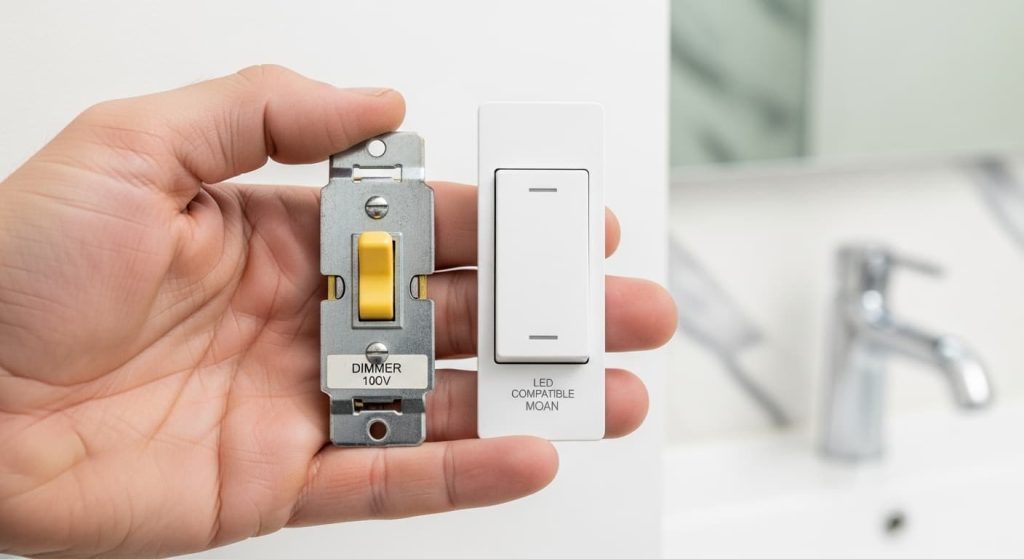
This is, by far, the most common reason for a flickering LED mirror. Many homeowners upgrade their mirrors but leave their old wall switches in place.
Older dimmer switches were designed for incandescent bulbs, which work by simply resisting the flow of electricity. LEDs, however, are electronic devices that need precise voltage control. If you use an old “Leading Edge” dimmer with a modern LED driver, they often clash. The dimmer chops up the electrical sine wave in a way the LED driver cannot handle, resulting in a pulsing or strobing light, especially at lower brightness levels.
2. Power Supply and Voltage Issues
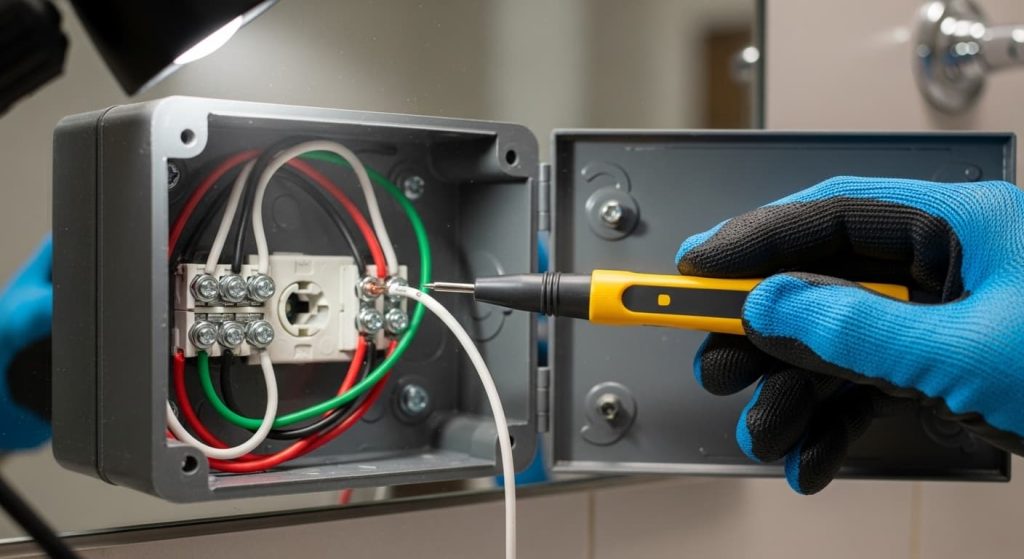
Your LED mirror needs a consistent diet of electricity. If the voltage fluctuates, the light output will waver. This can happen for a few reasons:
- Overloaded Circuits: Does the mirror flicker every time the air conditioner kicks on or when someone uses a hair dryer in the next room? This suggests the circuit is overloaded, causing a momentary voltage drop. Try plugging those high-power appliances into a different circuit to see if the problem stops.
- Loose Wiring: If the electrical connection behind the mirror is not tight, the flow of electricity can arc or jump, causing an intermittent connection. Loose neutral wires are a classic cause, so ensure the white wire is just as secure as the black (hot) wire.
- The “Ghost” Current: Sometimes, even when off, LEDs can flicker or glow faintly. This is often caused by capacitance between wires running parallel in your walls, which can induce a small voltage even when the circuit is off.
3. Faulty LED Drivers
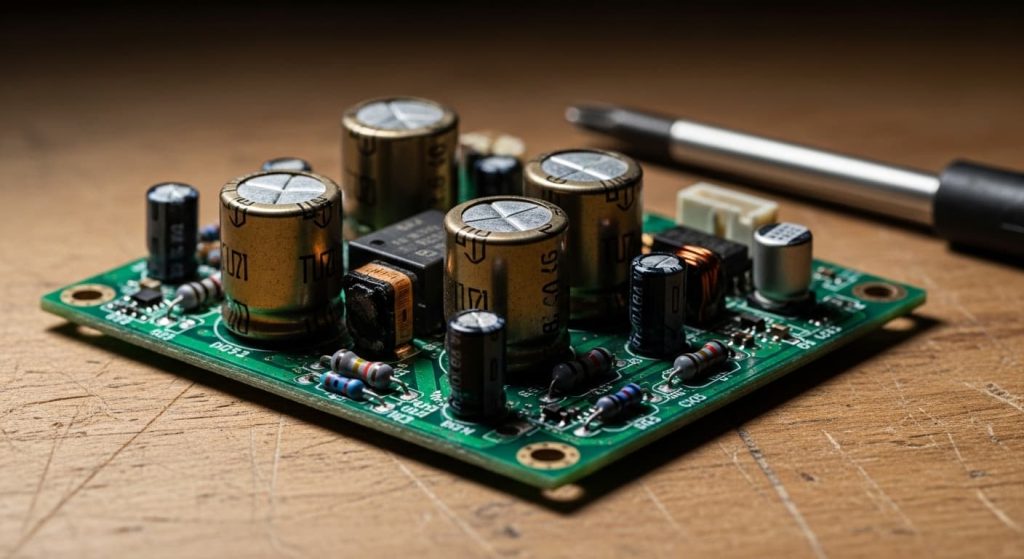
Think of the LED driver as the “heart” of your mirror. It pumps the electricity to the light strips. If the driver is of low quality or nearing the end of its lifespan, it may fail to regulate the current properly. Capacitors inside the driver can dry out or swell over time, leading to a “ripple current” that manifests as a visible flicker.
What to look for: If your mirror flickers constantly, even at full brightness and with no other appliances running, the driver is a prime suspect. You might also hear a faint buzzing or humming sound coming from behind the mirror, which is another tell-tale sign of a failing driver.
4. Environmental Factors
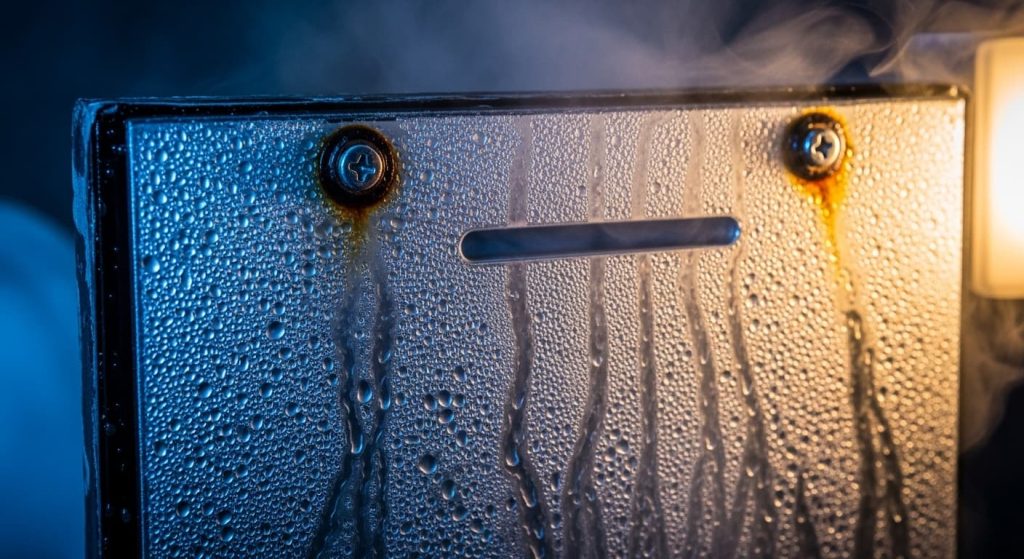
Bathrooms are hostile environments for electronics. They are hot, humid, and prone to condensation.
- Humidity: If your mirror does not have a high enough IP (Ingress Protection) rating, steam from your shower can seep into the housing. This moisture can bridge connections on the circuit board, causing erratic behavior. For a bathroom, especially near a shower or tub, look for a mirror with at least an IP44 rating to ensure it is protected from splashing water.
- Condensation: Water droplets forming on the internal wiring can cause temporary shorts that look like flickering.
- Temperature: While heat and humidity are the bigger concerns, extreme cold can also cause LEDs to flicker temporarily as the components struggle to reach their optimal operating temperature. This usually resolves as the room warms up.
Quick Troubleshooting Tips
Now that we know what might be causing the issue, let’s get your lights steady again. Safety Note: Always turn off the circuit breaker for your bathroom before removing the mirror or touching any wiring.
Step 1: Check the Connections
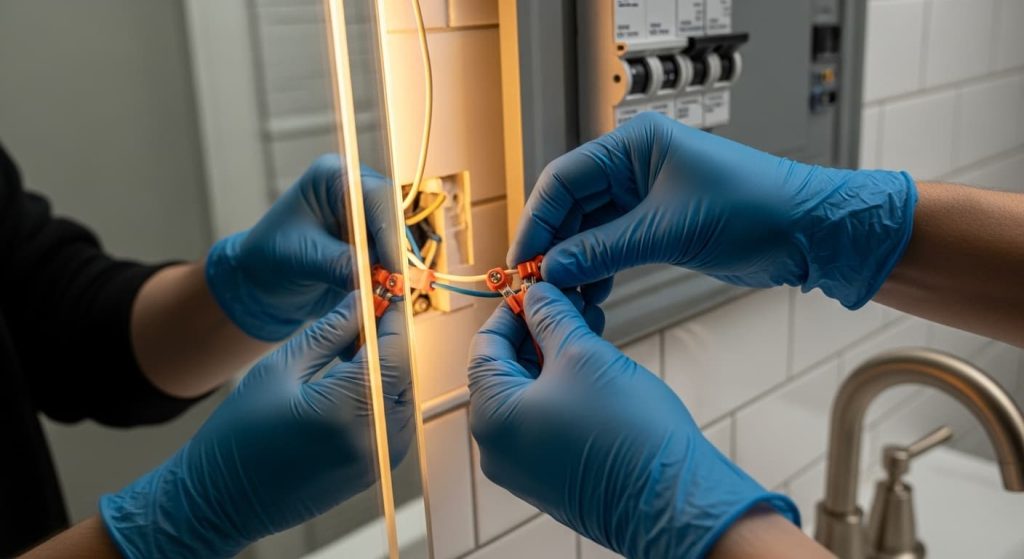
Start with the simplest physical fix. Carefully remove the mirror from the wall mounts to access the wiring behind it.
- Check the wire nuts connecting the mirror to your home’s wiring. Are they tight?
- Give the wires a gentle tug. If a wire comes loose, strip it back slightly, reconnect it, and secure it with a new wire nut and electrical tape.
- Loose neutrals are a classic cause of flickering, so ensure the white wire is just as secure as the black (hot) wire.
- Also, ensure the ground wire (usually bare copper or green) is properly connected to the ground in your junction box. A poor ground can sometimes contribute to flickering.
Step 2: Test the Dimmer
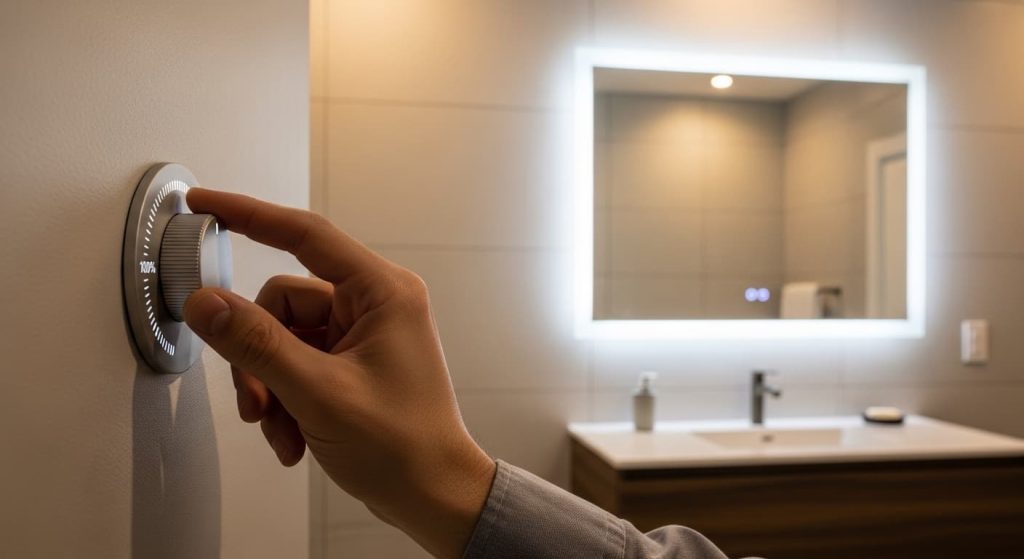
If your mirror is on a dimmer switch, this is the first thing you should investigate.
- The Full Power Test: Turn the dimmer all the way up to 100% brightness. Does the flickering stop? If it only flickers at 30% or 50% brightness, the dimmer is almost certainly incompatible.
- The Bypass Test: If you are comfortable with basic wiring, remove the dimmer switch and replace it temporarily with a standard single-pole toggle switch. If the mirror works perfectly with a standard switch, you simply need to buy an LED-compatible dimmer (often labeled as Electronic Low Voltage (ELV), Magnetic Low Voltage (MLV), or simply “LED compatible”) from reputable brands like Lutron or Leviton.
Step 3: Inspect for Moisture
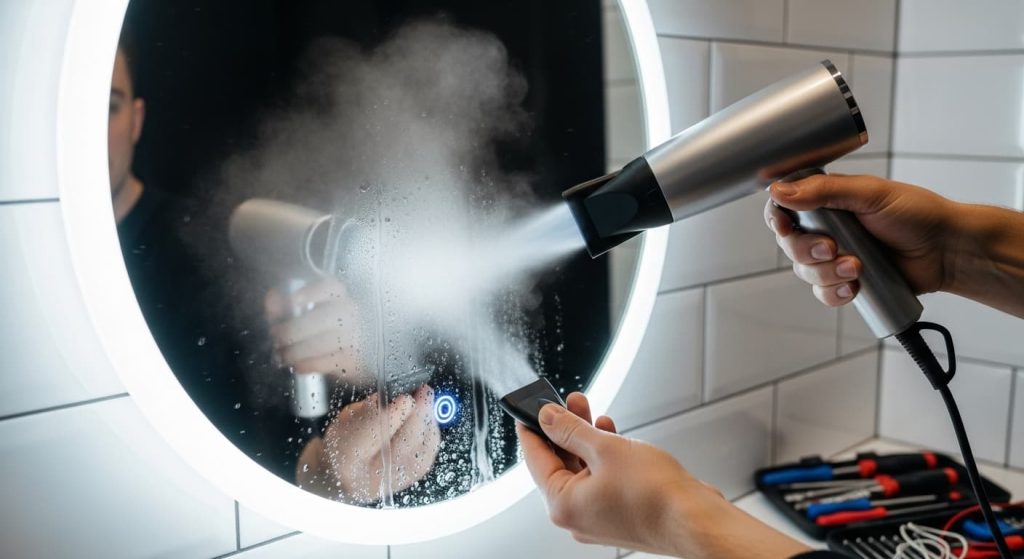
While you have the mirror down, look at the back of the unit.
- Do you see signs of water damage, such as rust spots, white powdery corrosion, or visible droplets inside the casing?
- If you find moisture, dry the unit thoroughly with a hair dryer on a cool setting. You may need to apply clear silicone caulk around the top and sides of the mirror (leaving the bottom open for airflow) to prevent steam from entering in the future.
Step 4: Reset or Replace the Driver
Sometimes, electronic components just get confused.
- The Hard Reset: Leave the breaker off for at least 10 minutes. This allows the capacitors in the driver to fully discharge, which can sometimes clear a “ghost” voltage or reset a confused internal circuit. Flip the breaker back on and see if the issue resolves.
- Replacement: If the flicker persists and you have ruled out the dimmer and loose wires, the driver is likely faulty. Most manufacturers use standard drivers. You can usually buy a replacement online if you match the input/output voltage and wattage listed on the label of the old driver.
Quick Diagnostic Checklist
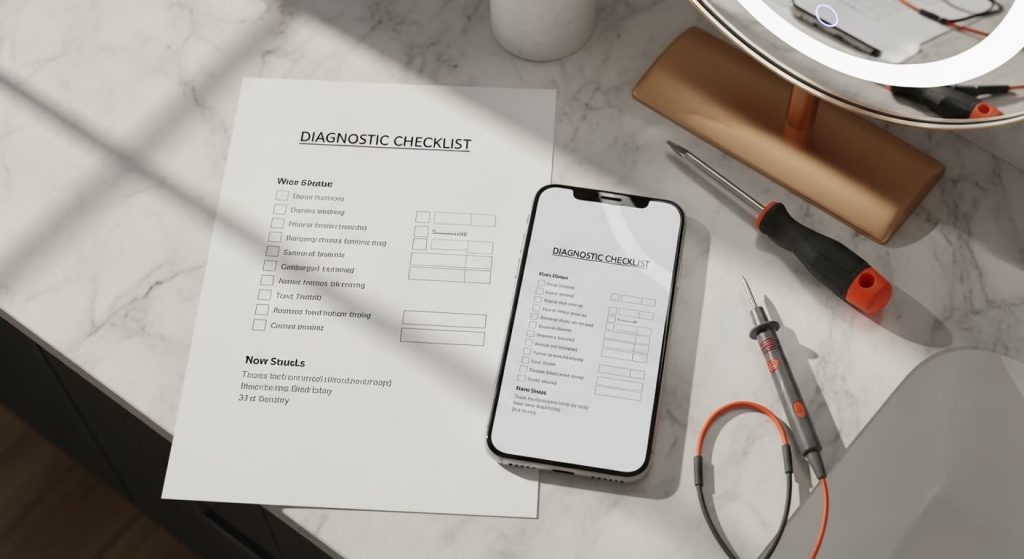
Use this handy reference to quickly identify your likely issue:
- Does it flicker only when dimmed? → Likely Cause: Incompatible dimmer switch.
- Does it flicker when appliances turn on? → Likely Cause: Circuit load issue or loose connection.
- Does it flicker constantly, even at full power? → Likely Cause: Loose wiring or failing driver.
- Does it flicker after a steamy shower? → Likely Cause: Moisture ingress or insufficient IP rating.
When to Call a Professional
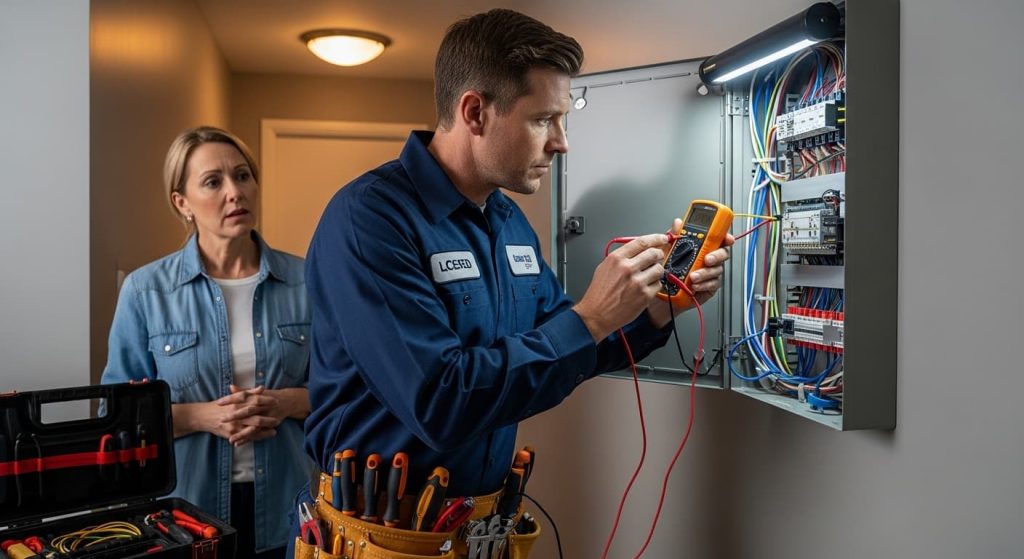
We are big fans of DIY, but electricity demands respect. There is a line between “fixing a loose screw” and “risking a house fire.” You should call a licensed electrician immediately if:
- The Flickering Affects Other Lights: If the vanity lights, ceiling fan, and hallway lights all flicker simultaneously, this suggests a problem with your home’s main neutral wire or service panel. This is dangerous and needs immediate professional attention.
- You Hear Buzzing or Sizzling: A quiet hum is normal for some dimmers, but a loud buzzing or sizzling sound (crackling) indicates arcing. This generates heat and is a major fire risk.
- Burning Smells: If you smell ozone or burning plastic, cut the power immediately and call a pro.
- Old Wiring: If your home has aluminum wiring or knob-and-tube (common in pre-1970s homes), modern LED fixtures may not ground correctly without professional remediation.
Prevention and Maintenance Tips
Once you have fixed the flicker, you want to ensure it stays fixed. Here is how to keep your LED mirror running smoothly for years.
Invest in Quality Dimmers
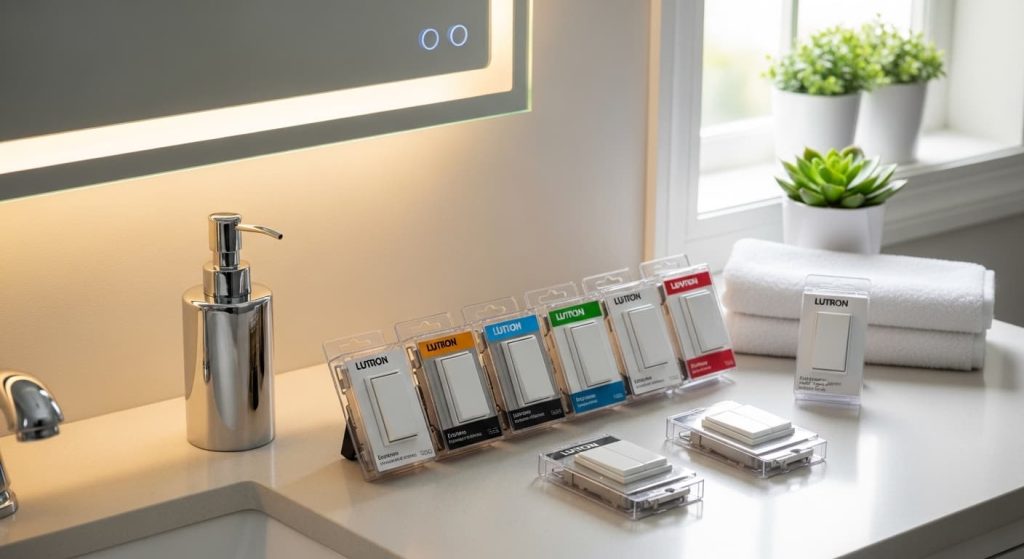
Don’t buy the cheapest dimmer on the shelf. Look for “CL” (CFL/LED) rated dimmers from reputable brands like Lutron or Leviton. These usually have a small adjustment dial on the side that allows you to trim the low-end voltage, ensuring perfect performance with your LED mirror.
Ensure Proper Ventilation
Good airflow helps prevent heat and humidity buildup behind your mirror. If your mirror is in an enclosed vanity alcove, consider adding a small ventilation gap or ensuring your bathroom exhaust fan is used regularly during and after showers.
Regular Inspection
Once a year, turn off the breaker and gently check that the wire connections behind the mirror are still tight. A quick visual check for any signs of corrosion or moisture can catch problems before they start.
Frequently Asked Questions (FAQ)
Why does my LED mirror flicker only when I dim it?
This almost always means your dimmer switch is incompatible. Older dimmers designed for incandescent bulbs don’t play well with LED technology. Replace it with an LED-compatible dimmer (look for “CL” or “LED” rated).
Can a flickering LED mirror cause a fire?
In most cases, no—it’s just annoying. However, if the flickering is accompanied by buzzing, sizzling, or a burning smell, it could indicate arcing or an electrical fault. Turn off the power immediately and call an electrician.
Why does my mirror flicker when I use my hair dryer?
This suggests an overloaded circuit or voltage drop. High-power appliances like hair dryers can temporarily pull too much power, causing the flicker. Try plugging the hair dryer into a different outlet on a separate circuit.
Will an LED mirror stop flickering on its own?
Unfortunately, no. Flickering rarely fixes itself. It will likely get worse over time as components degrade or connections loosen further.
My mirror flickers after a hot shower. Why?
This is likely moisture or condensation getting inside the mirror housing. Check your mirror’s IP rating—bathrooms need at least IP44 for protection against steam and splashes.
Can I fix a flickering LED mirror myself?
Yes, in many cases! Start by checking for loose wire connections and testing your dimmer switch. Always turn off the circuit breaker before touching any wiring.
How long do LED mirrors last?
Quality LED mirrors typically last 30,000 to 50,000 hours. If your mirror is newer and flickering, it’s likely an installation issue—not a worn-out product.
Do I need a special dimmer for LED mirrors?
Yes. Standard dimmers won’t work properly. You need a modern LED-compatible dimmer (often called Electronic Low Voltage or ELV dimmers) to control LED lights smoothly without flicker.
What does a failing LED driver sound like?
A failing driver often produces a faint buzzing or humming noise along with the flickering. This is a sign it’s struggling to regulate power and may need replacement.